
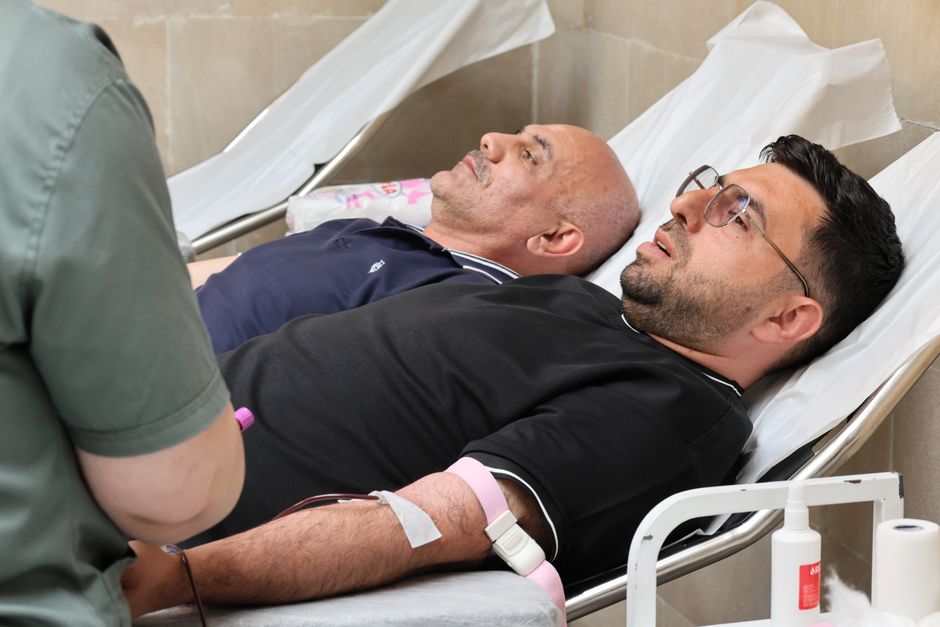
If you donate platelets, you can typically donate every 7 days, up to 24 times a year. If you donate plasma, you can usually donate every 28 days, up to 13 times a year. These two numbers are different because your body replaces platelets much faster than it replaces plasma.
Those are the general limits set by the U.S. Food and Drug Administration and used by most U.S. blood centers. Your actual schedule also depends on your weight, your health, your hemoglobin level, and the rules of the center you visit. Some centers space donations further apart than the federal minimum.
How Often Can I Donate Blood Platelets Or Plasma?
The short answer is platelets every 7 days and plasma every 28 days. The longer answer explains why, because the two fluids behave very differently inside your body.
Platelets are tiny cell fragments that help your blood clot. They circulate for about 8 to 10 days before your body clears them out and replaces them. Because the supply turns over quickly, you can give platelets more often without draining your reserves.
Plasma is the liquid part of your blood. It is about 90 percent water, and it carries proteins, hormones, nutrients, and clotting factors. When you donate plasma, your body has to rebuild those proteins. That process takes longer, which is why the waiting period is measured in weeks rather than days.
Federal rules allow up to 24 platelet donations and up to 13 plasma donations in a 12-month period. A center may set tighter limits. Always follow the schedule the donation staff gives you, not the maximum allowed by law.
What Is the Difference Between Donating Platelets and Donating Plasma?
Both donations use a process called apheresis. Blood is drawn from one arm, passed through a machine that separates out the component being collected, and the rest is returned to you. This is different from a whole blood donation, where a pint of blood is removed and not returned.
During a platelet donation, the machine collects platelets and returns your red cells and most of your plasma. During a plasma donation, the machine collects plasma and returns your red cells and platelets. Some centers collect both at once, which is called a combined donation.
Timing differs too. A platelet donation usually takes about 1.5 to 2.5 hours. A plasma donation often takes around 1 to 1.5 hours. Whole blood takes roughly 10 minutes, though the full visit runs closer to an hour.
One detail people rarely hear: platelet donors are often asked to avoid aspirin for a set period before donating. Aspirin affects platelet function for several days, and the platelets collected may be used for patients who need working platelets. Plasma donors do not face that same restriction. Check with your center about its specific medication rules.
Why Are the Waiting Periods Different?
The waiting periods exist to protect you, not just the person receiving your donation. Each type of donation removes something your body has to replace, and the replacement times are not equal.
Your bone marrow produces platelets continuously, and your body can ramp up production when levels drop. Plasma proteins, especially albumin and clotting factors, are rebuilt more slowly by the liver. That difference in recovery time is the core reason platelet donations can be more frequent.
Red blood cells are the slowest to recover. That is why whole blood donation has the longest interval of the common donation types, generally every 8 weeks, or 56 days. Red cells take weeks to regenerate, so the body needs more time between whole blood donations than between platelet or plasma donations.
What Affects How Often You Personally Can Donate?
The federal limits are ceilings, not targets. Several personal factors can push your actual schedule further apart.
- Your hemoglobin or hematocrit level. Donation staff check this before every apheresis donation. If your level falls below the required threshold, you will be deferred for that day.
- Your weight. Donors must meet a minimum weight, and some centers apply additional criteria for smaller donors.
- Your total blood volume. This is estimated from your height and weight and affects how much can safely be collected.
- Your vein health. Repeated apheresis can stress the veins used for access. Staff may rotate arms or recommend a break.
- Your medication list. Certain drugs, including some blood thinners, can disqualify you temporarily or permanently.
- Your recent travel and health history. Exposure to certain infections can trigger a waiting period.
If you donate frequently, ask the center to track your cumulative donations. Some centers require a physical exam or lab work after a certain number of donations in a year. This is a safeguard, not a sign that anything is wrong.
Is Donating Platelets or Plasma Safe If You Do It Regularly?
Apheresis donation is considered safe for healthy donors, and serious complications are uncommon. The most frequent side effects are mild and short-lived.
Citrate reactions are the most common complaint. The machine uses a substance called citrate to keep blood from clotting in the tubing. Citrate can lower your blood calcium slightly during the donation, which may cause tingling around the mouth or fingers, chills, or a metallic taste. These symptoms usually ease when the staff slow the collection rate or give you a calcium supplement.
Other possible effects include bruising or soreness at the needle site, lightheadedness, and fatigue. Fainting can happen, especially if you have not eaten or are dehydrated. Drinking water and eating before your appointment lowers that risk.
Long-term effects of frequent donation are less well studied. Some research suggests that regular plasma donation can lower certain protein levels, including immunoglobulin and albumin, though the body generally restores them over time. The evidence on long-term effects is limited, and no large trials have followed frequent donors for decades. If you plan to donate at or near the maximum frequency, tell your primary care doctor so they can monitor your blood work.
How Do You Prepare for a Platelet or Plasma Donation?
Preparation matters more for apheresis than for whole blood, mainly because the sessions are longer.
Drink plenty of water in the 24 hours before your appointment. Eat a normal meal within a few hours of donating, and avoid high-fat foods right before, since fat can cloud the plasma and affect testing. Skip alcohol the day before and the day of your donation.
Wear a shirt with sleeves that roll up easily above the elbow. Bring something to pass the time, since a platelet donation can run over two hours. Plan to rest for a few minutes afterward and avoid heavy lifting or intense exercise for the rest of the day.
Tell the staff about every medication and supplement you take, including over-the-counter pain relievers. Do not stop a prescribed medication on your own to qualify for a donation. Talk to your doctor first.
How Do Platelet and Plasma Donation Rules Compare?
The table below summarizes the general federal limits and typical features of each type. Individual centers may set stricter rules.
| Feature | Platelet donation | Plasma donation |
|---|---|---|
| Minimum interval | 7 days | 28 days |
| Maximum per year | 24 | 13 |
| Typical session length | 1.5 to 2.5 hours | 1 to 1.5 hours |
| What is returned to you | Red cells and most plasma | Red cells and platelets |
| Aspirin restriction | Often applies | Generally does not apply |
| Common side effect | Citrate tingling | Citrate tingling |
Can You Donate Platelets and Plasma at the Same Time?
Yes, some centers offer a combined platelet and plasma donation. This collects both components in a single session, and the machine returns your red cells. The session runs longer than either donation alone.
When you make a combined donation, the center applies its own interval rules before you can donate again. These rules are usually based on the total volume collected and may be more restrictive than the standard platelet or plasma intervals. Ask the staff what your next eligible date is before you leave.
Combined donations are especially useful because a single donor can supply two needed products. That reduces the number of separate donor exposures for the patient receiving them, which matters for people who need repeated transfusions.
What Should You Ask Your Donation Center?
Rules vary between centers even though the federal limits are the same. Before your first apheresis donation, ask a few direct questions.
- What is the minimum interval between donations at this center?
- How many donations can I make in a 12-month period?
- Are there medications I need to avoid, and for how long?
- What is the minimum weight and hemoglobin level required?
- Will you notify my doctor if my lab values change?
Getting clear answers up front helps you plan a schedule that is safe and sustainable. Frequent donation is generous, but it should never come at the cost of your own health.
Frequently Asked Questions
How often can you donate platelets?
You can typically donate platelets every 7 days, up to 24 times in a 12-month period. Your center may require longer gaps based on your health and lab results.
How often can you donate plasma?
You can usually donate plasma every 28 days, up to 13 times a year. This longer interval exists because your body takes more time to rebuild plasma proteins.
Can you donate platelets and plasma in the same week?
Not usually. Most centers require a waiting period after any apheresis donation, and a combined donation often carries its own longer interval before you can donate again.
Is it safe to donate platelets every week?
For healthy donors who meet the eligibility criteria, donating at the maximum allowed frequency is generally considered safe. Long-term effects of very frequent donation are not well studied, so tell your doctor if you plan to donate often.
