
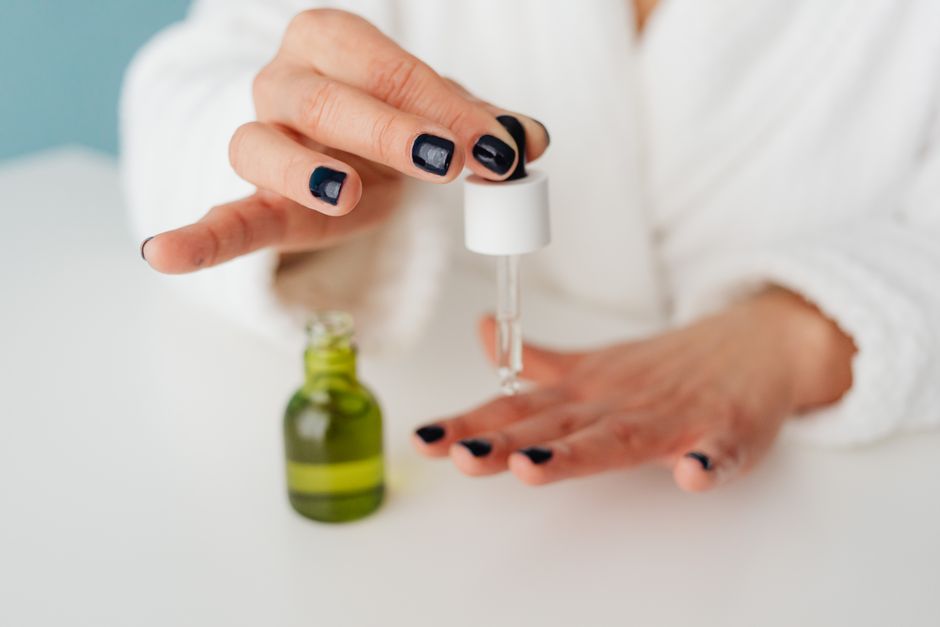
Nitric oxide is a gas your body makes constantly, and it does two jobs that matter here: it relaxes blood vessels and it participates in skin signaling. A nitric oxide serum is a topical product that usually supplies precursors like L-arginine or L-citrulline, sometimes with niacin or other compounds, on the theory that skin cells can convert these into nitric oxide. That mechanism is real in the body. Whether a serum delivers meaningful amounts through the skin barrier is a separate question, and the honest answer is that the evidence is uneven.
What Is Nitric Oxide and What Does It Actually Do?
Nitric oxide is a short-lived signaling molecule produced by enzymes called nitric oxide synthases. It diffuses into the smooth muscle surrounding blood vessels and triggers relaxation, which widens the vessel and increases blood flow. This is well established and is the same basic mechanism behind nitroglycerin used for chest pain.
In the skin, nitric oxide is involved in wound healing, immune response, and blood flow regulation. Skin cells can produce it. The molecule is also involved in pigmentation signaling and in the inflammatory response to UV exposure. None of that is controversial.
The catch is its lifespan. Nitric oxide lasts seconds in tissue. It is not a stable ingredient you can bottle and spread on your face in meaningful amounts. This is why topical products use precursors rather than nitric oxide itself.
How Does a Topical Nitric Oxide Serum Work?
The concept is straightforward. Instead of delivering nitric oxide directly, the serum delivers building blocks the skin might convert. L-arginine is the amino acid your nitric oxide synthase enzymes use as raw material. L-citrulline can be converted to L-arginine in the body. Some formulas include nitrite or nitrate salts. Others use plant extracts marketed as nitric oxide boosters.
A few practical points matter here:
- The stratum corneum, the outer layer of dead skin cells, is designed to keep things out. Small, fat-soluble molecules cross it more easily than amino acids, which are water-soluble and charged.
- Even if L-arginine crosses into living skin, conversion requires the enzyme and the right conditions. Availability of the raw material is not always the limiting factor.
- Some research has looked at whether topical nitrite can release nitric oxide when it contacts skin, especially under acidic conditions. This is a different approach from amino acid precursors.
So the mechanism is plausible. Plausible is not the same as demonstrated. A serum that increases nitric oxide in a lab dish does not automatically increase it in living skin, and an increase in living skin does not automatically produce a visible clinical result.
Does a Nitric Oxide Serum Improve Skin Appearance?
Some small studies have reported improvements in skin hydration, elasticity, or fine lines with topical nitric oxide precursor formulas. Many of these were funded by the companies selling the products, which does not make them wrong but does mean they should be read with appropriate caution. Independent replication is limited.
There is stronger evidence for nitric oxide in wound healing than in cosmetic skin aging. That is a different context with different delivery challenges.
What you can reasonably expect from a well-formulated topical product is temporary increased blood flow to the surface, which may give a short-lived flush or warmth. Whether that translates to lasting changes in collagen, wrinkles, or skin tone is not established by large independent trials.
If a product claims to visibly reduce wrinkles through nitric oxide, that specific claim is not supported by strong evidence. It may still be a fine moisturizer. The nitric oxide part is the unproven part.
How Does Nitric Oxide Affect Circulation?
This is the area with the most solid science. Nitric oxide is central to vascular health. The inner lining of blood vessels, the endothelium, produces it continuously to keep vessels relaxed and to prevent platelets from clumping. When the endothelium is damaged by high blood pressure, high blood sugar, smoking, or high cholesterol, nitric oxide production falls. That contributes to stiff arteries and reduced blood flow.
This is why diet and exercise matter for circulation. Aerobic exercise increases shear stress on vessel walls, which stimulates nitric oxide production. Certain foods, particularly leafy greens and beets, supply dietary nitrates that the body can convert to nitric oxide through a separate pathway. This pathway is well documented.
Here is where a serum runs into a wall. A topical product applied to your face or arm does not meaningfully enter your bloodstream. Even if it did, the amount needed to affect systemic circulation would be far beyond what a cosmetic serum contains. A topical nitric oxide serum is not a treatment for poor circulation, high blood pressure, or cardiovascular disease. No clinical evidence supports that use.
If you see a skincare serum marketed for “whole-body circulation,” that claim is not grounded in how topical absorption works.
What Should You Look For in a Nitric Oxide Serum?
If you want to try one, the ingredient list tells you more than the marketing. Common precursors include L-arginine, L-citrulline, and sodium nitrite. Some products pair these with niacin, which causes flushing on its own and can make it hard to tell what is doing what.
A few things worth knowing:
- Concentration matters, but more is not automatically better. High concentrations of L-arginine can irritate skin.
- Packaging matters. Nitric oxide precursors can degrade with light and heat. Opaque, airless pumps are better than open jars.
- “Nitric oxide boosting” plant extracts vary widely. There is no standard for what that phrase means.
- Patch test first, especially if you have sensitive skin or rosacea. Increased blood flow can worsen flushing in some people.
If a label promises to “boost nitric oxide by X percent,” ask X percent of what, measured where, and by whom. Those numbers rarely come from independent human studies.
Are There Risks or Reasons to Avoid These Products?
For most people, topical nitric oxide precursor serums cause at most mild irritation, redness, or a temporary warm sensation. That is the typical experience, not a guarantee.
Some cautions are worth stating clearly:
- People taking nitrate medications for heart conditions should not use topical nitrite products without asking a doctor. The interaction between nitrates and certain medications is well documented, and while skin absorption is limited, the precaution is reasonable.
- Anyone with active skin conditions like eczema or rosacea should be careful with products designed to increase blood flow.
- Pregnant and breastfeeding women: no clinical guidelines exist for topical nitric oxide precursor use in these groups. That is not the same as saying they are dangerous. It means the data are not there.
- Children: same situation. No established guidance.
None of this is meant to alarm. It is meant to be accurate about what is and is not known.
Is Oral or Dietary Nitric Oxide Support Better Than a Serum?
For circulation, yes. The evidence for dietary nitrates from vegetables and for regular aerobic exercise is far stronger than anything for topical products. That is not a close call.
For skin specifically, the comparison is less clear because neither approach has strong independent trial data for cosmetic outcomes. Oral L-citrulline and L-arginine supplements are widely sold for circulation and athletic performance. Some studies show modest effects on blood flow markers. Effects on skin appearance are not well established.
If your goal is cardiovascular health, a serum is the wrong tool. If your goal is skin appearance, a serum is one option among many, and the evidence for it is thinner than the evidence for sunscreen, retinoids, and moisturizers.
What Does the Evidence Actually Support?
Nitric oxide is real, important, and well studied in the body. Topical delivery of its precursors is a reasonable idea with limited proof. That is the honest summary.
What is well established:
- Nitric oxide regulates blood vessel tone and blood flow.
- Exercise and dietary nitrates support nitric oxide production systemically.
- Endothelial dysfunction reduces nitric oxide and contributes to vascular disease.
What is not well established:
- That topical nitric oxide serums meaningfully increase skin nitric oxide.
- That they produce lasting improvements in wrinkles, firmness, or tone.
- That they affect circulation anywhere beyond the application site, if at all.
A serum is not harmful for most people and may be a pleasant moisturizer. It is not a proven anti-aging treatment, and it is not a circulation therapy. Treat the marketing accordingly.
Frequently Asked Questions
How does nitric oxide serum work on the skin?
It supplies precursors like L-arginine or L-citrulline that skin cells may convert into nitric oxide, a signaling molecule involved in blood flow and healing. Whether enough crosses the skin barrier to matter is not well established.
Can a nitric oxide serum improve blood circulation?
No. Topical products do not meaningfully enter the bloodstream, so they cannot affect systemic circulation. Circulation is supported by exercise, diet, and managing conditions like high blood pressure.
Do nitric oxide serums actually reduce wrinkles?
The evidence is limited and mostly from small studies, some funded by product makers. No large independent trials confirm lasting wrinkle reduction from topical nitric oxide precursors.
Is it safe to use a nitric oxide serum every day?
For most people, daily use causes at most mild redness or warmth. Anyone taking nitrate medications, or who is pregnant or breastfeeding, should check with a doctor first because guidance for these groups does not exist.
