
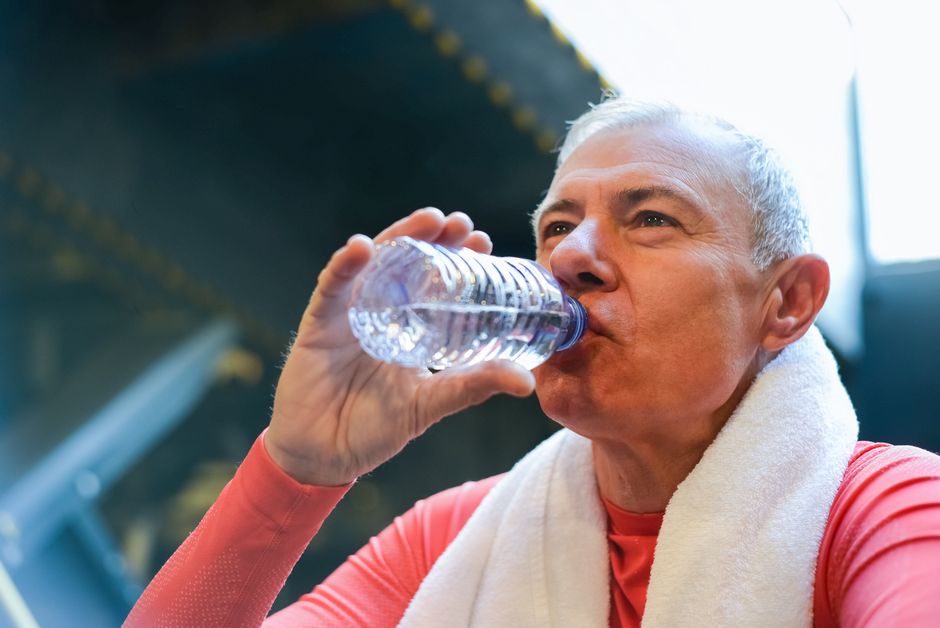
There is no single number that fits every person. The National Academies of Sciences, Engineering, and Medicine set a general daily reference for total water intake at about 125 ounces for men and about 91 ounces for women. That is total water — from drinks and food combined — not just what you pour into a glass. Most healthy adults who drink when they feel thirsty and eat a normal diet land in a reasonable range without counting ounces.
How Much Water Should I Drink Per Day In Ounces?
The commonly cited figures come from the National Academies: roughly 125 ounces (about 3.7 liters) of total water per day for men and about 91 ounces (about 2.7 liters) for women. These are not targets you must hit by drinking alone. They represent average total intake from all sources, and they include the water in food, coffee, tea, juice, and other beverages.
Roughly 20 percent of daily water intake typically comes from food, especially fruits and vegetables. That means the drinking portion is often closer to 100 ounces for men and about 73 ounces for women — and even those are population averages, not personal prescriptions.
The Institute of Medicine (now the National Academy of Medicine) has stated that healthy people who eat a normal diet and drink when thirsty are generally adequately hydrated. That is a meaningful point. Thirst is a real physiological signal, not a flaw to override.
Why Isn’t There One Number For Everyone?
Water needs shift with body size, activity, climate, diet, and health status. A 150-pound office worker in a mild climate and a 220-pound construction worker in July heat do not have the same requirement. The reference values above are averages across a large population; they were never meant as a fixed target for one individual.
Several factors push needs up:
- Activity. Sweating during exercise increases water loss, sometimes substantially.
- Heat and humidity. Hot environments raise sweat rates even at rest.
- Altitude. Higher elevations increase breathing water loss.
- Pregnancy and breastfeeding. These raise fluid needs, and the specific amounts are best discussed with a clinician.
- Illness. Fever, vomiting, and diarrhea all increase losses.
- Diet. High-sodium or high-protein diets can raise water needs.
Certain medications also affect fluid balance, including some diuretics and lithium. If you take a medication that changes how your body handles water, ask your prescriber rather than guessing.
Does Food Count Toward My Water Intake?
Yes. Food contributes a meaningful share of daily water. On average, about 20 percent of total water intake comes from what you eat. Some foods are especially water-rich:
- Watermelon, cantaloupe, and strawberries
- Cucumber, lettuce, and celery
- Tomatoes and zucchini
- Soup, broth, and yogurt
A large cucumber is mostly water by weight. A bowl of soup can contribute several ounces. This is why “eight glasses of water a day” oversimplifies things — it ignores food entirely and treats a rough cultural rule as if it were a clinical standard.
Is Eight Glasses a Day Actually a Rule?
No. The “eight 8-ounce glasses” figure is a popular guideline, not a scientific requirement. It adds up to 64 ounces, which sits below the National Academies’ average total intake figures for both men and women. There is no strong evidence that a healthy adult must drink exactly 64 ounces of plain water daily.
The eight-glass rule likely spread because it is easy to remember, not because research established it as a threshold. Many people meet their fluid needs without ever counting glasses.
What Counts as Hydration Besides Plain Water?
Most beverages hydrate. Coffee and tea, once thought to be dehydrating because of caffeine, contribute to daily fluid intake in practice. Research has generally found that moderate caffeine consumption does not cause meaningful dehydration in people who consume it regularly. The mild diuretic effect of caffeine does not appear to outweigh the fluid the drink provides.
Milk, juice, and sports drinks also count. Sports drinks are mainly useful for prolonged, intense exercise or heavy sweating, where replacing electrolytes matters. For everyday hydration, plain water and other beverages are usually enough.
Alcohol is the exception. It has a diuretic effect, and heavy drinking can contribute to dehydration. That does not mean a single drink dehydrates you, but alcohol is not a good hydration source.
What Are the Signs You’re Drinking Enough?
Urine color is a practical, widely used gauge. Pale yellow generally suggests adequate hydration. Dark yellow or amber suggests you may need more fluid. Clear, colorless urine throughout the day can mean you are drinking more than you need.
Other signals of adequate hydration include:
- Urinating regularly through the day
- Not feeling persistently thirsty
- No headache or fatigue that tracks with low fluid intake
Thirst itself is a reliable early signal for most healthy adults. It becomes less reliable with age, which is one reason older adults are advised to pay closer attention to fluid intake.
Can You Drink Too Much Water?
Yes, though it is uncommon in everyday life. Drinking very large amounts of water quickly can dilute blood sodium to dangerously low levels, a condition called hyponatremia. This has occurred in endurance athletes who drink excessively during long events, and in some cases involving extreme water-drinking challenges.
Symptoms of hyponatremia can include nausea, headache, confusion, and in severe cases seizures. The risk is not from normal drinking spread across a day. It comes from consuming large volumes in a short time, especially without replacing electrolytes.
For most people, drinking to thirst and spreading fluids across the day avoids both dehydration and overhydration.
Do You Need More Water When You Exercise?
Yes. Exercise raises fluid loss through sweat, and the amount depends on intensity, duration, and conditions. General guidance from sports medicine organizations suggests drinking before, during, and after activity, with amounts tailored to sweat rate and event length.
A practical way to estimate sweat loss is to weigh yourself before and after a workout. Each pound lost roughly corresponds to about 16 ounces of fluid. That figure is a commonly used estimate, not a precise measurement, but it gives a reasonable starting point.
For sessions under about an hour at moderate intensity, water is usually sufficient. Longer or more intense sessions, especially in heat, may call for electrolyte replacement. The evidence for electrolyte drinks is strongest for prolonged endurance activity, not for casual exercise.
Who Needs to Pay Closer Attention to Fluid Intake?
Some groups have higher risk of dehydration or need specific guidance:
- Older adults. Thirst sensation tends to decline with age.
- Infants and young children. They cannot always communicate thirst and have different fluid needs. No universal ounce target applies; ask a pediatrician.
- Pregnant and breastfeeding women. Fluid needs rise, but specific amounts should come from a clinician.
- People with kidney, heart, or liver conditions. Fluid restrictions may be medically necessary. Follow your care team’s instructions.
- Athletes and outdoor workers. High sweat losses require attention to both fluid and electrolytes.
If you have a condition that affects fluid balance, the general population figures do not apply to you. Your clinician’s guidance takes priority.
How Do You Know If You’re Drinking the Right Amount?
For most healthy adults, the answer is simpler than the numbers suggest. Drink when you are thirsty. Drink more when you sweat, when it is hot, or when you are active. Eat foods that contain water. Check your urine color now and then.
You do not need to hit 91 or 125 ounces precisely. Those figures describe average total intake across a population, not a daily quota for one person. If you feel well, urinate regularly, and your urine is pale yellow, you are likely in a healthy range.
Frequently Asked Questions
How many ounces of water should I drink a day?
The National Academies reference about 125 ounces of total water daily for men and about 91 ounces for women, including water from food and all beverages. Individual needs vary, so these are averages rather than personal targets.
Is 64 ounces of water a day enough?
For many healthy adults, 64 ounces of plain water plus the water from food and other drinks is likely adequate. There is no evidence that 64 ounces is a required minimum for everyone.
Does coffee count toward daily water intake?
Yes. Coffee and tea contribute to daily fluid intake, and moderate caffeine consumption does not appear to cause meaningful dehydration in regular consumers.
What color should my urine be if I’m hydrated?
Pale yellow generally indicates adequate hydration. Dark yellow or amber suggests you may need more fluid, while consistently clear urine can mean you are drinking more than needed.
