
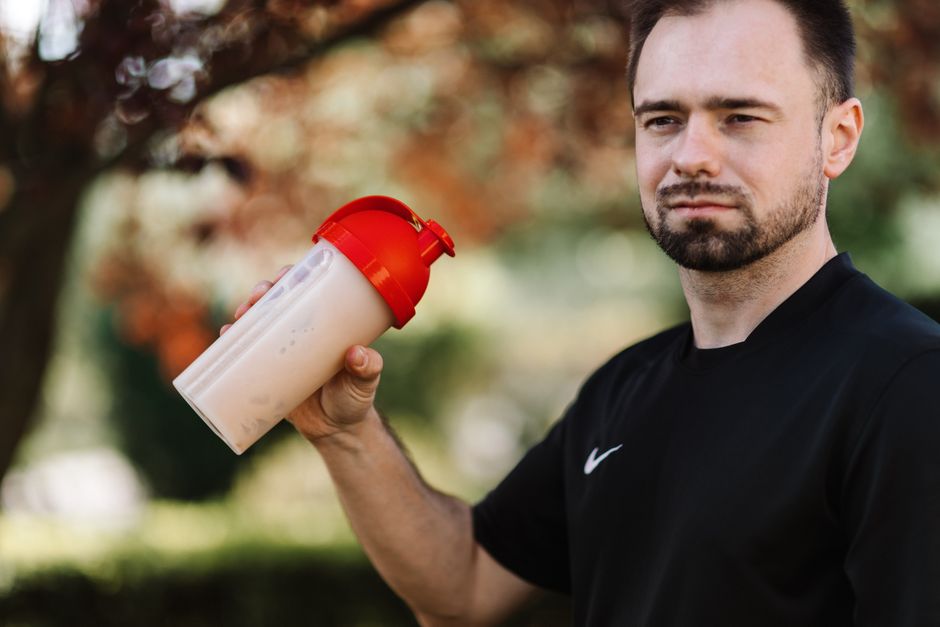
Mixing protein powder is a simple task, but the amount of water you use changes the result. Most protein scoops measure about 30 grams. For that size scoop, 8 to 12 ounces of water is the standard range. Start with 10 ounces for a balanced shake. Use 8 ounces for a thicker drink or 12 ounces for a thinner one.
Why Does the Amount of Water Matter?
The water amount does more than change the taste. It changes the texture, the speed you drink it, and how full you feel. A thicker shake takes longer to drink. That can help with satiety. A thinner shake goes down fast, which is useful right after a workout.
Temperature matters too. Cold water makes the shake thicker. Room temperature water makes it thinner. If you use a blender with ice, the shake becomes even thicker. The same scoop of powder can produce very different drinks depending on these factors.
How Much Water For Protein Powder Per Scoop?
The standard recommendation is 8 to 12 ounces of water per scoop of protein powder. Most scoops are 30 grams. Some brands use a 25-gram scoop. Check your container to confirm the serving size before you measure your water.
If you prefer a milkshake-like texture, use 6 to 8 ounces. If you want something closer to juice, use 12 to 14 ounces. The powder will still dissolve fully at either end. The difference is purely about consistency and personal preference.
What Happens If You Use Too Little Water?
Too little water creates a paste. The powder cannot fully dissolve. You end up with dry clumps that are unpleasant to drink. Some people mix this thick paste on purpose and eat it with a spoon like pudding. That is a personal choice, not a standard practice.
Using too little water can also make the shake hard to drink quickly. The thick texture coats your mouth. Some people find this makes them feel too full. If you are drinking protein for quick absorption after training, a very thick shake is not ideal.



What Happens If You Use Too Much Water?
Too much water makes the shake watery and weak. The protein flavor becomes diluted. You might not taste the chocolate or vanilla at all. The drink becomes less satisfying, which might lead you to eat something else later.
There is no health risk to a watery shake. The protein content stays the same. But the experience is worse. Most people find that a very thin shake is harder to finish because it feels like drinking flavored water.
Does the Type of Protein Change the Water Amount?
Whey protein isolates mix thinner than concentrates. They dissolve more completely. You can use slightly less water with an isolate and still get a smooth shake. Casein protein is thicker. It needs more water to reach the same consistency as whey.
Plant-based proteins behave differently. Pea and rice proteins often need more water or a blender. They can clump more easily than dairy proteins. If you use a plant-based powder, start with 12 ounces of water and adjust from there.
How to Measure Your Water Accurately
Use a liquid measuring cup. Do not guess by eye. A standard drinking glass holds 12 to 16 ounces, but that varies widely. If you use the same glass every day, you will get consistent results even if the exact amount is unknown.
A kitchen scale is the most accurate method. One fluid ounce of water weighs about 30 grams. So 10 ounces of water is 300 grams on a scale. This method is overkill for most people, but it works if you want precision.
Should You Use Milk Instead of Water?
Milk adds calories, protein, and fat. It also makes the shake thicker and creamier. If you are trying to gain weight or build muscle, milk is a reasonable choice. If you are cutting calories, water is better.
One cup of whole milk adds about 150 calories. Skim milk adds about 80. If you track your macros, these numbers matter. The protein in milk also adds to your total protein intake. That can be helpful or it can push you over your target, depending on your goals.
Does Water Temperature Affect Mixing?
Cold water mixes slower than warm water. Protein powders dissolve faster in room temperature liquid. But cold shakes taste better to most people. The trade-off is a few extra seconds of shaking.
Hot water is a problem. Heat can denature whey protein. This changes the structure but does not destroy the nutritional value. The bigger issue is that hot water makes some protein powders clump badly. Avoid hot water unless the product label says otherwise.
Common Mixing Mistakes to Avoid
The biggest mistake is adding powder to water instead of water to powder. When you add liquid to powder, the powder stays at the bottom of the shaker. It clumps. When you add powder to liquid, it floats and mixes more easily.
Another mistake is shaking too briefly. A few seconds of shaking is not enough. Most powders need 15 to 30 seconds of vigorous shaking. If you still see dry powder at the top or clumps at the bottom, shake for another 10 seconds.
Using a shaker ball helps. The metal spring breaks up clumps as you shake. If your powder still clumps with a ball, try a blender. A blender produces the smoothest shake of all, but it adds a dirty dish to clean.
Does the Water Amount Affect Protein Absorption?
No. Your body digests protein the same way regardless of how much water you use. The water changes the texture and taste, not how your body processes the protein. Your stomach handles both thin and thick shakes the same way.
Some people believe a thinner shake absorbs faster. That is not supported by evidence. Digestion speed depends on the protein type and what else you eat with it, not the water volume. Whey absorbs quickly. Casein absorbs slowly. Water amount does not change this.
Signs Your Shake Is Mixed Correctly
A properly mixed shake has a consistent texture. No dry powder at the top. No clumps at the bottom. The liquid should look uniform from the first sip to the last.
If you pour the shake and see powder sticking to the sides of the glass, it was not mixed enough. If you see a layer of foam on top, that is normal. Foam comes from the protein and the shaking action. It does not mean the shake is bad.
How to Adjust the Recipe to Your Taste
Start with 10 ounces of water per scoop. Drink it. If it is too thick, add 2 more ounces next time. If it is too thin, use 2 fewer ounces. Small adjustments make a big difference.
Keep notes if you are picky. Write down the exact water amount that works for you. That way you do not have to guess every time. Once you find your number, stick with it. Consistency makes it easier to track your nutrition.
Do Different Protein Brands Mix Differently?
Yes. Brand formulations vary. Some use additives that improve mixing. Others use fewer ingredients and clump more. The same water amount can produce a smooth shake with one brand and a lumpy shake with another.
Read the label on your specific product. Many brands print mixing instructions on the container. Those instructions are a good starting point. Adjust from there based on your preference. The label recommendation is not a rule, just a baseline.
Frequently Asked Questions
Is 8 ounces of water enough for one scoop of protein powder?
Yes, 8 ounces is enough for most 30-gram scoops. This produces a thicker shake. Add more water if you prefer a thinner consistency.
Can I use less water to make my protein shake taste stronger?
Yes, using less water concentrates the flavor. Try 6 ounces for a very strong taste, but expect a thicker texture that may be harder to drink.
Does hot water ruin protein powder?
Hot water can cause clumping and change the texture. It does not destroy the nutritional value, but it makes the shake unpleasant to drink.
How much water should I use for a 25-gram scoop of protein?
Use 6 to 10 ounces for a 25-gram scoop. The smaller scoop needs slightly less water to reach the same consistency as a 30-gram scoop.
