
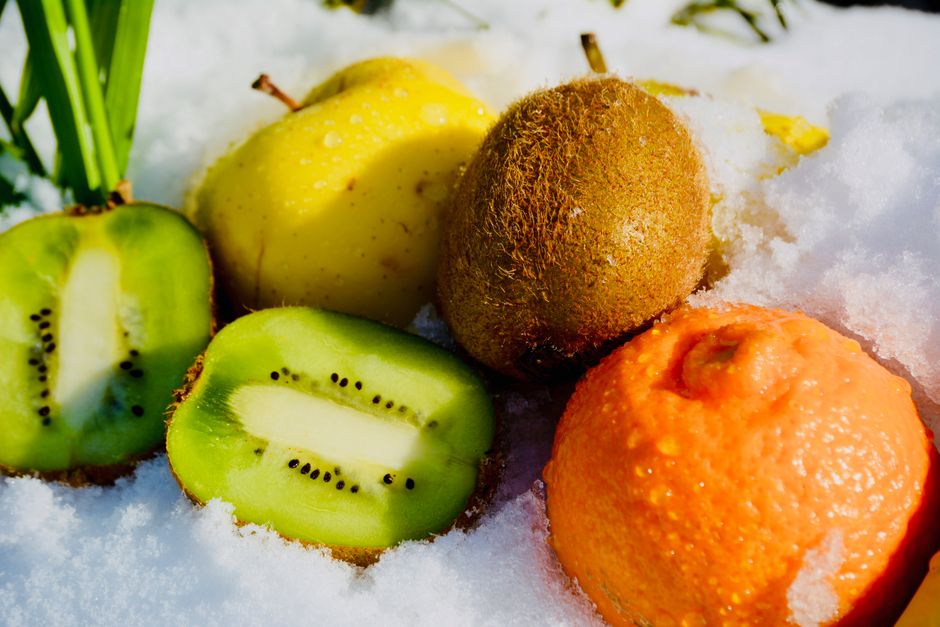
A single green kiwifruit typically contains about 60 to 85 milligrams of vitamin C, depending on variety, growing conditions, and ripeness. Gold kiwifruit varieties generally run higher, often in the range of 100 to 160 milligrams per fruit. That means one kiwifruit can deliver most or all of an adult’s daily vitamin C target in a single serving.
The exact numbers shift more than most people expect. Two kiwifruit from the same bin can differ in vitamin C content. Variety matters most, but so does when the fruit was picked and how long it sat in your fridge.
How Much Vitamin C In A Kiwi Varieties Compared?
Green and gold kiwifruit are the two main types sold in the US, and gold varieties carry meaningfully more vitamin C. The table below shows typical ranges based on USDA nutrient data and published variety analyses.
| Kiwifruit type | Vitamin C per fruit (typical) | Vitamin C per 100 g |
|---|---|---|
| Green (Hayward) | About 60–85 mg | About 90–100 mg |
| Gold (e.g., SunGold, Hort16A) | About 100–160 mg | About 130–160 mg |
One medium green kiwifruit weighs roughly 75 to 90 grams. A gold kiwifruit of the same size can weigh slightly more. Because vitamin C is measured per 100 grams in nutrition databases, a bigger fruit delivers more total vitamin C even within the same variety.
The US recommended dietary allowance for vitamin C is 90 mg per day for adult men and 75 mg per day for adult women. Smokers need an additional 35 mg daily, per the same guidelines. One gold kiwifruit covers the adult male RDA on its own. One green kiwifruit comes close.
Why Do Gold Kiwifruit Have More Vitamin C Than Green?
Gold kiwifruit were bred partly for higher vitamin C content, along with a sweeter flavor and smoother skin. The difference is genetic and consistent across growing seasons, not a fluke of individual fruit.
Plant breeders select for traits they want. In gold varieties, higher ascorbic acid content was one of those traits. The result is a fruit that reliably tests higher than green Hayward kiwifruit in published nutrient analyses.
This is a good reminder that “kiwifruit” is not one nutritional entity. If you are choosing a kiwifruit specifically for vitamin C, gold varieties generally win. If you prefer the tart flavor of green kiwifruit, you are still getting an excellent source.
How Does Kiwi Compare to Oranges and Other Fruits?
Kiwifruit beats oranges on vitamin C per gram. A medium orange contains roughly 50 to 70 milligrams of vitamin C. A green kiwifruit of similar size contains more, and a gold kiwifruit contains roughly double.
The comparison surprises people because oranges have a reputation as the vitamin C fruit. That reputation is deserved but not exclusive. Gram for gram, kiwifruit, red bell peppers, and guava all deliver more vitamin C than oranges.
- Red bell pepper, half cup raw: about 95 mg
- Gold kiwifruit, one medium: about 100–160 mg
- Green kiwifruit, one medium: about 60–85 mg
- Orange, one medium: about 50–70 mg
- Strawberries, half cup: about 45 mg
These figures come from USDA nutrient data and reflect typical values. Actual content varies with ripeness and storage.





Does Kiwifruit Variety Really Change the Vitamin C You Absorb?
Vitamin C content in the fruit is not the same as vitamin C absorbed by your body. Absorption depends on how much you eat at once, what else is in your stomach, and your body’s current vitamin C status.
Your body absorbs vitamin C efficiently at low intakes and less efficiently at high ones. Eating one gold kiwifruit delivers a large dose, and your body will absorb a smaller fraction of it than it would from a smaller dose. This is normal and not a reason to avoid high-vitamin-C foods.
People with low vitamin C status absorb a higher percentage of what they eat. People who are already replete absorb less. The practical takeaway is that a single kiwifruit a day is plenty for most adults, and stacking multiple high-dose supplements on top offers little extra benefit.
Does Storage or Ripeness Affect Vitamin C in Kiwifruit?
Vitamin C in kiwifruit declines during storage, and the decline is faster at room temperature than in the refrigerator. This is true of most fresh produce.
Vitamin C is water-soluble and sensitive to heat, light, and oxygen. A kiwifruit left on the counter for a week will have less vitamin C than one kept cold and eaten sooner. The difference is real but usually modest over normal storage times.
Ripeness cuts both ways. An underripe kiwifruit may have slightly different vitamin C content than a ripe one, but the change is small compared with the difference between varieties. Do not overthink ripeness if your goal is vitamin C. Buy fresh, store cool, and eat within a reasonable window.
One clarification worth making: freezing does not destroy vitamin C in kiwifruit to any meaningful degree. Frozen kiwifruit retains most of its vitamin C, though the texture changes and it is best used in smoothies or cooked dishes.
How Much Kiwifruit Do You Need for Your Daily Vitamin C?
For most adults, one kiwifruit per day covers the recommended dietary allowance. A single gold kiwifruit exceeds it. A single green kiwifruit meets it or comes close.
The RDA is set with a margin above the amount needed to prevent deficiency. It is not a minimum you must hit every single day. Vitamin C status is maintained by regular intake over time, not by perfect daily numbers.
People with higher needs include smokers, people recovering from surgery or wounds, and those with certain chronic conditions. The RDA already accounts for smokers with a higher target. For other groups, a healthcare provider is the right person to ask about individual needs.
Children have lower requirements than adults, and no clinical guidelines set a specific kiwifruit serving for children. The general RDA for children scales with age. A small portion of kiwifruit is a reasonable way to contribute to that target, but check with a pediatrician for specific guidance.
Is There Any Reason to Avoid Kiwifruit?
Kiwifruit allergy is real and can be serious. People with latex allergy are at higher risk of cross-reactivity with kiwifruit, because the proteins share structural similarities.
Symptoms range from mild oral itching to more significant reactions. Anyone with a known kiwifruit or latex allergy should avoid it. This is not a reason for most people to avoid kiwifruit, but it is a genuine consideration for a subset of people.
Kiwifruit also contains actinidin, an enzyme that can irritate the mouth in some people and break down gelatin. That is why fresh kiwifruit cannot be used in gelatin desserts without cooking first. The enzyme is not harmful to most people, but it explains the tingling some feel when eating raw kiwifruit.
Frequently Asked Questions
How much vitamin C is in one green kiwi?
A typical green kiwifruit contains about 60 to 85 milligrams of vitamin C. Exact amounts vary with variety, size, and freshness.
Which kiwi has the most vitamin C?
Gold kiwifruit varieties generally contain more vitamin C than green varieties, often 100 to 160 milligrams per fruit. Gold kiwifruit were bred in part for higher vitamin C content.
Is one kiwi a day enough vitamin C?
For most adults, one kiwifruit per day meets or comes close to the recommended dietary allowance of 75 to 90 milligrams. A gold kiwifruit exceeds it.
Does cooking or freezing kiwi destroy vitamin C?
Cooking reduces vitamin C because the vitamin is heat-sensitive. Freezing preserves most of it, though texture changes.
