
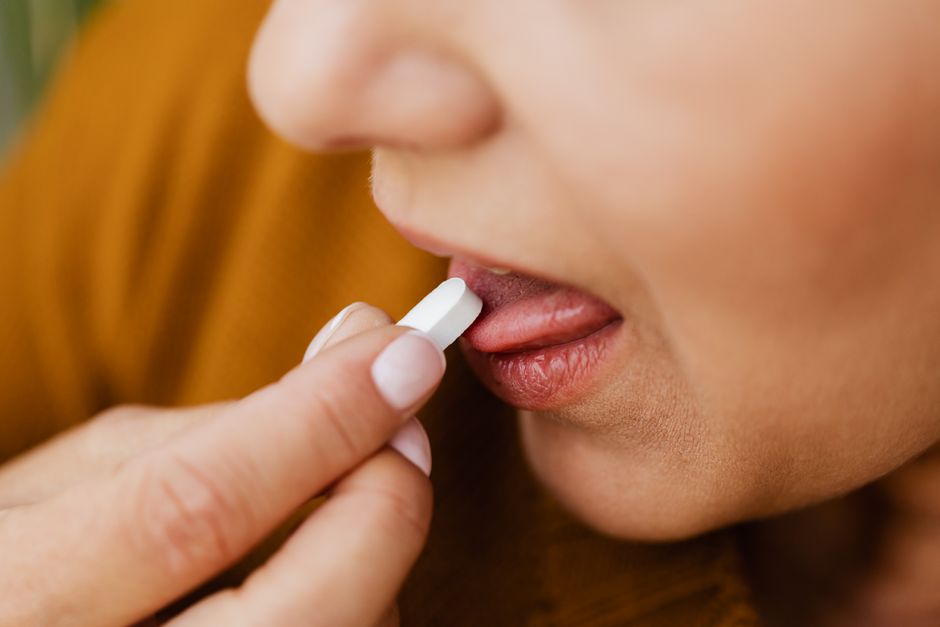
Most adult women need 1.3 milligrams of vitamin B6 each day. That number comes from the National Institutes of Health and applies to women aged 19 to 50 who are not pregnant or breastfeeding. Women over 50 need slightly more, at 1.5 milligrams daily. Pregnancy and breastfeeding raise the requirement further, to 1.9 and 2.0 milligrams respectively.
Those are the daily amounts needed to avoid deficiency. They are not the same as the amounts sometimes sold in supplements, which can be far higher. Understanding that difference matters more than most people realize.
What Is the Recommended Daily Amount of Vitamin B6 for Women?
The Recommended Dietary Allowance is set by the Food and Nutrition Board at the National Academies of Sciences, Engineering, and Medicine. It reflects the amount needed to maintain healthy levels in the blood and support normal body functions in most healthy people.
Here is how the numbers break down by life stage:
- Women aged 19 to 50: 1.3 mg per day
- Women aged 51 and older: 1.5 mg per day
- Pregnancy: 1.9 mg per day
- Breastfeeding: 2.0 mg per day
These amounts are small. A single chicken breast, a cup of chickpeas, or a medium potato can cover most of a day’s requirement. Vitamin B6 is found in many common foods, which is why true deficiency is uncommon in the United States among people eating a typical diet.
The RDA is not a target for supplements. It is the amount the body needs from all sources combined — food and supplements together.
How Much Vitamin B6 Per Day Should Women Take in Supplement Form?
For most women, no supplement is needed at all if they eat a varied diet. The body absorbs B6 from food efficiently, and food sources also provide other nutrients that work alongside it.
When a supplement is used, the tolerable upper intake level matters. For adults, that level is 100 milligrams per day from supplements. This is not a recommended dose. It is the highest daily amount unlikely to cause harm in most people. The upper limit applies only to synthetic B6 from supplements and fortified foods, not to B6 found naturally in food.
Many multivitamins contain between 1.7 and 2 milligrams of B6, well within safe range. Standalone B6 supplements, however, often contain 50, 100, or even 500 milligrams per pill. Those doses are far above what the body needs and can cause problems with long-term use.
Some clinicians recommend higher doses of B6 for specific conditions, such as nausea during pregnancy or certain nerve-related issues. That is a decision made with a healthcare provider, not something to start on your own.
Can You Take Too Much Vitamin B6?
Yes. Vitamin B6 is water-soluble, which means the body excretes what it does not use. Many people assume this makes it harmless at any dose. That assumption is wrong.
High doses of B6 from supplements, taken over months or years, can cause a condition called peripheral neuropathy. This involves nerve damage that leads to numbness, tingling, or burning in the hands and feet. It can also affect balance and walking.
The evidence linking high-dose B6 to nerve damage is well established. What is less clear is the exact dose and duration that triggers it in any given person. Some case reports describe neuropathy at doses of 200 milligrams daily or higher. Others suggest problems can occur at lower doses with prolonged use. Individual sensitivity varies.
What is clear is that the risk comes from supplements, not food. No cases of B6 toxicity from food alone have been documented, because the amounts in food are too small to cause harm.
If you take a B6 supplement and notice tingling or numbness in your hands or feet, that is a reason to stop and talk to a doctor. In many cases, the symptoms improve after stopping the supplement, but recovery can take time and may not be complete.



Who Actually Needs a Vitamin B6 Supplement?
True vitamin B6 deficiency is rare in the United States. When it does occur, it is usually tied to specific situations rather than a simple lack of B6 in the diet.
People who may be at higher risk include those with certain kidney conditions, liver disease, or malabsorption disorders. Some medications can also lower B6 levels, including certain drugs used to treat tuberculosis and some seizure medications. Heavy alcohol use over time can reduce B6 absorption and metabolism as well.
Older adults may absorb B6 less efficiently, which is part of why the RDA rises slightly after age 50. But even then, food sources are usually enough.
Pregnancy is a special case. Some research suggests B6 can help with nausea during early pregnancy. The American College of Obstetricians and Gynecologists lists vitamin B6 among options that may help with nausea and vomiting in pregnancy, often combined with doxylamine. The dose used in this context is typically determined by a healthcare provider. It is not a reason to self-prescribe high-dose B6 during pregnancy.
For most women, the answer to whether they need a supplement is no. A diet that includes poultry, fish, potatoes, chickpeas, bananas, and fortified cereals will cover the requirement easily.
What Foods Are High in Vitamin B6?
Vitamin B6 is widespread in both animal and plant foods. This is one reason deficiency is uncommon. The table below shows approximate B6 content in some common foods, based on USDA data.
| Food | Approximate B6 (mg) |
|---|---|
| Chicken breast, 3 oz cooked | 0.5 |
| Salmon, 3 oz cooked | 0.6 |
| Chickpeas, 1 cup canned | 1.1 |
| Potato, 1 medium with skin | 0.4 |
| Banana, 1 medium | 0.4 |
| Fortified cereal, 1 serving | Varies, often 0.5–2.0 |
A single cup of chickpeas provides close to a full day’s requirement for most adult women. A serving of salmon covers nearly half. Combining a few of these foods across the day makes it easy to meet the RDA without any supplement at all.
Cooking can reduce B6 content somewhat, since the vitamin is sensitive to heat and can leach into cooking water. Roasting or steaming tends to preserve more than boiling. Even with some loss, food sources remain more than adequate for most people.
Does Vitamin B6 Have Benefits Beyond Preventing Deficiency?
Vitamin B6 plays a role in more than 100 enzyme reactions in the body. It is involved in protein metabolism, red blood cell formation, and the production of neurotransmitters like serotonin and dopamine. These functions are well established.
What is less clear is whether taking extra B6 — above the RDA — provides benefits for conditions like depression, premenstrual syndrome, or heart disease. The evidence here is mixed.
Some studies suggest B6 may help with premenstrual symptoms, particularly mood-related ones. Other studies show little or no effect. The research on B6 and depression has similarly produced inconsistent results. Some trials indicate a possible benefit when combined with other nutrients, while others find none.
For heart health, early research suggested B6 might lower homocysteine levels, a marker linked to cardiovascular risk. But lowering homocysteine through B vitamins has not been shown to reduce actual heart attacks or strokes in large trials. The marker changed; the outcomes did not.
This is an important distinction. A nutrient can affect a biological marker without changing real-world health outcomes. Marketing often blurs that line. When a supplement claims to “support mood” or “promote heart health,” it is usually leaning on marker data or small studies, not on evidence that it prevents disease.
The most honest summary is this: B6 is essential for normal body function, and getting enough from food is important. Taking large doses in hopes of treating or preventing specific conditions is not supported by strong evidence for most of those uses.
Frequently Asked Questions
How much vitamin B6 should a woman take daily?
Most adult women need 1.3 milligrams per day, rising to 1.5 milligrams after age 50. Pregnancy and breastfeeding increase the need to 1.9 and 2.0 milligrams respectively.
Is 100 mg of vitamin B6 too much for a woman?
Yes, 100 milligrams per day is the tolerable upper intake level for adults, not a recommended amount. Long-term use at or near this dose from supplements has been linked to nerve damage.
Can I get enough vitamin B6 from food alone?
For most women, yes. Foods like chickpeas, salmon, chicken, potatoes, and bananas provide enough B6 to meet the daily requirement without any supplement.
What are the symptoms of too much vitamin B6?
High-dose B6 from supplements can cause numbness, tingling, or burning in the hands and feet due to nerve damage. These symptoms usually improve after stopping the supplement, but recovery can take time.
