
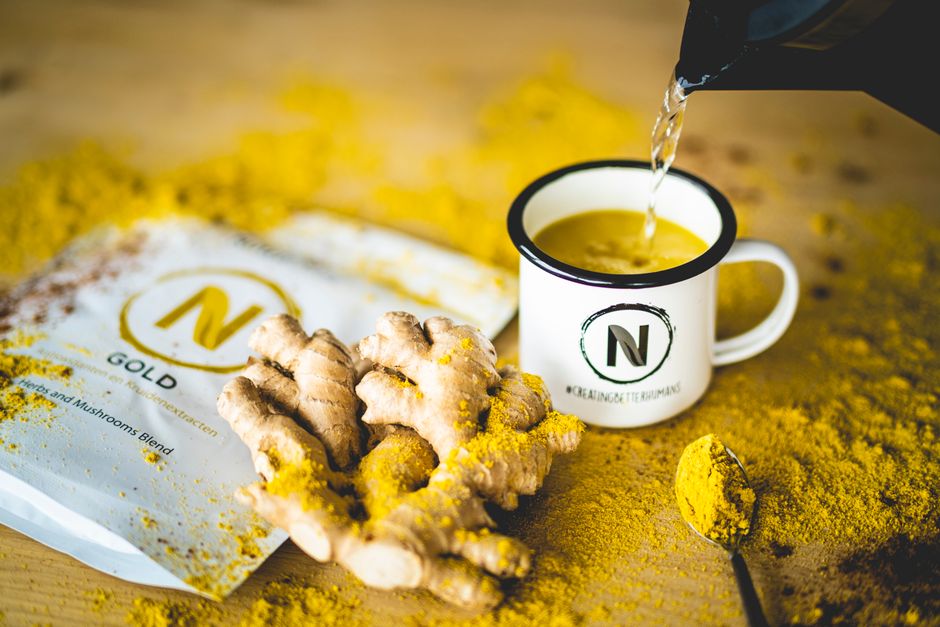
There is no official daily dose of turmeric for inflammation. No health agency has set a recommended amount, because turmeric is a spice and not a regulated medicine. The amount used in most clinical research is built around curcumin, the main active compound in turmeric, and commonly falls in a range that is difficult to reach from food alone. That gap between kitchen use and study doses is where most confusion starts.
Turmeric is the yellow root used in curry powder and mustard. Curcumin is one compound inside it. The two are not interchangeable, and that distinction matters more than any single number. This article explains what the research actually used, why absorption is the real problem, and what a sensible daily approach looks like for someone dealing with ongoing inflammation.
What dose of turmeric daily for inflammation does research actually use?
Clinical studies rarely give people turmeric powder. Most give a concentrated curcumin extract, and the amounts vary widely between trials. A common range in the published literature is roughly 500 to 1,000 mg of curcumin per day, often split into two or three doses. Some trials have used more, and some have used less.
That range is not a recommendation. It is a description of what researchers chose to test. The doses differ because the studies differ — different health conditions, different formulations, different lengths of time. There is no single agreed figure that has emerged as standard.
Here is the part that surprises people. A teaspoon of ground turmeric from your spice rack contains only a small fraction of curcumin — often far less than 100 mg, and the exact amount depends on the root and how it was processed. Reaching 500 mg of curcumin from food would mean eating very large amounts of turmeric, which is not practical and would be unpleasant.
So when you read that “turmeric reduces inflammation,” understand that the studies were usually testing an extract, not the powder in your cupboard. Those are different things at very different concentrations.
Why curcumin is hard for your body to absorb
Curcumin has poor bioavailability. That is the technical way of saying your body does not absorb much of it, and what it does absorb gets cleared quickly. Taken on its own, most curcumin passes through the gut without entering the bloodstream in meaningful amounts.
This is well established and not in dispute. It is also the reason many supplement makers add other ingredients — most often black pepper extract, known as piperine — to try to increase absorption. Some studies indicate piperine can raise blood levels of curcumin. Whether that translates into better symptom relief is a separate question that the evidence has not firmly answered.
Newer formulations attempt the same goal through different chemistry. Some show improved absorption in lab measurements. Improved absorption is not the same as proven clinical benefit. A supplement can get more curcumin into your blood and still fail to change how you feel.
Does turmeric actually reduce inflammation in people?
The evidence is mixed, and it depends heavily on what you are measuring. Laboratory studies show curcumin can influence several inflammatory pathways at the cellular level. That is real biology. But what happens in a petri dish does not automatically happen in a human body with a complex condition.
Some human trials have reported reductions in markers of inflammation, such as C-reactive protein, in specific groups of people. Other trials have found little or no difference compared with placebo. Results vary by condition, dose, formulation, and study quality. Many trials are small, which makes their findings less reliable.
The strongest interest has been in joint conditions such as osteoarthritis, where some studies suggest modest improvements in pain and function. Even there, the evidence is not strong enough to present curcumin as a reliable treatment. It is not a substitute for proven therapies, and anyone with a diagnosed inflammatory disease should treat it as a possible add-on discussed with their doctor — not a replacement.
One clarification worth making: “anti-inflammatory” gets used loosely in marketing. A food or supplement that nudges one inflammatory marker is not the same as a drug that treats an inflammatory disease. Those are different claims with different levels of proof.
Is it safe to take turmeric every day?
Turmeric as a food spice is generally considered safe at normal culinary amounts. Concentrated curcumin supplements are a different matter and carry more real risks.
Turmeric contains oxalates, and high intakes have been linked to kidney stones in some people. Curcumin can also interfere with blood clotting, which matters for anyone taking blood thinners or preparing for surgery. It may affect how the body handles certain medications. Some people experience stomach upset, nausea, or diarrhea.
High-dose curcumin supplements have been associated with liver injury in a small number of reported cases. This is uncommon, but it is documented, and it is a reason not to treat large doses as automatically harmless because the source is a plant.
Talk to your doctor before starting a curcumin supplement if you:
- Take blood thinners or any prescription medication
- Have a history of kidney stones
- Have liver disease
- Are scheduled for surgery
- Are pregnant or breastfeeding
For pregnancy and breastfeeding specifically, there are no established clinical guidelines for curcumin supplement dosing. The cautious position is to avoid concentrated supplements and stick to turmeric used as a food spice, and to confirm with a clinician.
How to approach turmeric practically
If your goal is general dietary support, using turmeric as a spice is reasonable and low-risk. Add it to soups, rice, lentils, scrambled eggs, or warm milk. Pair it with a source of fat, since curcumin is fat-soluble, and with black pepper if you like — traditional cooking does this naturally.
If you are considering a supplement for a specific problem, the honest framing is this: it is a reasonable thing to discuss with your doctor, not a proven fix. The realistic goal with most supplements for inflammation is modest support or symptom management, not cure. Anyone promising a cure is overselling.
A few practical points help you avoid wasting money:
- Look for the actual curcumin amount, not just the total turmeric powder weight
- Be skeptical of absorption claims that are not backed by human studies
- Start low if you and your doctor decide to try one
- Give it a fair trial, then stop if you notice no difference
Diet and lifestyle remain the better-established levers for inflammation. That is not a dismissal of turmeric — it is an honest ranking of what the evidence supports most strongly.
What about turmeric in food versus supplements?
These serve different purposes and should not be confused. Food amounts of turmeric are safe, cheap, and easy to include in a balanced diet. They will not deliver the curcumin doses used in studies.
Supplements deliver concentrated curcumin, which is what the research actually tested. They also carry the risks described above and vary enormously in quality and labeling. Two products claiming the same dose can behave very differently in the body.
If you want culinary turmeric, use it freely as a spice. If you want to try a curcumin supplement, treat it as a decision to make with a clinician, not a casual purchase.
Frequently Asked Questions
How much turmeric should I take daily for inflammation?
There is no official recommended dose. Most clinical studies used roughly 500 to 1,000 mg of curcumin per day from an extract, but that reflects research choices, not a medical recommendation.
Can I just eat turmeric powder instead of a supplement?
You can eat turmeric as a spice safely, but food amounts contain far less curcumin than the doses studied. Reaching study-level doses from food alone is not practical.
Does black pepper really help turmeric work better?
Some studies indicate black pepper extract can increase curcumin absorption. Whether that improved absorption leads to better symptom relief in people has not been firmly established.
Is turmeric safe to take every day?
Turmeric as a food spice is generally safe for most people. Concentrated curcumin supplements carry risks, including interactions with blood thinners and rare reports of liver injury, so check with your doctor first.
