
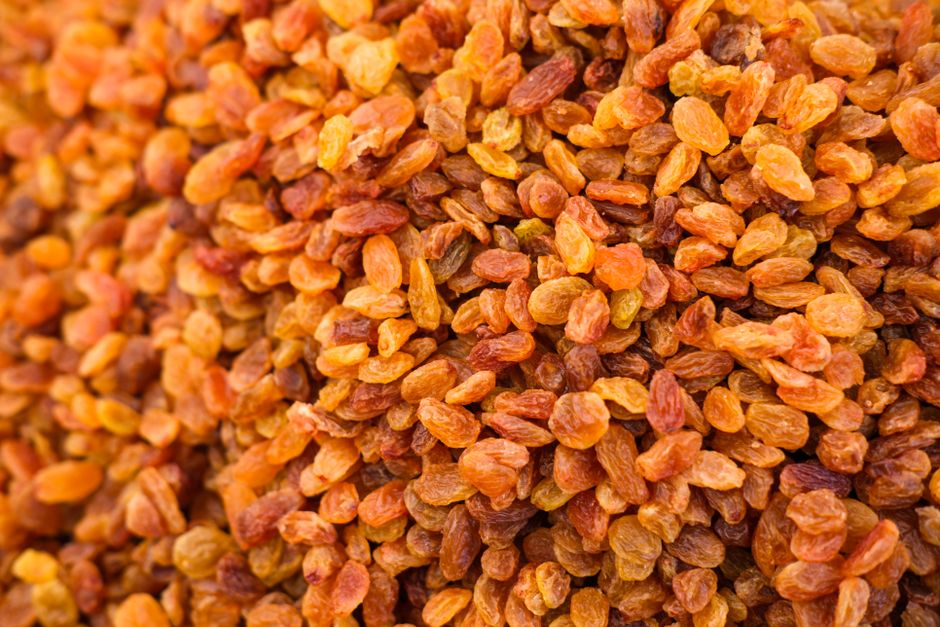
Raisins are one of the most sugar-dense fruits you can eat. A 1.5-ounce box of dark seedless raisins — the kind sold in small snack boxes — contains about 21 grams of sugar. That is roughly the same amount of sugar as a standard 12-ounce can of cola. The difference is that raisins also bring fiber, potassium, and antioxidants to the table, while soda brings nothing but sugar and water.
The sugar in raisins is natural, not added. It comes from the grapes themselves, concentrated when the water is removed during drying. A cup of fresh grapes has about 23 grams of sugar, but a cup of raisins has around 108 grams. Same fruit, very different concentration. That matters if you are watching your sugar intake, managing blood sugar, or just trying to understand what is actually in your food.
How Much Sugar Is In Raisins Nutrition Facts?
A 100-gram serving of raisins contains about 59 grams of sugar and 79 grams of total carbohydrates. That is the standard reference figure from the USDA FoodData Central database. For most people, 100 grams is a large serving — closer to two-thirds of a cup.
Here is what the numbers look like across common serving sizes:
| Serving Size | Sugar (grams) | Total Carbs (grams) | Calories |
|---|---|---|---|
| 1 small box (1.5 oz / 43 g) | ~21 | ~33 | ~129 |
| 1/4 cup (about 40 g) | ~24 | ~32 | ~120 |
| 1/2 cup (about 80 g) | ~47 | ~63 | ~240 |
| 100 grams | ~59 | ~79 | ~299 |
The exact sugar content varies slightly by grape variety and how dry the raisins are. Golden raisins tend to have a similar sugar profile to dark ones. The type of raisin matters less than the amount you eat.
One clarification worth making: the sugar in raisins is mostly fructose and glucose, the same sugars found in table sugar and fruit juice. “Natural” does not mean “low sugar.” Your body processes the sugar in raisins the same way it processes sugar from any source. The difference lies in what comes packaged with it.
Are Raisins Healthier Than Other Sweet Snacks?
Raisins contain fiber, potassium, iron, and polyphenol antioxidants that candy and soda do not. A 1.5-ounce box provides roughly 2 grams of fiber and about 320 milligrams of potassium. That is a real nutritional difference, not a marketing claim.
But the comparison is not as clean as it sounds. Raisins are still a concentrated sugar source. Eating a large handful delivers a lot of sugar quickly, and the fiber content — while meaningful — is not enough to offset that load for everyone.
Research on raisins and health outcomes is mixed. Some studies suggest raisins can be part of a healthy diet without causing the blood sugar spikes you might expect from their sugar content. The fiber and the structure of the dried fruit slow absorption somewhat compared to juice or candy. Other research indicates that raisins raise blood sugar in ways that matter for people with diabetes.
The honest position: raisins are a better choice than candy or soda in terms of nutrient density, but they are not a low-sugar food. They should be treated as a concentrated fruit serving, not a free-for-all snack.
Do Raisins Spike Blood Sugar?
Raisins have a moderate glycemic index — typically in the range of 54 to 64, depending on the variety and the study. That is lower than white bread or a baked potato but higher than most fresh fruits. The fiber content and the dense structure of the dried fruit slow digestion somewhat compared to fruit juice.
For people without diabetes, a normal serving of raisins does not cause problematic blood sugar spikes. The body handles the sugar load, and the fiber helps moderate the response.
For people with type 2 diabetes or insulin resistance, the picture is more nuanced. Some studies suggest raisins do not raise blood sugar as much as their sugar content would predict. Other research shows meaningful post-meal glucose increases. The evidence is mixed, and individual responses vary.
If you have diabetes, the practical approach is to treat raisins like any other carbohydrate source — count them in your meal plan and check your blood sugar response. A 1.5-ounce box has about 21 grams of sugar and 33 grams of total carbs, which is significant for anyone monitoring carbohydrate intake. Some clinicians recommend pairing raisins with protein or fat to blunt the blood sugar response, though the evidence for this strategy specifically with raisins is limited.
How Does Raisin Sugar Compare to Fresh Grapes and Other Dried Fruit?
Drying fruit removes water and concentrates everything else — including sugar. A cup of fresh grapes has about 23 grams of sugar. A cup of raisins has about 108 grams. Same fruit, roughly four to five times the sugar by volume.
That does not make raisins bad. It means portion size matters enormously. People rarely eat a full cup of raisins in one sitting, but it is easy to eat a half cup without thinking about it.
Here is how raisins compare to other common dried fruits per 100 grams:
| Dried Fruit (100 g) | Sugar (grams) | Fiber (grams) |
|---|---|---|
| Raisins | ~59 | ~3.7 |
| Dates (Medjool) | ~66 | ~6.7 |
| Dried figs | ~48 | ~9.8 |
| Dried apricots | ~53 | ~7.3 |
| Prunes | ~38 | ~7.1 |
Raisins are on the higher end for sugar and the lower end for fiber compared to other dried fruits. Prunes and dried figs offer more fiber per gram of sugar. That does not make raisins a poor choice, but it is useful context if fiber is your priority.
How Much Sugar Is Too Much — and Where Do Raisins Fit?
The American Heart Association recommends that women limit added sugar to about 25 grams per day and men to about 36 grams per day. These limits apply to added sugars, not naturally occurring sugars in fruit. Raisins contain no added sugar.
That distinction matters, but it does not give raisins a free pass. The AHA guidance is about added sugar specifically because natural sugar in whole fruit comes with fiber, water, and nutrients. Dried fruit sits somewhere in between — it is whole fruit, but the water is gone and the sugar is concentrated.
A 1.5-ounce box of raisins delivers about 21 grams of sugar. That is close to the daily added-sugar limit for women, even though none of it is added. For someone eating raisins as a snack multiple times a day, the sugar adds up quickly.
The practical takeaway is not to avoid raisins. It is to treat them as a concentrated fruit serving. A quarter cup on oatmeal or in a trail mix is reasonable. Eating them by the handful straight from the bag, several times a day, is where the sugar load becomes significant.
Do Raisins Have Any Nutritional Downsides Beyond Sugar?
Raisins are high in calories relative to their volume, which makes portion control easy to lose track of. A half cup has about 240 calories, mostly from sugar and carbohydrates. That is not a problem in itself, but it adds up fast if you are not measuring.
Raisins also contain a type of fiber and natural sugars that can cause digestive discomfort in some people, especially in large amounts. The fiber is fermentable, which means gut bacteria break it down and produce gas. Most people tolerate normal servings without issue.
One more consideration: raisins are sticky and cling to teeth. Frequent snacking on raisins without brushing can contribute to dental problems. This is not unique to raisins — any sticky, sugary food has the same issue — but it is worth knowing if you eat them throughout the day.
Raisins are not a “superfood” despite what some marketing suggests. They are a convenient, shelf-stable fruit with real nutrients and a lot of concentrated sugar. That is the honest summary. They fit well in a balanced diet when portions are reasonable. They do not fit well as an unlimited snack, especially for people watching blood sugar or calorie intake.
Frequently Asked Questions
How much sugar is in a small box of raisins?
A standard 1.5-ounce box of raisins contains about 21 grams of sugar. That is roughly the same amount as a 12-ounce can of regular soda.
Are raisins high in sugar compared to other fruit?
Yes, raisins are one of the highest-sugar fruits by weight because drying removes water and concentrates the natural sugars. A cup of raisins has about 108 grams of sugar compared to about 23 grams in a cup of fresh grapes.
Can diabetics eat raisins?
People with diabetes can eat raisins in small portions, but they should count them as a carbohydrate source and monitor blood sugar response. A 1.5-ounce box has about 33 grams of total carbohydrates, which is significant for anyone managing blood sugar.
Is the sugar in raisins added sugar?
No, the sugar in raisins is naturally occurring from the grapes themselves. However, the sugar is still concentrated, and your body processes it similarly to other sugars.
