
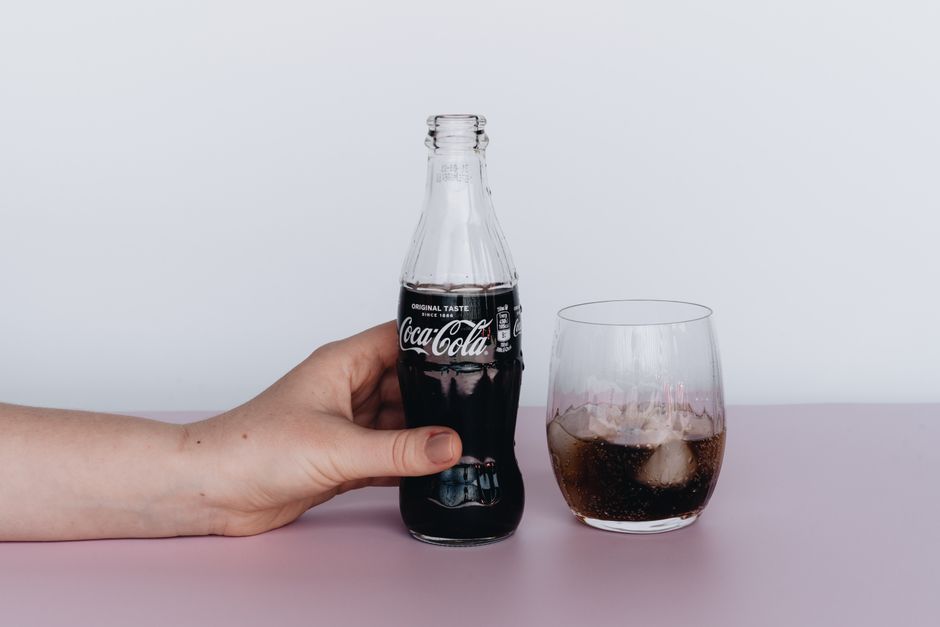
A 12-ounce can of Coca-Cola Classic contains 39 grams of sugar. That equals about 9.75 teaspoons. A 20-ounce bottle, the standard single-serving size at many convenience stores, contains 65 grams of sugar, which is about 16.25 teaspoons. These numbers are based on standard US nutrition labels and have been consistent for years. This guide breaks down exactly what that sugar is, how it affects your body, and how it compares to other drinks.
How Much Sugar Is In A Coke?
A standard 12-ounce can of Coca-Cola Classic has 39 grams of added sugar. This is the same as roughly 9.75 teaspoons. The American Heart Association recommends men consume no more than 36 grams of added sugar per day and women no more than 25 grams. One can of Coke already exceeds the daily limit for women and surpasses the limit for men.
The sugar in Coke is high fructose corn syrup in the United States. In some other countries, Coke is sweetened with cane sugar. Both are roughly half glucose and half fructose. Your body processes them similarly, though the metabolic effects of liquid sugar differ from solid food in important ways.
How Much Sugar Is In Different Sizes of Coke?
Coke is sold in many sizes. The sugar content scales directly with volume. Here is the breakdown for standard US sizes:
| Coke Size | Total Sugar | Teaspoons of Sugar |
|---|---|---|
| 7.5 oz mini can | 25 g | 6.25 tsp |
| 12 oz can | 39 g | 9.75 tsp |
| 16.9 oz bottle | 55 g | 13.75 tsp |
| 20 oz bottle | 65 g | 16.25 tsp |
| 1 liter bottle | 108 g | 27 tsp |
These numbers come directly from Coca-Cola’s published nutrition information. The grams are exact. The teaspoon conversions are rounded to the nearest quarter teaspoon. One teaspoon of sugar weighs about 4 grams.
What Does 39 Grams of Sugar Mean For Your Body?
When you drink a can of Coke, the sugar enters your bloodstream quickly. Liquid sugar requires no digestion breakdown like solid food. Your blood glucose rises within minutes.
Your pancreas responds by releasing insulin. Insulin helps move glucose from your blood into your cells for energy. But a sudden 39-gram sugar load is more than your body needs at once. The excess gets stored, first as glycogen in the liver and muscles, then as fat when those stores are full.
The fructose portion of the sugar is processed almost entirely by the liver. Unlike glucose, fructose does not trigger insulin release or suppress the hunger hormone ghrelin. This means liquid fructose calories do not make you feel full the way solid food does. You can drink a 20-ounce bottle of Coke and still feel hungry shortly after.
Regular consumption of sugary drinks is associated with weight gain, fatty liver disease, and an increased risk of type 2 diabetes. The relationship between sugar-sweetened beverages and metabolic disease is one of the most consistent findings in nutritional epidemiology. This does not mean one can of Coke causes harm. It means habitual daily consumption carries measurable risk.





Is High Fructose Corn Syrup Worse Than Regular Sugar?
High fructose corn syrup and table sugar are nearly identical in composition. HFCS used in sodas is typically 55 percent fructose and 45 percent glucose. Table sugar is 50 percent fructose and 50 percent glucose. The difference is negligible.
Your body cannot tell them apart once digested. Both deliver the same fructose and glucose molecules to your bloodstream and liver. Claims that HFCS is uniquely toxic or that cane sugar is somehow healthier in soda are not supported by solid evidence.
The real issue is not the type of sugar. It is the amount of liquid sugar consumed and the absence of any accompanying nutrients, fiber, or protein to slow absorption.
How Does Coke Compare To Other Drinks?
Coke is not uniquely high in sugar among sodas. It is actually in the middle of the range. Many fruit drinks, sweetened teas, and energy drinks contain similar or higher amounts.
Orange juice is often perceived as healthy but contains about 21 grams of sugar per 8-ounce serving. A 12-ounce glass has about 31.5 grams. That approaches the sugar content of a can of Coke, though orange juice also provides vitamin C and potassium.
Sports drinks like Gatorade contain about 14 grams of sugar per 8 ounces. A 20-ounce bottle has 34 grams. Sweetened iced tea can range from 20 to 45 grams per bottle depending on the brand. Many coffee drinks from chains contain 40 to 60 grams of sugar in a single serving.
The key distinction is that Coke provides zero nutritional value beyond calories. It has no vitamins, minerals, or beneficial compounds. It is pure sugar water with flavoring and phosphoric acid.
What About Diet Coke and Zero Sugar?
Diet Coke and Coke Zero contain no sugar. They are sweetened with artificial sweeteners such as aspartame and acesulfame potassium. A 12-ounce can contains zero grams of sugar and zero calories.
The health picture for diet sodas is more complicated than for regular soda. Large observational studies have found associations between daily diet soda consumption and increased risk of metabolic syndrome and type 2 diabetes. However, these studies cannot prove cause and effect. People who drink diet soda may have other dietary patterns that explain the association.
Randomized controlled trials on artificial sweeteners have produced mixed results. Some studies suggest they may alter gut bacteria or affect glucose metabolism. Other studies find no significant effect. The evidence is genuinely uncertain.
What is clear is that replacing regular soda with diet soda reduces sugar intake dramatically. For someone trying to cut sugar, switching from regular to diet is a meaningful step. For someone looking for the healthiest option, water remains the best choice.
How Much Sugar Is Safe Per Day?
Major health organizations have set recommended limits for added sugar. These limits apply to all added sugars, not just soda.
The American Heart Association recommends no more than 36 grams of added sugar per day for men and 25 grams for women. The World Health Organization recommends keeping added sugar below 10 percent of daily calories. For a 2,000-calorie diet, that equals about 50 grams per day. WHO states that reducing to below 5 percent, about 25 grams, provides additional health benefits.
The Dietary Guidelines for Americans recommend limiting added sugar to less than 10 percent of daily calories. For a 2,000-calorie diet, that is 50 grams per day.
One 12-ounce can of Coke provides 39 grams. That is 78 percent of the WHO’s 50-gram limit. It exceeds the AHA limit for women entirely. A 20-ounce bottle at 65 grams exceeds both the WHO limit and the AHA limit for men.
Does Coke’s Sugar Content Vary By Country?
Yes, but the difference is smaller than many online claims suggest. Coke in the United States uses high fructose corn syrup. Coke in Mexico and many European countries uses cane sugar. Both are about half fructose and half glucose.
The total sugar content is similar across countries. A 12-ounce serving contains roughly 39 grams regardless of the sweetener source. Some consumers report that Mexican Coke tastes sweeter or smoother, but the actual sugar content is nearly identical.
The idea that cane sugar Coke is healthier because it avoids HFCS is not supported by evidence. Your body metabolizes both the same way.
Frequently Asked Questions
How many teaspoons of sugar are in a can of Coke?
A 12-ounce can of Coca-Cola Classic contains 39 grams of sugar, which equals about 9.75 teaspoons. A 20-ounce bottle contains 65 grams, about 16.25 teaspoons.
Is Coke Zero actually sugar-free?
Yes, Coke Zero contains zero grams of sugar and zero calories. It is sweetened with artificial sweeteners instead of sugar.
How much sugar is in a bottle of Coke?
A 16.9-ounce bottle contains 55 grams of sugar, and a 20-ounce bottle contains 65 grams. A 1-liter bottle contains 108 grams of sugar.
What is the daily recommended limit for sugar?
The American Heart Association recommends no more than 36 grams per day for men and 25 grams per day for women. The World Health Organization recommends keeping added sugar below 50 grams per day for a 2,000-calorie diet.
