
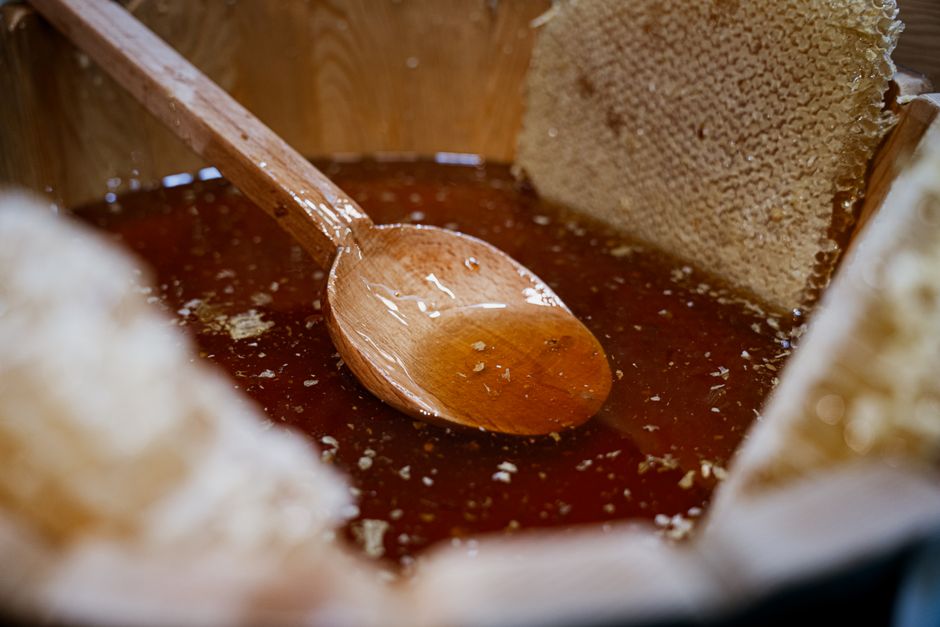
Honey is about 82 percent sugar by weight. A single tablespoon of honey contains roughly 17 grams of sugar. That is more sugar per tablespoon than table sugar, which has about 12.6 grams. These numbers matter because honey is often seen as a healthy alternative to refined sugar. The truth is more complicated.
How Much Sugar Is in a Tablespoon of Honey?
A standard 21-gram tablespoon of honey contains about 17 grams of sugar. That leaves only 4 grams for water, trace minerals, and enzymes. The United States Department of Agriculture (USDA) reports this data in its food composition database.
To put that in perspective, one tablespoon of white granulated sugar has about 12.6 grams of sugar. Honey delivers roughly 35 percent more sugar per spoonful. This is because honey is denser than crystalline sugar. You get more sugar in a smaller volume.
Honey is not dilute. It is a concentrated sugar solution. Bees evaporate water from nectar until the sugar concentration reaches around 80 percent. That is why honey never spoils and why its sugar content is so high.
How Does Honey Compare to White Sugar and Other Sweeteners?
Comparing sweeteners by volume is misleading. People measure sugar by the spoonful and honey by the spoonful. But they are different densities. A better comparison is by weight.
| Sweetener | Grams of Sugar per Tablespoon | Calories per Tablespoon |
|---|---|---|
| White sugar (granulated) | 12.6 | 48 |
| Honey | 17 | 64 |
| Maple syrup | 12.4 | 52 |
| Agave nectar | 16 | 60 |
| Coconut sugar | 12 | 45 |
Honey has more sugar and more calories per tablespoon than almost any common sweetener. Only agave nectar comes close. This is not a reason to avoid honey. It is a reason to measure it.
Many people assume honey is lower in sugar because it tastes sweeter than sugar. Honey is about 25 percent sweeter than white sugar. That means you can use less honey to achieve the same sweetness level. But most people do not adjust their measurements. They swap one tablespoon of sugar for one tablespoon of honey and end up consuming more sugar.
Does the Type of Honey Change the Sugar Content?
All honey is mostly sugar. The exact ratio of fructose to glucose varies by flower source. Clover honey has a different fructose-glucose ratio than manuka honey or acacia honey. But the total sugar content stays between 78 and 83 percent regardless of variety.
Manuka honey is often marketed as the healthiest honey. It is not lower in sugar. A tablespoon of manuka honey still contains about 16 to 17 grams of sugar. The antibacterial properties of manuka come from methylglyoxal, not from a different sugar profile.
Raw honey and processed honey also have the same sugar content. Filtering and pasteurization remove pollen and kill yeast. They do not remove sugar. The USDA database does not show any meaningful difference in sugar concentration between raw and processed honey.
If you see a honey labeled as “low sugar” or “sugar free,” it is not honey. It is a sugar substitute product that looks like honey. Real honey cannot be low sugar. The bees do not make it that way.





How Much Sugar In Honey Is Too Much?
The American Heart Association recommends that women consume no more than 25 grams of added sugar per day and men no more than 36 grams. One tablespoon of honey provides 17 grams. That is 68 percent of the daily limit for women and 47 percent for men in a single tablespoon.
These limits apply to added sugars. Honey is considered an added sugar by the FDA when it is used as a sweetener. The FDA’s 2020-2025 Dietary Guidelines for Americans state that added sugars should be less than 10 percent of total daily calories. For a 2000-calorie diet, that is 50 grams of added sugar per day.
Three tablespoons of honey hit that limit. Most people do not stop at one tablespoon. A typical serving of honey in tea or on oatmeal is closer to two tablespoons. A smoothie with honey can easily contain three or four tablespoons.
Honey contains trace amounts of B vitamins, vitamin C, and minerals like calcium and iron. The amounts are negligible. You would need to eat several cups of honey to reach meaningful levels of any nutrient. That would also deliver hundreds of grams of sugar. Honey is not a significant source of vitamins or minerals in normal serving sizes.
Does Honey Spike Blood Sugar Differently Than Sugar?
Honey has a lower glycemic index than white sugar. White sugar has a GI of about 65. Honey has a GI that ranges from 45 to 64 depending on the variety. Acacia honey has a lower GI. Clover honey is closer to the middle.
Glycemic index measures how quickly a food raises blood sugar. A lower GI means a slower, more gradual rise. This is often cited as a reason honey is healthier than sugar. The difference is real but small.
Research published in the Journal of the American College of Nutrition found that honey caused a slightly lower blood sugar response than pure glucose. But the response was still significant. Honey is not a low-glycemic food. It is a moderate-glycemic food.
For people with diabetes, honey must be counted as sugar. The American Diabetes Association includes honey in its list of added sugars that should be limited. Replacing sugar with honey does not reduce total carbohydrate intake. It usually increases it.
What Are the Common Misconceptions About Honey and Sugar?
The biggest misconception is that honey is a free food. People pour it into tea, yogurt, and smoothies without thinking about the sugar content. Honey is sugar. It should be treated like sugar.
- Honey is not a weight loss aid. Some studies suggest honey may have a modest effect on metabolism. The evidence is weak. No study has shown that eating honey leads to weight loss compared to eating the same amount of sugar.
- Honey does not cure allergies. Local honey is widely claimed to relieve seasonal allergies. The evidence does not support this. A 2002 study published in the Annals of Allergy, Asthma & Immunology found no difference between honey and placebo for allergy symptoms.
- Honey is not a health food. It has antioxidants, especially in darker varieties. But the amount is small. You would get more antioxidants from a single serving of berries than from several tablespoons of honey.
- Raw honey is not safer than processed honey. Raw honey can contain spores of Clostridium botulinum. This is dangerous for infants under one year old. The CDC warns against giving any honey to children under 12 months.
Another misconception is that honey from local farmers is lower in sugar. It is not. The sugar content of honey is determined by the bees, not the beekeeper. Local honey has the same sugar concentration as store-bought honey.
How to Use Honey Without Overdoing the Sugar
Measure honey by weight if possible. A tablespoon of honey weighs 21 grams. If you use a measuring spoon, level it off. Do not heap the spoon. A heaping tablespoon of honey can contain 25 grams of sugar or more.
Use honey as a replacement for sugar, not as an addition. If a recipe calls for half a cup of sugar, try a third of a cup of honey. Reduce the liquid in the recipe by about a quarter cup because honey adds moisture. This keeps the sugar content roughly the same.
Read labels on packaged foods that contain honey. Granola, salad dressings, and barbecue sauces often list honey as an ingredient. The sugar content on the nutrition label includes all sources, including honey. Look at total grams of sugar per serving, not just the ingredient list.
Consider whether the flavor of honey adds something to the food. Honey has a distinct taste. If you are using it purely for sweetness, you might be better off with a smaller amount of a different sweetener. If you want the flavor, use honey but use less of it.
The healthiest approach is to treat honey like any other sugar. Use it intentionally. Enjoy it. But do not pretend it is something it is not.
Frequently Asked Questions
How much sugar is in a teaspoon of honey?
A standard 7-gram teaspoon of honey contains about 5.7 grams of sugar. This is roughly the same amount of sugar as a teaspoon of white sugar.
Is honey healthier than white sugar?
Honey has trace antioxidants and a slightly lower glycemic index, but the difference is small. Both are high in sugar and should be limited.
Can people with diabetes eat honey?
People with diabetes can eat honey but must count it as sugar. It raises blood glucose and should be included in daily carbohydrate limits.
Does raw honey have less sugar than processed honey?
No. Raw and processed honey have the same sugar content. Processing removes pollen and yeast but does not change the sugar concentration.
