
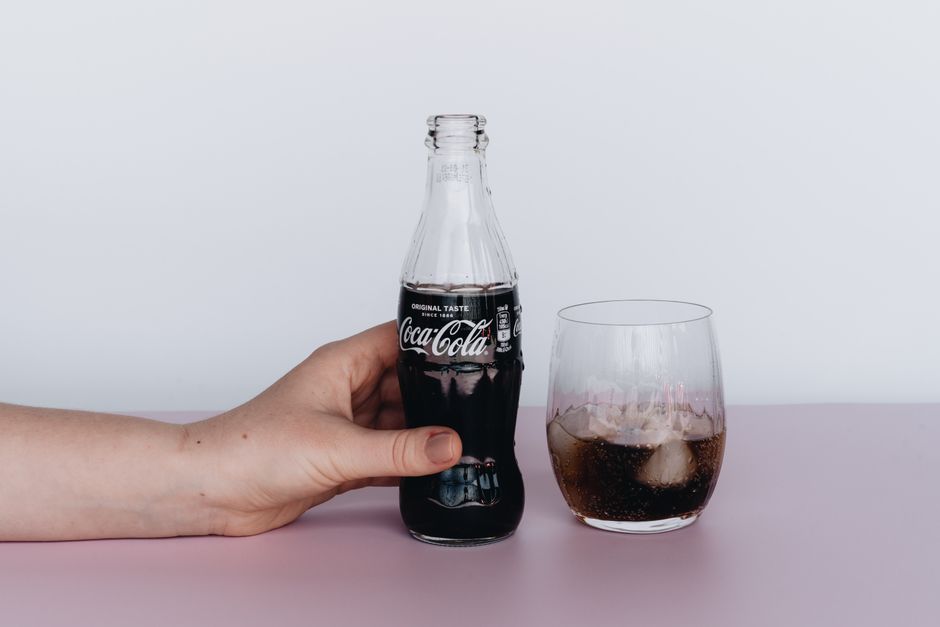
A standard 12-ounce can of Coca-Cola contains 39 grams of sugar. That equals about 9.75 teaspoons of added sugar. For context, that single can puts you over the American Heart Association’s recommended daily limit for added sugar for most adult men (36 grams) and well past the limit for women (25 grams). This guide breaks down what that number means for your body and how it compares to other drinks.
How Much Sugar Is Actually In A Can Of Coke?
A 12-ounce can of regular Coca-Cola has 39 grams of sugar. A 16-ounce bottle has 52 grams. A 20-ounce bottle has 65 grams.
All of that sugar comes from high fructose corn syrup in the US version. In some countries, Coke is sweetened with cane sugar, but the total sugar content is roughly the same.
To picture it: 39 grams of sugar is about 9.75 teaspoons. The US Dietary Guidelines recommend limiting added sugar to less than 10% of daily calories. For a 2,000-calorie diet, that’s about 50 grams per day. One can of Coke uses up most of that allowance before you eat anything.
Why 39 Grams Of Sugar Matters For Your Body
Your body processes liquid sugar differently than sugar in whole food. When you drink a can of Coke, the sugar hits your bloodstream quickly. There is no fiber, fat, or protein to slow absorption.
Blood sugar spikes. Your pancreas releases insulin to bring it down. Over time, frequent spikes can contribute to insulin resistance, which is a risk factor for type 2 diabetes.
The fructose in high fructose corn syrup follows a different path. Your liver processes it. When the liver gets more fructose than it can handle, it converts some to fat. Some research suggests this contributes to fatty liver disease over time, though the exact thresholds in humans are still being studied.
None of this means one can of Coke is toxic. It means regular consumption adds up. The problem is cumulative, not a single can.
How Coke Compares To Other Drinks
Sugar-sweetened beverages are the single largest source of added sugar in the American diet. Here is how a 12-ounce serving of common drinks compares:
| Drink (12 oz) | Sugar (grams) | Approximate teaspoons |
|---|---|---|
| Coca-Cola | 39 | 9.75 |
| Pepsi | 41 | 10.25 |
| Mountain Dew | 46 | 11.5 |
| Orange juice | 33 | 8.25 |
| Sweetened iced tea | 32 | 8 |
| Sports drink | 21 | 5.25 |
| Diet Coke | 0 | 0 |
| Sparkling water | 0 | 0 |
Fruit juice is worth a second look. Many people consider it healthy, but unsweetened orange juice has almost as much sugar as Coke. The difference is that juice also provides vitamin C, potassium, and other nutrients. Coke provides none.
Milk is a different case. A 12-ounce glass of whole milk has about 12 grams of naturally occurring lactose. That is not added sugar, and it comes with protein, calcium, and vitamin D.





What About Diet Coke And Zero Sugar?
Diet Coke and Coke Zero contain no sugar. They use artificial sweeteners instead — aspartame in Diet Coke, aspartame and acesulfame potassium in Coke Zero.
These drinks have essentially zero calories. That is a clear advantage for weight management compared to regular soda.
But “no sugar” does not automatically mean “healthy.” Some observational studies have linked diet soda consumption to higher risk of metabolic conditions, but these studies cannot prove cause and effect. People who drink diet soda may have other habits that explain the association.
The evidence on artificial sweeteners is mixed. Some research suggests they may alter gut bacteria or affect appetite regulation. Other studies find no meaningful effect. The current consensus is that artificial sweeteners are safe at approved levels, but long-term health effects are not fully settled.
If you are choosing between regular and diet soda, diet is better for blood sugar control and calorie intake. If you are choosing between diet soda and water, water is the clearer choice for hydration and overall health.
How Much Sugar Should You Actually Have Per Day?
The American Heart Association recommends no more than 36 grams of added sugar per day for men and 25 grams for women. The World Health Organization suggests keeping added sugar below 10% of daily calories, which is about 50 grams on a 2,000-calorie diet.
These are limits, not targets. There is no biological need for added sugar. Your body can get all the glucose it needs from carbohydrates in vegetables, fruits, grains, and dairy.
One can of Coke puts a woman at 156% of the recommended daily limit. A man at 108%. Two cans exceed both limits before accounting for any food.
The average American consumes about 77 grams of added sugar per day, according to national survey data. That is roughly 60 pounds of added sugar per person per year.
Does Coke’s Sugar Content Differ By Size?
The sugar scales directly with the serving size. Here are the exact numbers for common Coca-Cola package sizes:
- 7.5 oz mini can: 25 grams
- 12 oz standard can: 39 grams
- 16.9 oz bottle: 52 grams
- 20 oz bottle: 65 grams
- 1 liter bottle: 108 grams
Restaurant fountain drinks are the hardest to track. A small at many fast-food chains is 16 ounces. A large can be 32 ounces or more. At 32 ounces, you are looking at roughly 104 grams of sugar — more than four times the recommended daily limit.
When you order soda at a restaurant, you rarely know the exact size. This makes it easy to consume far more sugar than you intend.
Why Liquid Sugar Is Different From Sugar In Food
Your brain tracks calories from food differently than calories from drinks. Solid food triggers fullness signals. Liquid calories do not to the same degree.
Studies consistently show that people do not compensate for calories consumed as beverages. If you drink a 140-calorie can of Coke, you do not automatically eat less at your next meal. Those calories are simply added on top of your usual intake.
This is one reason sugar-sweetened beverages are linked to weight gain more strongly than any other single food or drink category. The calories pass through without registering as food.
There is also the matter of dental health. Sugar feeds bacteria in your mouth, which produce acid that erodes tooth enamel. The acid in Coke itself adds to this effect. Frequent sipping throughout the day is worse than drinking one can quickly because it keeps sugar and acid in contact with your teeth longer.
How To Reduce Soda Sugar Without Going Cold Turkey
If you drink soda regularly, cutting it out entirely is hard. Caffeine withdrawal and sugar cravings are real. Gradual reduction tends to work better than sudden elimination.
Some practical approaches:
- Dilute soda with sparkling water. Start with 75% soda, 25% water. Shift the ratio over weeks.
- Switch to a smaller size. A 7.5 oz mini can has 25 grams instead of 39.
- Replace one soda per day with unsweetened sparkling water or plain water.
- If you drink soda for caffeine, consider coffee or tea. You get caffeine without the sugar.
- Keep soda out of the house. Making it inconvenient reduces consumption.
None of these are medical prescriptions. They are practical strategies that work for many people. The evidence does not support any single “best” method for reducing soda intake — the approach that works is the one you can sustain.
What The Sugar Label Does Not Tell You
Nutrition labels in the US now list “added sugars” separately from total sugar. This is a useful change. It helps you distinguish between naturally occurring sugar in milk or fruit and sugar added during processing.
Coca-Cola’s label shows 39 grams of total sugar and 39 grams of added sugar. All of it is added. There is no naturally occurring sugar in the product.
The label also shows the percent daily value. For a 12-ounce can of Coke, that is 78% of the daily value based on a 2,000-calorie diet. That percentage is based on the 50-gram limit from the FDA, not the stricter American Heart Association limits.
One thing the label does not show: how quickly the sugar will hit your bloodstream. Glycemic index is not required on labels. Coke has a high glycemic index, meaning it raises blood sugar rapidly. But you would not know that from reading the package.
Frequently Asked Questions
How many teaspoons of sugar are in a can of Coke?
A 12-ounce can of Coke contains 39 grams of sugar, which equals about 9.75 teaspoons. That is more than the recommended daily added sugar limit for most adults.
Is Coke Zero actually sugar-free?
Yes, Coke Zero contains zero grams of sugar and zero calories. It is sweetened with aspartame and acesulfame potassium instead.
How much sugar is in a 20-ounce bottle of Coke?
A 20-ounce bottle of Coke contains 65 grams of sugar, about 16 teaspoons. That is more than double the American Heart Association’s daily limit for women.
Is the sugar in fruit juice the same as the sugar in Coke?
Both contain sugars, but juice has naturally occurring sugars along with vitamins and nutrients, while Coke has only added sugar with no nutritional value. The sugar in juice still raises blood sugar, but juice offers other benefits that soda does not.
