
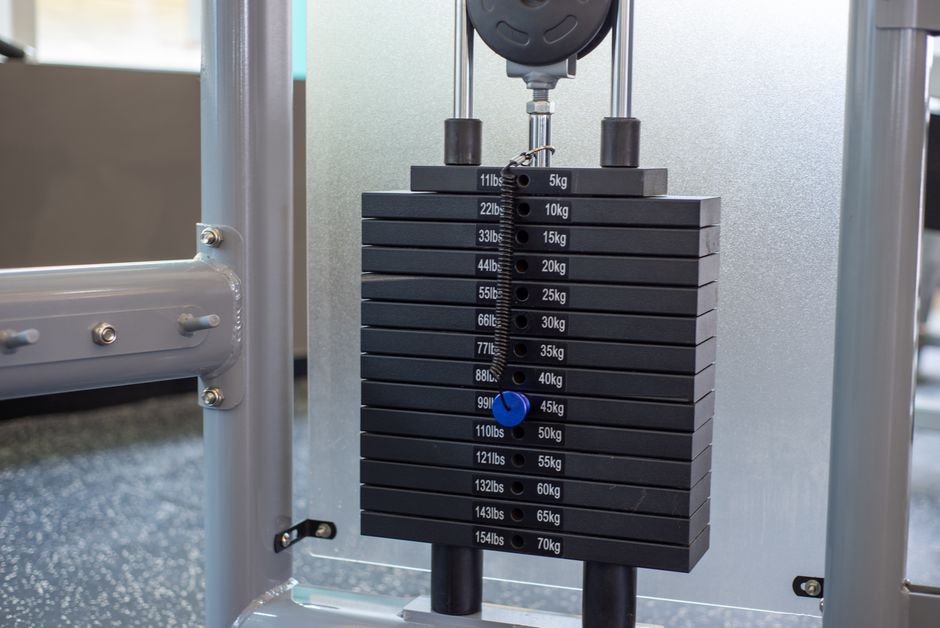
A stone is a unit of weight equal to 14 pounds. That is the whole answer. If you see a number given in stone — a person’s body weight, a baby’s birth weight, a bag of produce in an older British cookbook — multiply it by 14 to get pounds, or by about 6.35 to get kilograms. So 10 stone is 140 pounds, 12 stone is 168 pounds, and 15 stone is 210 pounds.
That simplicity hides a few real traps. The stone is used differently depending on context, it is almost always confused with the “stone” used for food and body weight in the US, and it has largely fallen out of official use in favor of metric units even in the countries that invented it. Here is what the number actually means, where it comes from, and how to convert it without getting it wrong.
How Much Is a Stone in Pounds and Kilograms?
One stone is exactly 14 pounds, or 6.35029 kilograms. That figure is not approximate — the stone is defined in terms of the pound, which is itself defined in terms of the kilogram under international agreement.
The conversion is a straight multiplication. Nothing more complicated is needed.
- 1 stone = 14 lb = 6.35 kg
- 2 stone = 28 lb = 12.70 kg
- 5 stone = 70 lb = 31.75 kg
- 10 stone = 140 lb = 63.50 kg
- 12 stone = 168 lb = 76.20 kg
- 15 stone = 210 lb = 95.25 kg
- 20 stone = 280 lb = 127.01 kg
Going the other way, divide pounds by 14 to get stone. A 200-pound person is 14 stone 4 pounds (14 stone plus the 4-pound remainder). A 150-pound person is 10 stone 10 pounds. The remainder matters, because body weight is rarely a clean multiple of 14.
One point often missed: the “stone” is not a metric unit and is not part of the International System of Units. It survives mainly in the UK and Ireland for body weight, and in a few specialist contexts elsewhere. Official UK guidance on body weight now expresses figures in both metric and imperial, but the stone remains the everyday unit people use to describe themselves.
Why Is the Stone Still Used for Body Weight?
Habit, mostly. The stone has been used in Britain for centuries, and it became the standard unit for weighing people long before metric units were adopted. When a country uses a unit for generations, it sticks — even after official measurement systems change.
The UK formally began moving toward metric in the 1960s, and metric units are now the standard for most trade and official measurement. Body weight is one of the last holdouts. People in the UK and Ireland still commonly say “I’m eleven and a half stone” rather than “73 kilograms,” and bathroom scales sold there often show both.
This creates a real practical problem. A person who grew up with stones reads a number like “13 stone” instantly as a body weight. A person who grew up with pounds reads it as a mystery. This is why medical and fitness contexts increasingly give weights in kilograms or pounds, sometimes both.
There is also a historical wrinkle worth knowing. The stone was not always 14 pounds. Different trades and regions used different stone values — an 8-pound stone for some goods, a 16-pound stone for others. The 14-pound stone became the standard for body weight and general use, but the variation is why old recipes and old trade documents can be misleading if you assume 14 pounds without checking.
Is a Stone the Same as a “Stone” of Food or Body Weight in the US?
No, and this is where confusion gets real. In the US, “stone” is almost never used as a unit of weight. When Americans see the word, it usually refers to something else entirely — a stone fruit like a peach, a kidney stone, a gemstone, or a stone in the sense of a hard object.
If a US reader encounters “stone” in a health or nutrition context, it is almost certainly not a unit of measurement at all. It is a physical object or a medical term. The unit of weight called a stone is a British and Irish convention, and it does not appear in US medical records, US food labels, or US fitness tracking.
This matters for anyone reading health information from different countries. A UK article saying a person “lost two stone” means they lost 28 pounds. A US article would never phrase it that way. If you are comparing weights across sources, always check the unit before drawing any conclusion.




How Do You Convert Stone to Pounds and Kilograms Accurately?
Multiply stone by 14 for pounds, or by 6.35 for a close kilogram figure. For precision, use 6.35029 — the difference only matters at large numbers or in clinical settings.
For body weight, the most reliable approach is to convert to pounds first, then to kilograms, because the pound-to-kilogram factor (0.453592) is the one most clinical and fitness tools use. A 12-stone person is 168 pounds, which is about 76.2 kilograms.
If you are converting the other way — kilograms to stone — divide kilograms by 6.35, or convert to pounds first and divide by 14. Both give the same result. The remainder tells you the pounds left over.
One caution: do not round too early. Converting 11.5 stone to kilograms by multiplying 11.5 by 6.35 gives about 73.0 kilograms. Rounding 11.5 to 12 first and then converting gives 76.2 kilograms — a difference of more than 3 kilograms, or roughly 7 pounds. In a clinical context, that gap matters. Convert the exact figure, then round the final answer if needed.
Where Does the Stone Unit Come From?
The word comes from the practice of using actual stones as weights on balance scales. Different stones weighed different amounts, which is why historical stone values varied so much by trade and region.
The 14-pound stone was standardized in Britain over centuries and became the accepted value for body weight and general goods. It was formalized in British law and later carried into the imperial system. When the UK moved toward metric, the stone was retained as a familiar unit for personal weight even as official trade shifted to kilograms.
The stone is not part of the metric system and is not used in most of the world. It survives because people use it, not because any modern measurement authority requires it.
Does Stone Weight Matter for Health or Medical Decisions?
The unit itself does not. What matters is the underlying weight, and the health measures built on it — body mass index, weight change over time, and clinical thresholds — are all defined in kilograms or pounds, not stone.
Body mass index, for example, is calculated from weight in kilograms divided by height in meters squared. A BMI of 30 or higher is classified as obesity under standard criteria used by the World Health Organization and major health bodies. That threshold is the same whether you describe the weight in stone, pounds, or kilograms — the unit is just a label on the same number.
This is where a common mistake creeps in. People sometimes convert a weight to stone, round it, and then compare it to a threshold. The rounding can shift the result across a category boundary. If a clinical decision depends on the number, use the exact weight in the unit the guideline was written in.
The stone is also not a reliable way to describe weight change in a medical record. A loss of “one stone” means 14 pounds, but “a stone” is sometimes used loosely in conversation to mean “a noticeable amount.” In any health context, ask for the number in pounds or kilograms.
Common Conversions at a Glance
These are the figures people ask about most often. All use the exact 14-pound definition.
| Stone | Pounds | Kilograms (approx.) |
|---|---|---|
| 7 | 98 | 44.5 |
| 8 | 112 | 50.8 |
| 9 | 126 | 57.2 |
| 10 | 140 | 63.5 |
| 11 | 154 | 69.9 |
| 12 | 168 | 76.2 |
| 13 | 182 | 82.6 |
| 14 | 196 | 88.9 |
| 15 | 210 | 95.3 |
| 16 | 224 | 101.6 |
For anything not on this table, multiply by 14. That is the only rule you need.
Frequently Asked Questions
How many pounds is 1 stone?
One stone is exactly 14 pounds, or about 6.35 kilograms. This definition is fixed and does not vary.
How much is 10 stone in pounds?
Ten stone is 140 pounds, which is about 63.5 kilograms. Multiply any stone figure by 14 to get pounds.
Is a stone 14 pounds or 16 pounds?
A stone is 14 pounds in standard modern use, including body weight. Some historical trades used a 16-pound stone, but that is not the value used today.
Do Americans use stone for body weight?
No. The stone is a British and Irish convention and is not used for body weight in the US, where pounds and kilograms are standard.
