
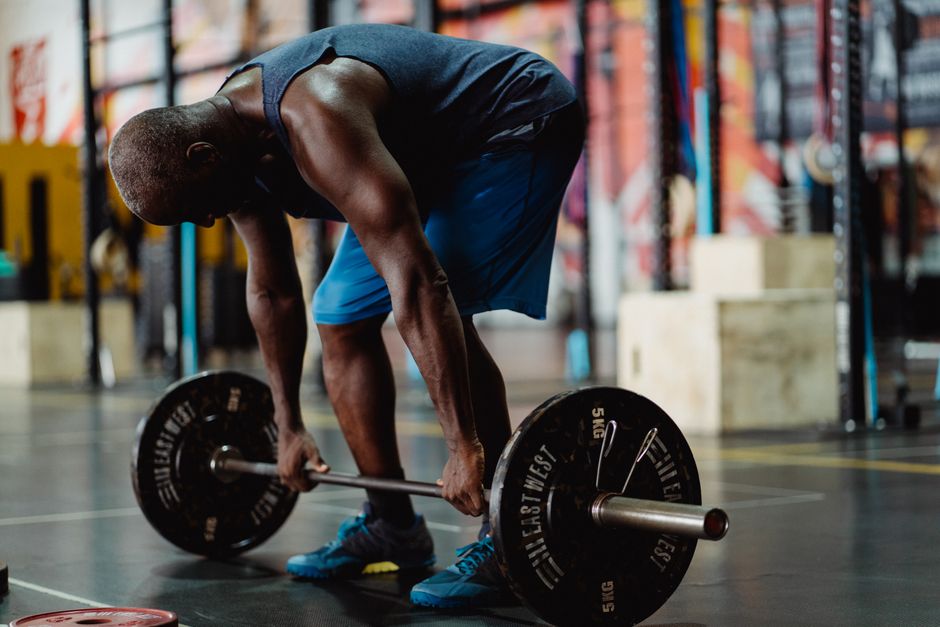
The power clean is a lift that builds explosive strength. It asks your body to move a barbell from the floor to your shoulders in one powerful motion. There is no single number that defines a “good” power clean for everyone. Your body weight, training history, and gender all play a role in what is realistic and safe for you.
For most healthy adults, a good starting goal is a power clean that equals 50% to 75% of your body weight. A trained lifter might reach 100% of their body weight after a year of consistent practice. Elite athletes often clean 1.5 times their body weight or more. These are general reference points, not strict rules.
Your focus should be on learning the technique correctly first. Strength will follow good form. Pushing for a heavy number before your mechanics are solid is the fastest way to get injured.
What Is a Power Clean Compared to a Full Clean?
The power clean and the full clean are different lifts. In a power clean, you catch the barbell in a partial squat. Your thighs stay above parallel to the floor. In a full clean, you catch the bar at the bottom of a deep squat position.
The power clean allows most people to lift slightly less weight than a full clean. This is because the catch position is higher, which requires more pull from the legs and back. You generate the force to meet the bar higher up, rather than dropping under it.
Many coaches use the power clean as a teaching tool. It is easier to learn than the full clean. It also carries less risk of a failed lift in a deep squat position. For general fitness, the power clean is often the better choice.
How Body Weight Affects Your Power Clean Numbers
Your body weight is the single most important factor in setting a realistic goal. A 150-pound lifter and a 250-pound lifter will have very different numbers. Comparing raw weight lifted across different body sizes is not useful.
A common way to measure progress is the ratio of your clean to your body weight. This is called a relative strength measure. A 150-pound person cleaning 150 pounds is lifting 100% of their body weight. A 250-pound person cleaning 250 pounds is also lifting 100% of their body weight. These are equally impressive relative achievements.
Here is a practical breakdown based on training experience:
- Beginner (0-6 months): 40% to 60% of body weight
- Intermediate (6-18 months): 60% to 85% of body weight
- Advanced (2+ years): 85% to 110% of body weight
- Elite athlete: 120% to 150% of body weight
These ranges are general guidelines. Some people progress faster. Some progress slower. Your limb length, joint mobility, and prior athletic background all influence your ceiling.
Gender Differences in Power Clean Standards
Men and women have different average strength levels. This is largely due to differences in muscle mass and body composition. Women typically have lower upper body strength but more comparable lower body strength relative to men.
For women, a solid power clean goal is often 40% to 60% of body weight as a beginner. Intermediate lifters may reach 60% to 80%. Advanced female lifters often clean 80% to 100% of their body weight.
These are averages, not limits. Many female athletes clean more than their body weight. The ranges simply reflect what is typical based on population data and coaching experience.
Never compare yourself to someone of a different gender or body weight. Your only meaningful competition is your own previous performance.





How Much Should I Be Able To Power Clean? Essential Guide to Testing
Testing your power clean is straightforward. You need a barbell, weight plates, and a safe space. You also need to know the correct technique before you test a heavy load.
Start with the empty barbell. The standard Olympic bar weighs 45 pounds for men and 35 pounds for women. Practice the movement pattern for several sets. Focus on the triple extension of your hips, knees, and ankles. This is the explosive part of the lift.
Once your technique looks solid, add weight in small increments. Use 5 to 10 pound jumps. Rest for two to three minutes between heavy attempts. A true one-rep max test should only be done after you have been training the lift for at least three months.
If you have never done a power clean, do not test a max. Spend several weeks building the movement pattern with light weight. Your first goal is to move well, not to move heavy.
Key Technique Points That Determine Your Max
Your power clean number is limited by your technique more than your raw strength. A lifter with perfect mechanics can clean more than a stronger lifter with poor mechanics. This is why technique work always comes first.
The setup matters. Your back should be flat. Your shoulders should be slightly over the bar. The bar should stay close to your body throughout the pull. If the bar drifts away from your legs, you lose power and increase your risk of injury.
The explosive extension is the heart of the lift. You must fully extend your hips and knees before you begin to pull with your arms. Many beginners pull with their arms too early. This turns the clean into an upright row, which is weaker and less safe.
The catch position is the final piece. You need to pull yourself under the bar rapidly. Your elbows should rotate around the bar quickly. The bar should land on your shoulders with your torso upright. A soft, controlled catch is safer than a stiff one.
How to Improve Your Power Clean Over Time
Progress on the power clean comes from consistent practice and targeted strength work. You cannot expect to improve the lift if you only practice it once a month. Frequency matters.
Practice the power clean two to three times per week. Keep the volume moderate. Five sets of three repetitions is a solid training template. This gives you enough practice to refine your skill without excessive fatigue.
Your pulling strength is the main limiting factor. The muscles of your posterior chain — your hamstrings, glutes, and lower back — drive the lift. Strengthen these muscles with exercises like deadlifts, Romanian deadlifts, and good mornings.
Your upper back and traps also matter. These muscles help you shrug the bar upward and pull yourself under it. Rows and shrugs can support your clean. Do not neglect them.
Core stability is essential. Your core transfers power from your legs to the bar. Planks, hanging leg raises, and heavy carries all build the stability you need.
Common Mistakes That Hold Lifters Back
Several technical errors can stall your progress. Identifying and fixing these is often the fastest way to increase your numbers.
Starting with the bar too far from your body is a common issue. The bar should begin over the middle of your foot. If it starts too far forward, your pull will be inefficient and your back will be at risk.
Rising too quickly in the setup is another mistake. Many lifters pop their hips up before the bar moves. This puts the weight on your lower back instead of your legs. Your hips and shoulders should rise at the same rate.
Pulling with your arms before full hip extension is the most common technical flaw. Your arms should stay straight until your hips are fully open. Early arm pull wastes energy and limits the weight you can lift.
Catching the bar on your palms instead of your shoulders is a safety issue. The bar should rest on your shoulders with your fingers relaxed. If the bar sits in your palms, your wrists and elbows take unnecessary stress.
When to Add Weight and When to Hold Back
Adding weight too quickly is the most common cause of injury in the power clean. The lift is technical. Your body needs time to adapt to the movement before it can handle heavy loads safely.
Add weight only when your current load feels smooth and fast. If the bar slows down significantly or your form breaks down, stay at that weight. Perfect repetitions at a moderate weight build better strength than sloppy repetitions at a heavy weight.
You should hold back if you feel pain in your wrists, elbows, or lower back. Mild muscle soreness is normal. Joint pain is a warning sign. Stop and address the issue before continuing.
If you are training for general fitness, you do not need to test a one-rep max. Working sets of three to five repetitions with a challenging but doable weight are enough. The goal is to build explosive power, not to chase a number.
Power Clean for Older Adults and Beginners
The power clean is a demanding lift. It requires coordination, mobility, and explosive power. These qualities decline with age if they are not trained. The power clean can help older adults maintain them, but caution is required.
If you are over 50 or have not exercised regularly in years, start with a very light load. Use a PVC pipe or a light wooden dowel before you touch a barbell. Master the movement pattern completely before adding any weight.
Mobility restrictions are common in older adults. Tight ankles, hips, and shoulders can make the power clean difficult. Address these limitations before you attempt the full movement. A partial range of motion with good posture is better than a full range with poor posture.
Consult a qualified coach if you are new to the lift. A coach can identify your limitations and help you work around them. This is especially important for older adults and anyone with a history of back or joint injuries.
Frequently Asked Questions
What is a good power clean for a beginner?
A beginner should aim for 40% to 60% of their body weight. Focus on perfect technique before worrying about the number on the bar.
How long does it take to power clean your body weight?
Most lifters can reach their body weight after one to two years of consistent training. Progress depends on your starting strength, technique, and training frequency.
Is the power clean dangerous for your back?
The power clean is safe when performed with correct technique. Most back injuries happen from rounding the spine or pulling with the arms too early.
Can I power clean if I have wrist or shoulder problems?
You can, but you need to address mobility issues first. The bar must rest on your shoulders, not your palms, to protect your wrists. Consult a professional if you have persistent joint pain.
Your power clean number is a personal metric. It reflects your strength, your technique, and your consistency. Do not compare yourself to others. Do not chase a number that does not fit your body or your experience level. Train the lift correctly, stay patient, and your numbers will improve over time.
