
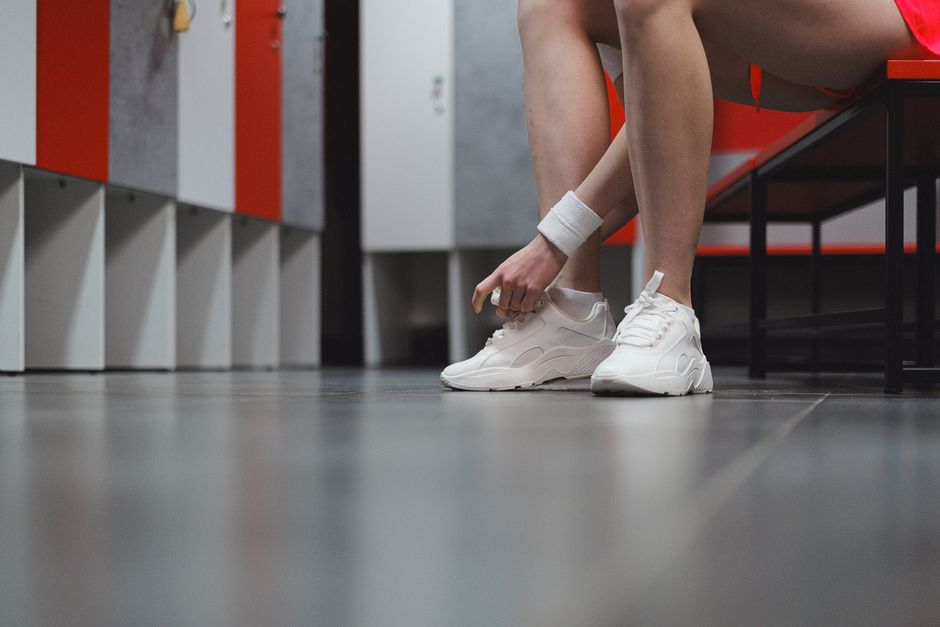
Your shoe should have about a thumb’s width of space between the end of your longest toe and the front of the shoe. That works out to roughly 1 to 1.5 centimeters, or about half an inch. This small gap is not extra room you can trim away. It is the space your foot needs to work properly when you walk and run.
Most people wear shoes that are too short, not too long. The fix is simple, but it starts with understanding why that space matters and how to measure it correctly.
How Much Room Should You Have In A Shoe?
A thumb’s width at the front is the standard most shoe fitters and foot health professionals use. It gives your toes room to spread and your foot room to move forward with each step.
Here is what happens without it. When you walk, your foot slides forward inside the shoe. Your arch flattens slightly under your body weight, and your foot effectively gets longer. If there is no gap at the front, your toes press against the inside of the shoe on every step. Over time, that pressure can lead to blisters, calluses, and toenail problems.
The width across the ball of your foot matters just as much as the length. A shoe can have perfect toe room and still be too narrow. Your toes should not feel squeezed together, and the widest part of your foot should sit at the widest part of the shoe.
One point people often miss: measure your feet later in the day. Feet swell slightly over the course of the day and after activity. A shoe that fits in the morning can feel tight by evening. Measuring at the end of the day gives you a more realistic fit.
Why Do Most People Wear the Wrong Shoe Size?
Most adults are wearing shoes that are too small. The problem is common enough that it shows up repeatedly in foot health research. People tend to buy the size they have always worn, even though foot size changes with age.
Two things drive this. First, feet change. Ligaments and tendons lose some elasticity over time, and the arch can drop slightly. This can make the foot longer and wider. Many people gain half a shoe size or more across their adult life without realizing it.
Second, shoe sizing is not standardized. A size 9 from one brand can measure differently from a size 9 in another. The number on the box is a starting point, not a guarantee.
There is also a habit problem. People often choose shoes by feel in the store while standing still. But feet behave differently when you walk. A shoe that feels fine standing can be too short once you move.
How Do You Measure the Right Amount of Toe Room?
The most reliable check is done standing up, with your full weight on your feet. Sitting down shortens your foot slightly and can make a too-small shoe feel acceptable.
Stand in the shoe with the laces or straps done up as you would wear them. Press your thumb down at the very front, between your longest toe and the end of the shoe. You want to feel a small gap, not a hard wall and not a large empty space.
Your longest toe is not always your big toe. For many people, the second toe is longer. Check which toe reaches farthest forward and use that one as your reference point.
If you want a more precise measurement, trace your foot on a piece of paper while standing, then measure from the back of your heel to the tip of your longest toe. Compare that number to the shoe’s internal length, not the outside of the sole. Shoe manufacturers sometimes publish internal length, though not all do.
- Measure at the end of the day, when feet are at their largest.
- Measure both feet. Most people have one foot slightly larger than the other.
- Fit the larger foot, not the smaller one.
- Wear the socks you plan to use with those shoes when you try them on.
What Happens If Your Shoes Are Too Small?
Shoes that are too short put repeated pressure on your toes and toenails. This is a mechanical problem, and the effects build up over time.
Common results include blisters from friction, calluses where skin thickens under pressure, and toenail damage. Toenails can become thickened, discolored, or in some cases loosened from the nail bed after long-term pressure, especially during activities like running or hiking.
People with diabetes or poor circulation need to take this seriously. Reduced sensation in the feet means a person may not feel a shoe rubbing until damage has already happened. Foot health guidance for people with diabetes consistently emphasizes well-fitting shoes and regular foot checks for this reason.
Children need particular attention here. Growing feet change size faster than adults expect, and a tight shoe can affect how a child walks. Checking fit every few months is reasonable during growth periods.
Can a Shoe Have Too Much Room?
Yes. A shoe that is too long or too wide causes its own problems. Your foot slides forward and back inside the shoe, which creates friction with every step.
That sliding can cause blisters on the heel and toes. It also makes the shoe less stable. Your foot has to work harder to stay in place, which can contribute to fatigue and, in some cases, discomfort in the arch or ankle.
Too much width is its own issue. If the shoe is wider than your foot, your foot moves side to side. The shoe no longer supports the foot the way it was designed to.
The goal is a snug fit through the middle and heel, with a small gap at the front. Snug does not mean tight. It means your foot stays put without being squeezed.
Does Shoe Room Matter More for Running or Walking?
It matters more during running, because the forces are higher. When you run, your foot strikes the ground with more force and your arch flattens more under load than when you walk. That means your foot lengthens more inside the shoe.
Runners commonly need a little more room than they would choose for everyday shoes. Many running shoe fitters suggest going up a half size from your casual shoe size, but this is general practice rather than a rule backed by formal guidelines. The thumb-width check remains the practical standard.
Walking shoes should still have that front gap. The difference is that walking produces less forward slide, so the margin does not need to be as generous.
When Should You Replace Shoes That Fit Well?
Fit can change even when the shoe has not. Your feet change with age, weight changes, and pregnancy. A shoe that fit well two years ago may not fit now.
Shoes also break down. Cushioning compresses, the upper stretches, and the shape can change with wear. There is no universal timeline for replacement because it depends on the shoe, how often you wear it, and what you do in it. A rough guide some clinicians use is that everyday shoes worn regularly may need replacing after several months to a year of heavy use, and running shoes after a few hundred miles. These figures vary by source and are not firm clinical standards.
The practical approach is to recheck the fit. If your toes are touching the front, or the shoe feels loose and sloppy, it is time to reassess.
The Bottom Line
About a thumb’s width at the front is the target. Not a hard wall against your toes, and not a loose, sliding fit. Measure standing, measure late in the day, and fit your larger foot. Your feet will tell you the rest.
Frequently Asked Questions
How much space should be at the end of a shoe?
About a thumb’s width, roughly 1 to 1.5 centimeters or half an inch, between your longest toe and the front of the shoe. This gives your foot room to move forward when you walk.
Should you size up if a shoe feels tight in the toes?
Yes, if your toes are pressing against the front, the shoe is too short and a larger size is the right move. Trying a wider fit in the same length is also worth considering, since tightness can come from width rather than length.
Is it better for shoes to be slightly too big or too small?
Neither is ideal, but slightly too small causes more consistent problems because toes are compressed on every step. Slightly too big causes sliding and blisters, so aim for the correct fit rather than choosing between the two.
Do your feet get bigger as you age?
They can. Loss of elasticity in ligaments and a slight drop in the arch can make feet longer and wider over time. Many adults end up needing a larger size than they wore in their twenties.
