
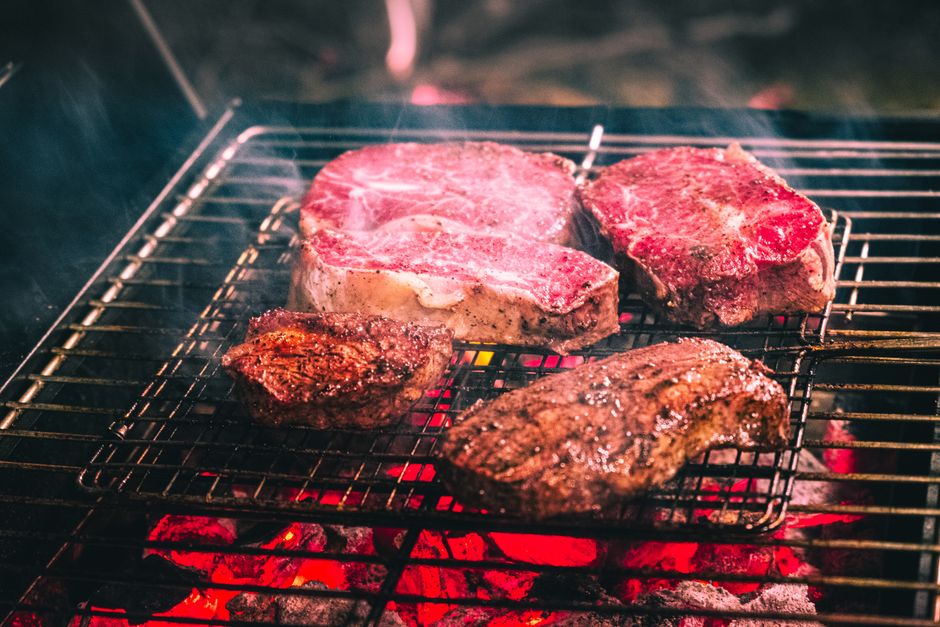
Steak is one of the most protein-dense foods you can put on a plate, and the amount varies far less between cuts than most people expect. A standard 3-ounce cooked serving of beef steak — about the size of a deck of cards — delivers roughly 22 to 26 grams of protein across nearly every major cut, from filet mignon to ribeye. The bigger differences show up in fat, calories, and cost, not protein. Below is a cut-by-cut breakdown, plus what actually changes the numbers on your plate.
How Much Protein Is In Steak Every Cut Ranked?
The table below reflects cooked, trimmed beef using USDA nutrient data, which is the reference most dietitians and researchers use. All values are for a 3-ounce (85-gram) cooked portion, since that is the standard serving used in nutrition databases and on food labels.
| Cut | Protein (3 oz cooked) | Fat (3 oz cooked) | Calories (3 oz cooked) |
|---|---|---|---|
| Sirloin (top sirloin, trimmed) | ~25 g | ~8 g | ~180 |
| Filet mignon (tenderloin, trimmed) | ~24 g | ~8 g | ~180 |
| Flank steak | ~24 g | ~8 g | ~180 |
| Skirt steak | ~24 g | ~10 g | ~200 |
| Strip steak (New York strip, trimmed) | ~24 g | ~11 g | ~200 |
| T-bone / Porterhouse (trimmed) | ~23 g | ~13 g | ~220 |
| Ribeye (trimmed) | ~23 g | ~16 g | ~240 |
Those numbers come from USDA FoodData Central, which publishes nutrient values for beef by cut and by fat trim level. The pattern is consistent: protein stays in a narrow band while fat and calories climb as you move toward more marbled cuts.
Why Do Different Cuts Have Similar Protein?
Muscle tissue is muscle tissue. Protein content in beef reflects the structural proteins — actin and myosin — that make up muscle fibers, and those exist in roughly the same proportion in every cut of the same animal.
The differences between cuts come down to three things: how much fat is marbled through the muscle, how much connective tissue is present, and how much external fat is trimmed before or after cooking. Fat contributes almost no protein. So a heavily marbled ribeye has the same muscle protein as a lean sirloin, plus a lot of extra fat on top.
This is why a 3-ounce ribeye and a 3-ounce sirloin differ by only a couple of grams of protein but can differ by 60 or more calories. Fat drives the calorie gap, not protein.
Does Cooking Change the Protein in Steak?
Cooking does not add or remove protein. It changes water content, which is why the same raw steak weighs less after cooking and why protein appears to concentrate per ounce.
A raw 4-ounce steak might weigh closer to 3 ounces after cooking, depending on doneness and cooking method. The total protein stays the same — it is just packed into a smaller weight. This is the single biggest source of confusion when people compare raw and cooked numbers.
Nutrition databases label this clearly: “cooked” values are for the steak after cooking, “raw” values are before. If you weigh your food raw but use a cooked reference, your protein estimate will be off. Pick one method and stay consistent.




How Much Protein Is in a Typical Steak Serving?
Restaurant and home portions are usually larger than 3 ounces. Here is how protein scales with common steak sizes, using the same USDA-based values:
- 3 oz cooked (deck of cards): about 22–26 g protein
- 6 oz cooked: about 44–52 g protein
- 8 oz cooked: about 58–69 g protein
- 12 oz cooked (large steakhouse cut): about 88–104 g protein
For context, most adults need somewhere in the range of 0.8 grams of protein per kilogram of body weight per day as a baseline, according to the Institute of Medicine’s Dietary Reference Intakes. For a 150-pound (68 kg) adult, that is roughly 54 grams per day. A single 8-ounce steak can cover a full day’s baseline requirement on its own.
People who are older, physically active, or recovering from illness often have higher protein needs, and some research suggests intakes above the baseline RDA may help preserve muscle in those groups. That is a conversation worth having with a clinician rather than a fixed number to apply universally.
Which Cuts Give You the Most Protein Per Calorie?
If protein density matters to you — say, you are watching calories — lean cuts win. Sirloin, filet mignon, and flank steak deliver roughly 24–25 grams of protein for about 180 calories. Ribeye delivers about the same protein for around 240 calories.
That is a real difference if you eat steak several times a week. Over a month, choosing lean cuts most of the time can meaningfully change total calorie intake without changing protein intake.
Trim level matters too. A “trimmed” ribeye with visible fat removed has fewer calories than an untrimmed one. USDA data lists both, and the gap can be substantial.
Does Steak Protein Build Muscle the Same as Other Proteins?
Beef is a complete protein, meaning it contains all nine essential amino acids your body cannot make on its own. It is also rich in leucine, an amino acid that plays a direct role in triggering muscle protein synthesis.
Research consistently shows that animal proteins like beef support muscle building effectively when eaten as part of an adequate diet. Whether beef is superior to chicken, fish, dairy, or plant proteins for muscle growth is a different question — the evidence generally shows that total daily protein intake and resistance training matter more than the specific source, as long as the protein is complete and well-digested.
One non-obvious point: steak is not a fast-digesting protein. It takes longer to break down than whey or eggs, which some people interpret as a disadvantage. In practice, slower digestion can be an advantage for sustained amino acid delivery, and the difference in muscle-building outcomes between fast and slow proteins is small when total daily intake is adequate.
What Else Comes With Steak Protein?
Steak is not just protein. It supplies heme iron, zinc, vitamin B12, niacin, and selenium in forms the body absorbs efficiently. Heme iron from red meat is absorbed more readily than the non-heme iron found in plants, which is one reason beef appears in discussions about iron status.
At the same time, regular intake of red meat — especially processed red meat — has been linked in large observational studies to higher risk of certain chronic diseases. These studies cannot prove cause and effect, and the findings are debated, but the pattern is consistent enough that most major health organizations recommend limiting red meat intake and favoring leaner sources when you do eat it.
Steak fits comfortably into many diets. It is not a food that needs to be either avoided or celebrated. The protein number is the easy part — it is roughly the same across cuts. What changes is everything around it.
Frequently Asked Questions
How much protein is in a 6 oz steak?
A 6-ounce cooked steak provides roughly 44 to 52 grams of protein, depending on the cut. Leaner cuts like sirloin land near the higher end, while fattier cuts like ribeye land near the lower end.
Which steak cut has the most protein?
Sirloin, filet mignon, and flank steak are among the highest, at about 24 to 25 grams per 3-ounce cooked serving. The differences between cuts are small — usually 1 to 3 grams.
Is steak a good source of protein?
Yes. Steak is a complete protein containing all nine essential amino acids, and it also supplies heme iron, zinc, and vitamin B12. Most health organizations still recommend limiting red meat intake and choosing leaner cuts when you eat it.
Does a bigger steak always mean more protein?
Yes, protein scales with portion size, but the cut matters less than the weight. An 8-ounce sirloin and an 8-ounce ribeye have similar protein, though the ribeye has more fat and calories.
