
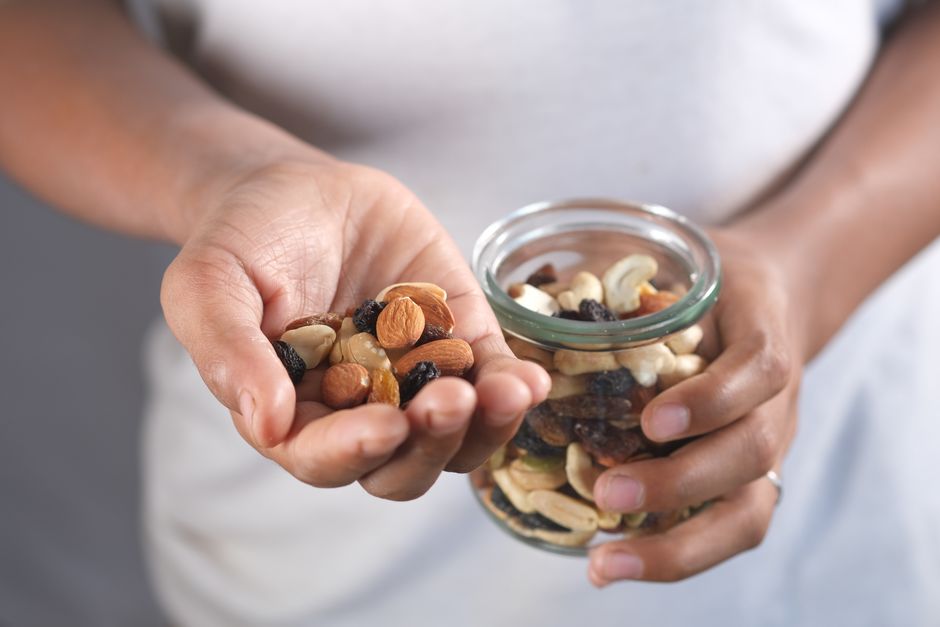
A handful of nuts delivers roughly 5 to 7 grams of protein for most common varieties. The exact number depends on the nut and the size of your hand. Almonds, peanuts, and pistachios land on the higher end. Cashews and walnuts sit a little lower. A standard handful is usually counted as about one ounce, or 28 grams.
That small amount adds up more than people expect. Nuts also bring fiber, healthy fats, and minerals to the table. But protein is often the reason people reach for them. Here is what the numbers actually look like, and where the limits are.
How Much Protein Is In A Handful Of Nuts by Type?
One ounce is the reference point most nutrition data uses, and it lines up closely with a modest handful for an adult. The protein content varies by nut because each type has a different mix of fat, carbohydrate, and water.
Here is the approximate protein in one ounce (28 grams) of common nuts, based on USDA nutritional data:
- Peanuts: about 7 grams (technically a legume, but nutritionally grouped with nuts)
- Almonds: about 6 grams
- Pistachios: about 6 grams
- Cashews: about 5 grams
- Walnuts: about 4 grams
- Pecans: about 3 grams
- Macadamia nuts: about 2 grams
The spread is real but modest. Moving from macadamias to peanuts roughly triples the protein, yet the total stays in single digits either way. Nuts are a protein contributor, not a protein main event.
Does The Size Of Your Hand Change The Amount?
Yes, and more than most people realize. “A handful” is not a standardized measure. A small hand might hold closer to three-quarters of an ounce, while a large hand can comfortably hold an ounce and a half or more.
That means two people eating “a handful of almonds” could be getting 4 grams and 9 grams of protein respectively. Neither is wrong. The phrase is just imprecise.
If you want a reliable number, weigh your portion once. A kitchen scale removes the guesswork permanently. Many people find their habitual handful is larger than one ounce, especially with nuts they enjoy.
This matters for calories too. Nuts are calorie-dense, and portion creep is easy. The protein difference between a small and large handful is a few grams. The calorie difference can be well over 100.
Is Nut Protein As Good As Protein From Meat Or Eggs?
No, and this is where nuts get oversold. Protein quality is judged partly by its amino acid profile and how well the body can use it. Animal proteins like eggs, dairy, meat, and fish are complete proteins, meaning they supply all nine essential amino acids in adequate amounts.
Most individual nuts are limited in at least one essential amino acid. Lysine tends to be low in many nuts, though peanuts and pistachios are relatively stronger. This does not make nut protein worthless. It means nuts work best as part of a varied diet rather than as a primary protein source.
Combining foods helps. Nuts eaten with grains, legumes, or dairy fill in the gaps. A handful of almonds on oatmeal, or peanut butter on whole-grain toast, provides a more complete amino acid mix than either food alone.
For adults eating a mixed diet, this rarely requires planning. The body maintains an amino acid pool and balances intake across the day. The combining concern matters most for people eating very limited diets.
Can Nuts Actually Meet Your Daily Protein Needs?
Not realistically on their own. General protein intake guidance for most adults falls somewhere around 0.8 grams per kilogram of body weight per day, though needs rise with age, activity, and other factors. For a 70-kilogram (about 154-pound) adult, that is roughly 56 grams daily.
At 5 to 7 grams per handful, you would need to eat an enormous quantity of nuts to hit that target. The calorie load would be impractical long before the protein goal was met. One ounce of almonds carries about 160 to 170 calories, so eight ounces would exceed 1,200 calories from nuts alone.
Nuts are best understood as a supporting player. They add a few grams of protein to meals and snacks, alongside fiber and unsaturated fat. They are not a replacement for eggs, fish, poultry, beans, or dairy as your protein foundation.
Which Nuts Give You The Most Protein Per Bite?
Peanuts, almonds, and pistachios deliver the most protein per ounce. If protein is your priority, those three are the practical choices. They also tend to be among the more affordable options.
But protein is only one reason to eat nuts. Walnuts are notably high in plant-based omega-3 fatty acids. Almonds and pistachios bring useful amounts of vitamin E and potassium. Macadamias are low in protein but high in monounsaturated fat.
Choosing based only on protein misses the bigger picture. A mix of nuts gives you a broader range of nutrients than any single type.
Do Roasting, Salting, Or Processing Change The Protein?
Roasting does not meaningfully change protein content. It removes some water, which concentrates the nutrients per gram slightly, but the difference is small. Dry-roasted and raw nuts land in nearly the same place.
Salt and added oils change other things. Salted nuts add sodium, which matters for people watching blood pressure. Oil-roasted nuts add fat and calories. Neither alters the protein number much.
Processing is a different story. Nut butters generally keep the protein of the whole nut, but check the label for added sugars and oils. Honey-roasted or candied nuts add sugar and calories without adding protein. Nut-based flours and powders vary widely, so the label is the only reliable guide.
What Else Do You Get From A Handful Of Nuts?
Protein is a small part of what nuts offer. A one-ounce handful typically provides:
- Fiber, usually 2 to 3 grams
- Unsaturated fats, the majority of their calories
- Vitamin E, especially from almonds and sunflower seeds
- Magnesium, especially from almonds and cashews
- Potassium, especially from pistachios
- Plant compounds called polyphenols
These nutrients are why nuts feature in dietary patterns linked to heart health. Research published in the American Journal of Clinical Nutrition and other journals has associated regular nut intake with favorable cardiovascular outcomes. The evidence is strongest for nuts as part of an overall healthy eating pattern, not as a standalone remedy.
One caution is worth stating plainly. Nuts are a common allergen, and for people with tree nut or peanut allergy, they can cause serious reactions. Anyone with a known allergy should avoid them entirely and follow their clinician’s guidance.
Whole nuts are also a choking risk for young children. The general guidance is to avoid whole nuts for children under four and offer nut butters thinned or spread thinly instead. Check with a pediatrician for individual advice.
How Should You Fit Nuts Into Your Day?
A handful as a snack is the simplest approach. Pairing nuts with a protein-rich food makes the snack more satisfying and more complete nutritionally. Nuts with yogurt, or almonds with a hard-boiled egg, cover more amino acid ground than nuts alone.
Portion awareness helps. Nuts are easy to overeat straight from a large container. Pouring a portion into a small bowl rather than eating from the bag is a simple habit that keeps the calories in check.
For most adults, a daily ounce fits comfortably within a balanced diet. People managing their weight or watching calorie intake may want to measure rather than estimate. The protein is modest, but the calories are not.
Frequently Asked Questions
How much protein is in a handful of almonds?
A one-ounce handful of almonds has about 6 grams of protein. A larger handful will contain somewhat more, so weighing the portion gives a precise number.
Are nuts a good source of protein?
Nuts are a modest protein source, providing about 5 to 7 grams per ounce for most types. They are best used to supplement protein from other foods rather than as a primary source, since most nuts lack a complete amino acid profile.
How much protein is in a handful of mixed nuts?
A one-ounce handful of mixed nuts typically provides about 5 to 6 grams of protein. The exact amount depends on which nuts are in the mix, since peanuts and almonds carry more than cashews and macadamias.
Is it healthy to eat a handful of nuts every day?
For most adults, a daily one-ounce portion fits well within a balanced diet and is linked with heart-health benefits in large observational studies. People with nut allergies should avoid them, and young children should not be given whole nuts due to choking risk.
