
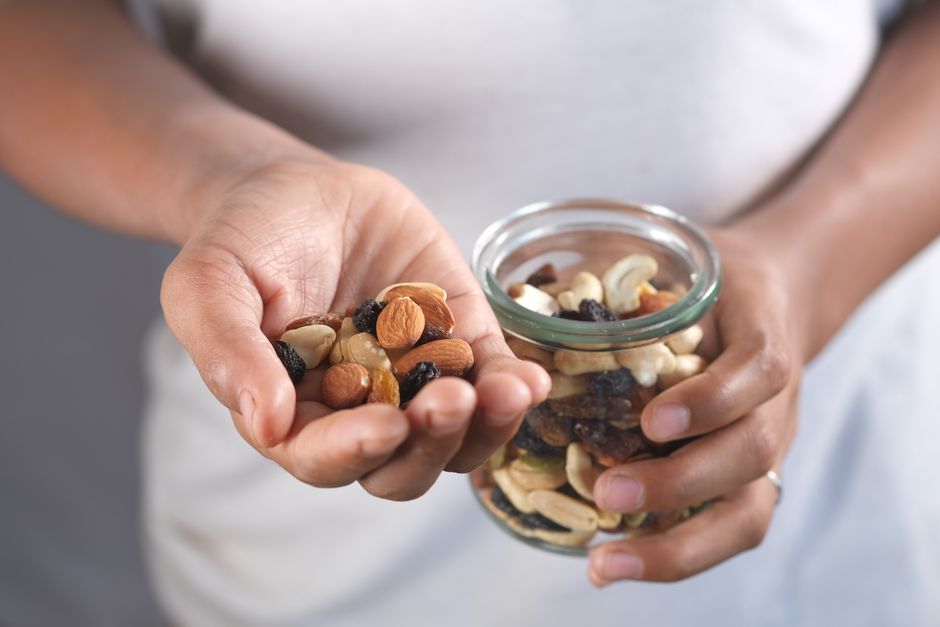
Almonds contain about 6 grams of protein per one-ounce serving, which works out to roughly 21 grams per 100 grams. That one-ounce serving is about 23 whole almonds and delivers 164 calories. So almonds are a solid plant protein source, but they are not a protein-first food like beans, eggs, or chicken.
How Much Protein In Almond Nuts Per Serving?
A one-ounce serving of raw almonds — about 23 kernels — has 6.0 grams of protein. That same ounce also brings 14 grams of fat, 6 grams of carbohydrate, and 3.5 grams of fiber.
The protein number stays fairly stable whether the almonds are raw, dry-roasted, or blanched. Roasting removes water, so the protein per ounce edges up slightly by weight, but the difference is small. The bigger change comes from added ingredients. Honey-roasted, smoked, or chocolate-covered almonds usually add sugar and oil, which lowers protein as a share of total calories.
Almond butter is a different story. Two tablespoons provide about 6 to 7 grams of protein, similar to a one-ounce serving of whole nuts. The catch is portion control. It is easy to eat far more than two tablespoons from a jar without noticing.
Almond Protein Content by Weight and Form
Protein density varies with how the almonds are processed and how much water they contain. The table below uses standard USDA nutrient values for common forms.
| Form | Typical Serving | Protein |
|---|---|---|
| Raw whole almonds | 1 oz (23 nuts) | 6.0 g |
| Raw whole almonds | 100 g | 21 g |
| Dry-roasted almonds | 1 oz | About 6 g |
| Almond butter | 2 tbsp | 6–7 g |
| Almond flour | 1/4 cup | 6 g |
| Almond milk (plain, unsweetened) | 1 cup | About 1 g |
Almond milk is the outlier here. It contains very little almond by volume, so its protein content is close to negligible compared with whole nuts. People who swap dairy milk for almond milk often lose a meaningful protein source without realizing it.
Is Almond Protein Complete?
Almond protein is not complete on its own. Like most plant proteins, it is low in at least one essential amino acid — in this case, lysine.
Essential amino acids are the nine building blocks the body cannot make and must get from food. A “complete” protein supplies all nine in adequate amounts. Animal proteins like eggs, milk, and meat generally do. Most single plant foods do not.
The practical fix is not complicated. Eating almonds alongside a lysine-rich food — beans, lentils, quinoa, or dairy — covers the gap. You do not need to combine them in the same bite. Your body pools amino acids over the course of a day, so a varied diet handles this naturally.
This is worth stating plainly because the “incomplete protein” idea has been oversold as a problem. For most people eating a normal mixed diet, it is not one. It matters more for vegans and vegetarians who rely heavily on a narrow set of plant foods.




How Does Almond Protein Compare to Other Nuts and Foods?
Almonds sit near the top of the nut group for protein, but they are not the leader. Peanuts, which are technically legumes, edge them out.
- Peanuts: about 7 g per ounce
- Almonds: about 6 g per ounce
- Pistachios: about 6 g per ounce
- Cashews: about 5 g per ounce
- Walnuts: about 4 g per ounce
- Pecans: about 3 g per ounce
Against non-nut foods, the gap widens. One ounce of cooked chicken breast has roughly 8 to 9 grams of protein. A large egg has about 6 grams. Half a cup of cooked lentils has about 9 grams. A cup of Greek yogurt can have 15 to 20 grams.
So almonds are a decent protein contributor, not a protein powerhouse. Their real strength is that they pair protein with fiber, healthy fats, vitamin E, magnesium, and potassium in a single convenient package. Judging them only on protein misses what they actually do well.
How Much Protein Do You Actually Need?
The Recommended Dietary Allowance for protein is 0.8 grams per kilogram of body weight per day for most healthy adults. For a 150-pound person, that is about 54 grams a day.
That figure is a minimum to prevent deficiency, not an ideal target. People who are physically active, older adults, and those recovering from illness often need more. Athletes and people doing regular strength training may need roughly 1.2 to 2.0 grams per kilogram per day, a range supported by sports nutrition research.
Where almonds fit depends on your total intake. A one-ounce handful adds 6 grams. That is a helpful contribution to a 54-gram daily target, but it is not going to carry it alone. If you are relying on almonds as your main protein source, you would need to eat a large quantity — and at 164 calories per ounce, the calorie load adds up fast.
Can Almonds Really Be a Protein Source?
Yes, but a supporting one rather than a primary one. The word “source” gets used loosely in food marketing, and almonds are a frequent beneficiary of that looseness.
Here is the honest breakdown. Almonds provide protein, and that protein counts toward your daily total. But they also deliver more fat than protein by weight, and their protein is incomplete. Calling them a “high-protein food” stretches the term. A food that gets roughly 15 percent of its calories from protein is better described as a nutrient-dense snack than a protein source.
None of this makes almonds a bad choice. They are one of the better snacks available. The issue is only with claims that position them as a protein replacement for meat, eggs, or legumes. No study supports that framing, and the nutrient math does not either.
Do Roasting or Processing Change the Protein?
Roasting does not destroy almond protein in any meaningful way. Heat can slightly alter protein structure, but the amino acids remain available for digestion. The protein content of dry-roasted almonds is essentially the same as raw.
What changes is everything around the protein. Oil-roasted and flavored almonds pick up added fat, sugar, or salt. That does not lower the protein grams, but it changes the food’s overall nutritional profile and makes it easier to overeat.
Almond flour behaves differently again. Grinding almonds into flour concentrates them by removing water, so a quarter cup delivers about 6 grams of protein. It is a useful option for people avoiding wheat, though it does not behave like wheat flour in baking and needs recipe adjustments.
One non-obvious point: soaking almonds in water before eating, a practice sometimes claimed to improve digestion and nutrient absorption, has limited supporting evidence in humans. The idea is plausible on paper. It has not been confirmed by solid clinical trials.
Are There Downsides to Getting Protein From Almonds?
The main practical issue is calories. Almonds are energy-dense, and it is easy to eat two or three servings without registering it. At 164 calories per ounce, a large handful can quietly add several hundred calories to a day.
Almonds are also a common allergen. For people with a tree nut allergy, they are off the table entirely, and this is a serious safety matter rather than a preference. Anyone with a known nut allergy should follow their clinician’s guidance on avoidance.
For most healthy adults, almonds fit comfortably into a balanced diet. They are not a reason to change anything else about how you eat. They are simply one useful piece of a varied protein intake.
Frequently Asked Questions
How much protein is in 10 almonds?
Ten almonds contain roughly 2.5 to 3 grams of protein, based on the standard value of about 6 grams per 23-almond ounce. The exact amount depends on the size of the individual nuts.
How much protein is in 100g of almonds?
Raw almonds contain about 21 grams of protein per 100 grams, according to USDA nutrient data. That 100-gram portion also carries roughly 579 calories, so it is a large serving.
Are almonds a good source of complete protein?
No. Almond protein is low in the essential amino acid lysine, so it is not complete on its own. Pairing almonds with beans, lentils, or dairy fills that gap.
Does almond milk have as much protein as almonds?
No. A cup of plain unsweetened almond milk has only about 1 gram of protein, far less than the 6 grams in a one-ounce serving of whole almonds. Almond milk contains very little actual almond by volume.
