
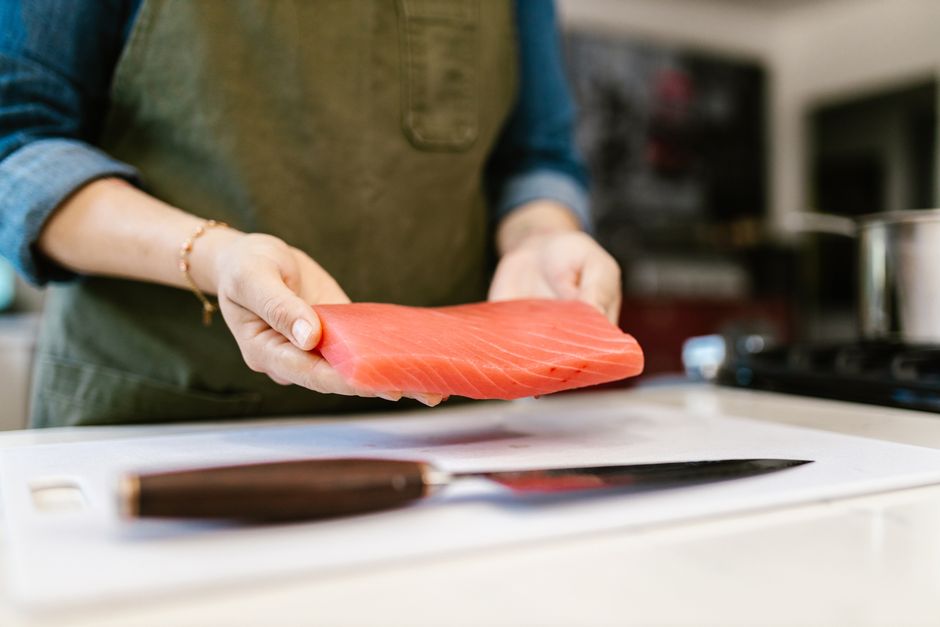
A piece of salmon delivers roughly 25 to 40 grams of protein depending on its size and cut. A standard 3-ounce cooked serving contains about 22 grams. A typical 6-ounce restaurant fillet lands closer to 40 grams. Salmon is one of the more protein-dense fish you can eat, and it brings omega-3 fats along with it.
How Much Protein In A Piece Of Salmon?
Most people picture a fillet when they ask this, and fillet size varies a lot. The USDA nutrient database lists cooked wild Atlantic salmon at about 22 grams of protein per 3-ounce serving. Farmed Atlantic salmon comes in close to the same figure. That 3-ounce portion is roughly the size of a deck of cards.
Real-world portions are often bigger. A 4-ounce cooked fillet gives you about 29 grams. A 6-ounce fillet gives you about 44 grams. Restaurant servings frequently run 6 to 8 ounces, so the protein on your plate can easily pass 50 grams.
Here is a reference table using USDA data for cooked salmon:
| Portion (cooked) | Protein | Calories (approx.) |
|---|---|---|
| 3 oz | ~22 g | ~175 |
| 4 oz | ~29 g | ~233 |
| 6 oz | ~44 g | ~350 |
| 8 oz | ~58 g | ~467 |
One thing that surprises people: cooking removes water, so a piece of salmon weighs less after cooking than before. A raw 6-ounce fillet shrinks to roughly 5 ounces cooked. The protein doesn’t disappear, but the weight changes. If you weigh your food raw and track cooked values, your numbers will be off.
Does Wild vs. Farmed Salmon Change the Protein?
Not much. Wild and farmed salmon carry similar protein levels per ounce. The bigger differences show up in fat content and omega-3 levels, not protein.
Farmed salmon tends to be higher in total fat, including omega-3 fatty acids, because of its diet. Wild salmon is leaner and often has fewer calories per ounce. That means a farmed fillet may deliver slightly more calories for the same protein.
Different species also vary a little. King salmon, coho, and sockeye all sit in a similar protein range, though exact values shift with the fish’s diet, age, and where it was caught. The variation is small enough that it rarely matters for daily protein planning.
How Does Salmon Compare to Other Protein Sources?
Salmon holds its own against most animal proteins and beats most plant sources ounce for ounce. Chicken breast is slightly higher in protein per ounce. Beef and eggs are in a similar range. What sets salmon apart is the omega-3 fat, which most other common proteins lack.
Per 3-ounce cooked serving:
- Salmon: about 22 grams of protein
- Chicken breast: about 26 grams
- Lean beef: about 22 grams
- Eggs: about 6 grams each
- Canned tuna: about 20 grams
- Tofu: about 8 grams
Salmon is also a complete protein, meaning it contains all nine essential amino acids your body cannot make on its own. That puts it in the same category as meat, poultry, eggs, and dairy. Most single plant proteins fall short on one or more amino acids, which is why people eating plant-based diets are often advised to combine sources.




How Much Protein Do You Actually Need?
The general adult recommendation is about 0.8 grams of protein per kilogram of body weight per day. For a 150-pound adult, that works out to roughly 54 grams daily. A single 6-ounce salmon fillet covers most of that.
Some groups may need more. Older adults, people recovering from illness or surgery, athletes, and pregnant or breastfeeding women often have higher protein needs. The exact amount for these groups varies, and no single number fits everyone. A doctor or registered dietitian can give guidance based on individual circumstances.
Protein needs are also not the whole story. Salmon’s omega-3 content is a separate benefit. The American Heart Association has long recommended eating fish, particularly fatty fish like salmon, as part of a heart-healthy diet. That recommendation rests on decades of research linking fish intake to cardiovascular health.
Is Canned Salmon Different?
Canned salmon is close to fresh in protein. A 3-ounce serving of canned salmon provides about 20 grams, slightly less than fresh cooked fillet. The difference is small and mostly reflects water content and processing.
Canned salmon often includes the bones and skin, which raises its calcium content considerably compared with boneless fillets. If you eat the bones, you get a meaningful calcium boost. Some people find the texture off-putting, but mashing the bones into the meat makes them nearly undetectable.
Smoked salmon is a different case. It is cured and often saltier, and portion sizes tend to be smaller. A typical 2-ounce serving of smoked salmon provides roughly 12 to 15 grams of protein. Because it is high in sodium, it is not a direct swap for a fresh fillet if you are watching salt intake.
What Else Does Salmon Provide?
Salmon is one of the best dietary sources of vitamin D and long-chain omega-3 fatty acids, specifically EPA and DHA. These fats are linked to heart health and are important for brain and eye development. The body does not make them efficiently on its own, so food sources matter.
Salmon also supplies B vitamins, selenium, and potassium. Farmed salmon tends to have more vitamin D than wild, largely because of what farmed fish are fed. Wild salmon gets vitamin D from its natural diet of plankton and smaller fish.
One caution worth knowing: larger fish can accumulate mercury, but salmon is generally low in mercury compared with shark, swordfish, and king mackerel. The FDA lists salmon among the “best choices” for low-mercury fish, including for people who are pregnant or breastfeeding. That distinction matters because fish advice varies widely by species.
How Should You Cook Salmon to Keep the Protein Intact?
Protein content barely changes with cooking method. Baking, grilling, poaching, and pan-searing all preserve the protein. What changes is water loss and how much fat renders out, which shifts the weight and calorie count slightly.
Overcooking does not destroy protein in any meaningful way, but it does dry the fish out and can make it less appealing. Salmon is done when it reaches an internal temperature of 145°F, according to FDA food safety guidance. The fish should flake easily with a fork at that point.
If you are tracking protein, weigh the fish raw and use raw values, or weigh it cooked and use cooked values. Mixing the two is the most common source of error. It sounds minor, but the water loss between raw and cooked can throw off your numbers by 20 percent or more.
Frequently Asked Questions
How much protein is in a 6 oz piece of salmon?
A cooked 6-ounce fillet provides about 44 grams of protein. A raw 6-ounce fillet weighs less after cooking but contains the same total protein.
Is salmon high in protein compared to chicken?
Chicken breast is slightly higher, at about 26 grams per 3-ounce serving versus roughly 22 for salmon. Salmon’s advantage is its omega-3 fat content, not its protein level.
How much protein is in a small piece of salmon?
A small 3-ounce cooked portion contains about 22 grams of protein. That is roughly the size of a deck of cards.
Does canned salmon have as much protein as fresh?
Canned salmon provides about 20 grams per 3-ounce serving, close to fresh. It also often includes bones, which add calcium.
