
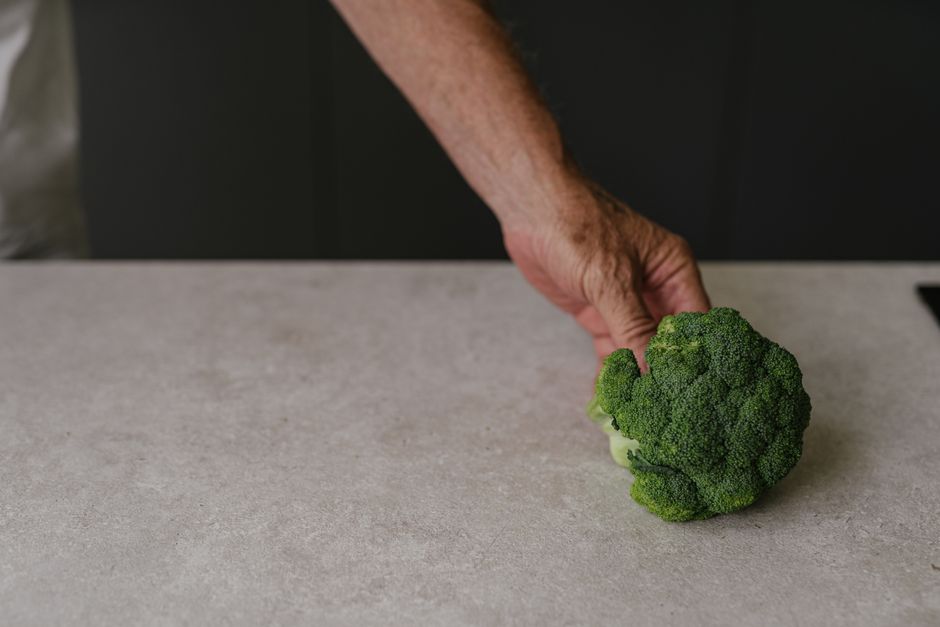
Raw broccoli has about 2.6 grams of protein per 100 grams, and cooked broccoli has roughly 2.4 grams per 100 grams. The difference is small. What changes more with cooking is how much broccoli you can realistically eat in one sitting, and that affects the total protein you get from a serving.
Broccoli is not a protein food. It is a vegetable that happens to contain a modest amount of protein along with fiber, vitamin C, vitamin K, folate, and other nutrients. The raw-versus-cooked question matters for a few practical reasons, but it does not turn broccoli into a meaningful protein source on its own.
How Much Protein Does Broccoli Have Raw Vs Cooked?
The protein content is nearly the same whether you eat broccoli raw or cooked. Per 100 grams, raw broccoli provides about 2.6 grams of protein. Boiled broccoli provides about 2.4 grams per 100 grams. Steamed broccoli falls in a similar range.
The small drop in cooked broccoli is mostly a matter of water. Cooking adds water to the vegetable, which dilutes the protein per gram of food. If you compare the same starting weight of broccoli before cooking, the protein content does not disappear. It is still there, just spread across a slightly heavier final weight.
Here is a comparison based on standard nutrient data:
| Form | Protein per 100 g | Protein per 1 cup |
|---|---|---|
| Raw broccoli | About 2.6 g | About 2.4 g (91 g) |
| Boiled broccoli | About 2.4 g | About 3.7 g (156 g) |
| Steamed broccoli | About 2.4 g | Varies with cooking time |
The cup comparison is where things get interesting. A cup of raw broccoli weighs less than a cup of cooked broccoli because raw broccoli is bulky and full of air. Cooked broccoli packs down. So a cup of cooked broccoli can deliver more protein than a cup of raw, even though the per-gram figure is slightly lower.
This is a useful clarification. People often compare raw and cooked by volume without realizing the weights differ. If you measure by the cup, cooked broccoli can come out ahead on total protein simply because you are eating more of it.
Why Does Cooking Change the Protein Number at All?
Cooking does not destroy broccoli protein in any meaningful way. The change in the per-gram number comes from water content and, to a smaller degree, from some protein and other water-soluble nutrients leaching into the cooking water.
When you boil broccoli, some water-soluble compounds move into the water. If you drain and discard that water, you lose a small amount of protein along with vitamin C and other water-soluble nutrients. Steaming or stir-frying avoids this because the broccoli is not sitting in water that gets poured away.
The protein itself is made of amino acids, and heat does cause some structural changes. But your digestive system breaks protein down into amino acids regardless of whether it was cooked. For the purposes of nutrition, the protein in cooked broccoli is still available to your body.
What matters more than the small per-gram difference is how you prepare it. Steaming and quick stir-frying tend to preserve more water-soluble nutrients than boiling. If protein is your main concern, the cooking method barely matters. If vitamin C and other water-soluble nutrients matter to you, steaming is generally the better choice.
Is Broccoli a Good Source of Protein?
No. Broccoli is a poor protein source compared with foods that are actually known for protein. It contains protein, but in small amounts relative to its calories and weight.
To put it in perspective, you would need to eat a large amount of broccoli to match the protein in a single egg, a small portion of chicken, or a serving of beans. A large egg has about 6 grams of protein. A 3-ounce portion of cooked chicken breast has roughly 26 grams. Broccoli delivers a fraction of that per serving.
That does not make broccoli useless for protein. It contributes to your daily total, and every bit adds up. But if you are relying on broccoli as a primary protein source, you will fall short. Plant-based eaters get their protein from legumes, grains, soy foods, nuts, and seeds, with vegetables like broccoli playing a supporting role.
Broccoli does contain all the essential amino acids, which makes it a complete protein in the technical sense. That sounds impressive but means little in practice. The amounts are small, and you would need to eat far more broccoli than is realistic to meet your protein needs from it alone.
Does Cooking Make Broccoli Easier to Digest?
Yes, for most people. Cooking softens the fiber structure of broccoli, which makes it easier to chew and easier on the digestive system. Raw broccoli is tougher and can cause gas or bloating in people who are sensitive to it.
Raw broccoli contains compounds that some people find harder to break down. Cooking reduces these to some degree. If raw broccoli gives you gas, steamed broccoli may sit better. This is a real difference for many people, not just a preference.
The trade-off is that cooking reduces some heat-sensitive nutrients, including vitamin C. Raw broccoli generally has more vitamin C than cooked broccoli, especially if the cooked version was boiled and drained. Steaming preserves more than boiling but still reduces vitamin C somewhat compared with raw.
For most people, the best approach is to eat broccoli both ways. Raw in salads or with dip, cooked as a side dish. You get the vitamin C from raw and the easier digestion and higher volume from cooked.
How Much Broccoli Would You Need to Eat for Protein?
A lot. To get 25 grams of protein from broccoli alone, you would need to eat roughly 1 kilogram, or about 2.2 pounds, of raw broccoli. That is not a realistic or sensible way to meet protein needs.
Even getting 10 grams of protein from broccoli would require eating around 400 grams, or close to a pound. Most people do not eat that much broccoli in a day, let alone in one meal.
This is why nutrition guidance treats vegetables as contributors to protein intake rather than primary sources. Broccoli adds protein to your day, but it is not a protein food. The distinction matters when you are planning meals, especially if you are trying to hit a protein target.
If you are tracking protein, count broccoli as a small addition. Do not count on it to close a gap. Build your protein intake around foods that deliver it in concentrated amounts, and let vegetables like broccoli add to the total.
Does Raw or Cooked Broccoli Fit Better in a High-Protein Diet?
Both fit, but cooked broccoli usually works better in practice. It is easier to eat in larger amounts, which means more total protein per serving even though the per-gram number is slightly lower.
A cup of cooked broccoli delivers more protein than a cup of raw because cooked broccoli is denser. If you are trying to increase your vegetable and protein intake at the same time, cooked broccoli lets you eat more of it without feeling like you are chewing through a pile of raw stems.
Raw broccoli still has a place. It retains more vitamin C and is convenient for snacking or adding crunch to meals. There is no rule that says you have to choose one. Most people benefit from eating broccoli in both forms across the week.
The protein difference between raw and cooked broccoli is small enough that it should not drive your decision. Eat broccoli the way you enjoy it and the way your digestion tolerates it. The protein will take care of itself as part of a balanced diet.
Frequently Asked Questions
Does cooking broccoli destroy its protein?
No, cooking does not destroy broccoli protein in any meaningful way. The small drop in protein per gram is mostly due to water added during cooking, which dilutes the protein across a heavier final weight.
Is raw broccoli higher in protein than cooked?
Raw broccoli has slightly more protein per gram, at about 2.6 grams per 100 grams versus about 2.4 grams for cooked. The difference is small and mostly reflects water content rather than protein loss.
How much protein is in one cup of broccoli?
A cup of raw broccoli has about 2.4 grams of protein, while a cup of cooked broccoli has about 3.7 grams. Cooked broccoli packs more densely into a cup, so you get more total protein per serving despite the slightly lower per-gram figure.
Can broccoli be your main source of protein?
No, broccoli is not a practical protein source on its own. You would need to eat roughly 1 kilogram of raw broccoli to get 25 grams of protein, so it works best as a supporting contributor to your daily intake.
