
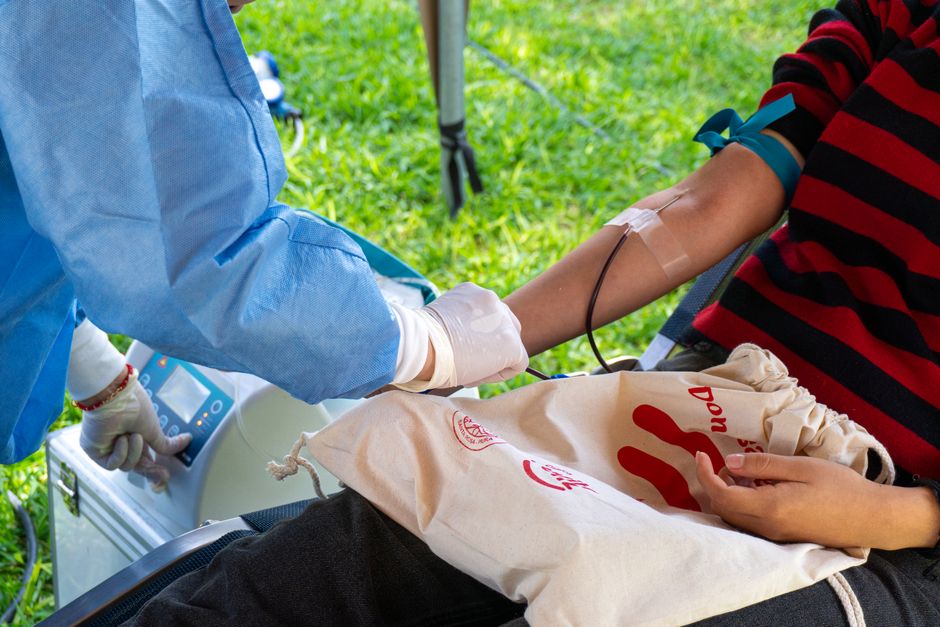
Donating plasma is a common way to earn money or help others, but the rules around how often you can go are strict. In the United States, the FDA limits plasma donors to once every 48 hours, with a maximum of two donations in any 7-day period. Most people can donate roughly 800 to 900 milliliters of plasma per session, though the exact amount depends on your weight and the specific center’s equipment.
How Much Plasma Can You Donate Per Visit?
The volume of plasma collected during a single donation is not a fixed number for everyone. It is calculated based on your body weight, and federal guidelines set the upper limit.
In the U.S., the Food and Drug Administration (FDA) caps a single plasma donation at 800 milliliters for most donors. However, donors who weigh 175 pounds (about 80 kilograms) or more may be allowed to give up to 880 milliliters of plasma per donation.
These figures refer to the pure plasma collected. The process itself draws whole blood, separates the plasma, and returns the red blood cells and other components back into your body. This means you lose fluid but not the oxygen-carrying red cells, which is why more frequent donations are physically possible compared to whole blood.
How Often Can You Donate Plasma?
The frequency rules are set to protect your health, primarily your protein levels and immune function. Plasma is mostly water, but it also contains antibodies and proteins that your body needs.
The FDA’s standard is clear: you may donate plasma no more than once in a 48-hour period. This means if you donate on a Monday morning, the earliest you can donate again is Wednesday morning. You also cannot exceed two donations within a 7-day period.
This schedule is the absolute legal maximum. Many commercial plasma centers impose their own stricter limits, often allowing a maximum of two donations per week regardless of what the calendar says.
Why Does the 48-Hour Rule Exist?
The restriction is not arbitrary. It is based on the time your body needs to replenish the proteins and antibodies removed during donation.
Your liver produces most of the proteins found in plasma, including albumin and immunoglobulins. Research consistently shows that protein levels can drop after donation and take about 48 hours to return to baseline. Donating more frequently than this can lead to chronically low protein levels, which may cause fatigue, dizziness, and a weakened immune response.
Plasma centers test your protein levels before every donation. If your total protein or immunoglobulin levels fall below acceptable ranges, you will be temporarily deferred until your levels recover.





How Much Money Do You Get for Donating Plasma?
Payment for plasma donation varies widely by company, location, and promotional offers. There is no national standard rate.
Most new donor promotions offer between $400 and $700 for your first month if you complete a set number of donations, often five to eight visits. After the promotional period, regular compensation typically ranges from $30 to $60 per visit.
Payment is generally loaded onto a prepaid debit card rather than paid in cash. The amount you receive is compensation for your time and travel, not payment for the plasma itself, which is a legal distinction that allows the practice to exist.
Who Cannot Donate Plasma?
Not everyone is eligible to donate plasma. The screening process is thorough, and many people are turned away for medical or lifestyle reasons.
Common disqualifiers include:
- Weighing less than 110 pounds (50 kilograms)
- Being under 18 years of age
- Having certain chronic conditions such as hepatitis, HIV, or active cancer
- Having low iron or protein levels at the time of screening
- Recent tattoos or piercings in some states, depending on the regulation
- Being pregnant or having given birth within the last six weeks
These eligibility rules are not optional. They are enforced by both the plasma center and federal regulators. If you are unsure about your eligibility, the best approach is to ask the center directly. They will perform a medical screening on your first visit.
Does Donating Plasma Have Side Effects?
Most people tolerate plasma donation well, but side effects do occur. The most common are mild and temporary.
You may feel lightheaded, dizzy, or fatigued during or after the donation. Some people experience a tingling sensation around the lips or fingers, which is caused by the citrate anticoagulant used to keep your blood from clotting during the procedure. This sensation usually passes quickly.
More serious side effects are rare but possible. These include fainting, nerve injury from the needle, or an infection at the needle site. Dehydration is also a risk, which is why centers require you to drink plenty of fluids before and after donating.
If you feel unwell after donating, tell the staff immediately. They are trained to handle these reactions.
Can You Donate Plasma Too Often?
Yes. Donating at the maximum legal frequency for months or years can strain your body even if you pass every screening.
Chronic frequent donation has been studied for its long-term effects. Some research suggests that very frequent donors may have lower immunoglobulin levels over time, which could increase the risk of infections. The evidence is not conclusive, but it is enough that many medical professionals advise caution.
Your body can usually signal when you are overdoing it. Symptoms of donating too frequently include persistent fatigue, frequent colds or infections, and difficulty concentrating. If you experience these, take a break from donation for several weeks and let your protein levels rebuild.
Listen to your body rather than trying to hit the maximum schedule every single week.
Is Donating Plasma Safe?
Plasma donation is a regulated medical procedure, and the overall safety record is strong when you follow the rules.
Every donation uses sterile, single-use needles and tubing. There is no risk of contracting a bloodborne illness from the equipment because nothing is reused. The plasma itself is tested for diseases before it is used in medical products.
The main risks are not infectious but physiological. Dehydration, fainting, and citrate reactions are the most common issues, and all are manageable with proper hydration and following the center’s instructions.
If you are generally healthy, meet the weight and age requirements, and donate within the allowed frequency, plasma donation is considered a low-risk activity.
What to Do Before You Donate Plasma
Preparation matters more than most people realize. How you treat your body in the 24 hours before donation affects both your comfort and your eligibility.
Hydration is the single most important factor. Drink plenty of water in the day leading up to your appointment. Being well-hydrated makes your veins easier to find and reduces the risk of feeling faint.
Eat a meal with protein and healthy fats a few hours before donating. Avoid fatty foods immediately before your visit, as they can make your plasma appear milky and interfere with testing. Avoid alcohol for at least 24 hours prior, as it can dehydrate you and affect your blood pressure.
Getting a good night’s sleep also helps. A rested body handles the fluid shift of donation more smoothly.
Frequently Asked Questions
How much plasma can you donate in a week?
The FDA allows a maximum of two donations in any 7-day period, with at least 48 hours between donations.
How much money do you get for donating plasma the first time?
Most centers offer new donor promotions between $400 and $700 for completing a set number of donations in your first month.
How long does a plasma donation take?
The actual donation process takes about 40 minutes, but your total visit usually lasts 60 to 90 minutes including screening and check-in.
Can you donate plasma if you weigh less than 110 pounds?
No, you must weigh at least 110 pounds to be eligible to donate plasma in the United States.
