
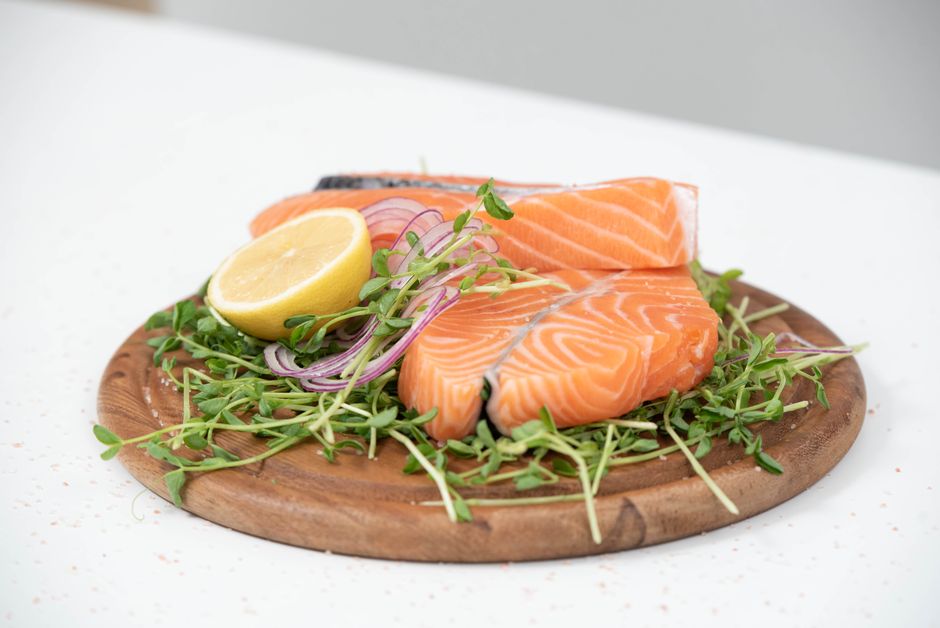
Salmon is one of the few foods that delivers omega-3 fats in amounts large enough to matter for human health. A typical 3-ounce cooked serving of farmed Atlantic salmon contains roughly 1,500 to 2,000 milligrams of combined EPA and DHA, the two omega-3 fats the body uses most directly. Wild sockeye and coho tend to land somewhat lower, often in the range of 700 to 1,200 milligrams per 3-ounce serving. Those are meaningful numbers, because most adults in the United States get only a small fraction of that from their diets.
The word “omega-3” covers several different fats, and not all of them behave the same way in the body. Understanding which type salmon provides, and how much, explains why salmon shows up so often in nutrition guidance.
How Much Omega 3 Does Salmon Actually Contain?
Farmed Atlantic salmon is the richest commonly eaten source, averaging around 1,500 to 2,000 milligrams of EPA and DHA per 3-ounce cooked portion. Wild salmon species generally contain less total fat and therefore less omega-3, though the exact amount swings with species, season, and what the fish ate.
The table below gives approximate ranges for common types. These figures come from USDA nutrient data and vary by catch, farming conditions, and cut.
| Type of Salmon (3 oz cooked) | Approximate EPA + DHA |
|---|---|
| Farmed Atlantic | 1,500–2,000 mg |
| Wild sockeye | 900–1,200 mg |
| Wild coho | 700–1,000 mg |
| Wild pink | 600–900 mg |
| Canned pink or chum | 500–900 mg |
Two things drive the difference. Fat content is the main one, since omega-3 fats are stored in the fish’s tissue fat. Farmed salmon is fed a controlled diet and tends to carry more fat than wild fish, which swim farther and burn more energy. Species matters too. A lean wild pink salmon simply has less fat to hold omega-3 than a farmed Atlantic fillet.
These ranges are approximate on purpose. A single fillet can sit above or below the range depending on the individual fish.
What Are EPA and DHA, and Why Do They Matter?
EPA and DHA are long-chain omega-3 fatty acids. The body can build them from a shorter plant omega-3 called ALA, found in flaxseed, chia, and walnuts, but the conversion is inefficient. Estimates suggest only a small percentage of ALA is converted to EPA, and an even smaller amount to DHA. That is why seafood, which supplies EPA and DHA ready-made, is treated as a distinct and more direct source.
These fats become part of cell membranes throughout the body. DHA is especially concentrated in the retina and in brain tissue. EPA is involved in the body’s inflammatory signaling. Both are precursors to compounds that help regulate inflammation and blood vessel function.
A third omega-3, DPA, is also present in salmon in smaller amounts. It is less studied than EPA and DHA but appears in the body and may contribute to overall omega-3 status.
Salmon also supplies protein, vitamin D, vitamin B12, selenium, and iodine. The omega-3 content is the headline, but it is not the only nutrient of value in the fish.
How Does Salmon Compare to Other Omega-3 Sources?
Few foods come close to salmon for EPA and DHA. The closest competitors are other oily fish.
- Herring and sardines: often comparable to or higher than wild salmon per serving, and typically cheaper.
- Mackerel: high in EPA and DHA, though some types are best limited due to mercury.
- Anchovies: concentrated omega-3 in small servings.
- Tuna: canned light tuna is moderate; albacore is higher but also higher in mercury.
- Trout: farmed rainbow trout is a solid source, generally lower than salmon.
- Plant sources: flax, chia, and walnuts provide ALA, not EPA or DHA.
The gap between fish and plants is not small. A tablespoon of flaxseed oil delivers ALA, but the body’s conversion to EPA and DHA is limited, so it does not function as a one-to-one substitute for a serving of salmon. If you eat no seafood, an algae-based supplement supplies DHA and EPA directly, since algae is where fish originally get these fats.





Does Cooking or Canning Change the Omega-3 Content?
Cooking does not destroy omega-3 fats in any dramatic way, but some can be lost depending on the method. Fats can render out and drip away during high-heat cooking, and omega-3 fats are sensitive to prolonged high heat and oxygen.
Methods that keep the fish intact and limit fat loss tend to preserve more. Baking, steaming, and poaching generally retain more omega-3 than frying, where fat can leach into the oil. Canned salmon is a practical option: it is cooked in the can, and if the bones and skin are included, it also adds calcium. Canned pink and chum salmon contain less omega-3 than fresh farmed Atlantic, but they remain a genuine source.
The bigger variable is not cooking method. It is which fish you buy and how much of it you eat.
How Much Salmon Do You Need for the Omega-3 You Want?
A single 3-ounce serving of farmed Atlantic salmon delivers more EPA and DHA than many people get from all seafood combined in a week. Dietary guidance in the United States generally recommends eating about 8 ounces of seafood per week, or roughly two servings, for adults. That recommendation is built around supporting heart health and providing key nutrients, and salmon is one of the most efficient ways to meet it.
Two servings of salmon per week would supply well over 3,000 milligrams of EPA and DHA in most cases. For context, many fish oil capsules provide around 300 to 600 milligrams of combined EPA and DHA per capsule, so a single salmon serving can exceed several capsules.
It is worth being clear about what this does and does not mean. Eating fish is associated with heart health in large population studies, but that does not automatically mean that taking high-dose fish oil capsules produces the same benefit. Trials testing fish oil supplements have produced mixed results for heart outcomes. The evidence is stronger for eating fish as part of a diet than for isolated high-dose supplementation.
Is There a Downside to Eating a Lot of Salmon?
For most adults, two servings of salmon per week is considered safe and is the amount most dietary guidance points toward. The main considerations are mercury and other contaminants, and these differ by type.
Salmon is generally low in mercury compared with large predatory fish like shark, swordfish, and king mackerel. Farmed salmon has raised separate questions about persistent organic pollutants, though regulatory agencies in the United States and Europe have assessed farmed salmon as safe to eat in the recommended amounts. The evidence does not support avoiding salmon over contaminant concerns for the general population.
Specific groups need tailored guidance. People who are pregnant or breastfeeding, and parents feeding young children, should follow established federal seafood advice rather than general rules, because both the benefits and the contaminant limits are handled differently for these groups. If you take a blood thinner such as warfarin, or you have a bleeding disorder, talk with your clinician before making large changes to your fish or fish oil intake, since high omega-3 intake can affect clotting. This is a case where individual medical guidance matters more than general advice.
One clarification worth making: the omega-3 in salmon is not the same as the omega-3 in a typical fish oil pill, dose for dose. Food delivers a mix of fats, protein, and micronutrients together, and the research on food and on supplements does not always agree.
Farmed vs Wild: Which Has More Omega-3?
Farmed Atlantic salmon generally contains more total omega-3 than wild salmon, mainly because it has more fat. Wild salmon tends to have a slightly higher proportion of omega-3 relative to its total fat, and a lower ratio of omega-6 to omega-3, but the absolute amount of EPA and DHA per serving is usually higher in farmed fish.
Both are nutritious. If your goal is maximizing EPA and DHA per serving, farmed Atlantic is the more concentrated choice. If you prefer wild fish for other reasons, sockeye is the strongest wild option for omega-3.
Feed composition affects farmed salmon’s omega-3 content. As aquaculture has shifted toward more plant-based feeds, the omega-3 levels in some farmed salmon have declined over the years compared with older data. The USDA figures reflect this, and the numbers continue to shift. This is one reason exact values are best treated as ranges rather than fixed numbers.
Frequently Asked Questions
How much omega 3 is in a 3-ounce serving of salmon?
A 3-ounce cooked serving of farmed Atlantic salmon contains roughly 1,500 to 2,000 milligrams of combined EPA and DHA. Wild species generally fall lower, often between 600 and 1,200 milligrams depending on the type.
Is canned salmon as good a source of omega 3 as fresh?
Canned pink and chum salmon typically provide around 500 to 900 milligrams of EPA and DHA per 3-ounce serving, which is less than fresh farmed Atlantic but still a real source. Canned salmon is a practical, lower-cost option that keeps most of its omega-3 through the canning process.
Does farmed salmon have more omega 3 than wild salmon?
Yes, farmed Atlantic salmon generally contains more total EPA and DHA per serving than wild salmon because it has a higher fat content. Wild salmon has a somewhat higher proportion of omega-3 relative to its total fat, but the absolute amount per serving is usually lower.
How much salmon should I eat per week for omega 3?
General dietary guidance in the United States recommends about 8 ounces of seafood per week for adults, which is roughly two servings. Two servings of salmon would supply well over 3,000 milligrams of EPA and DHA in most cases.
