
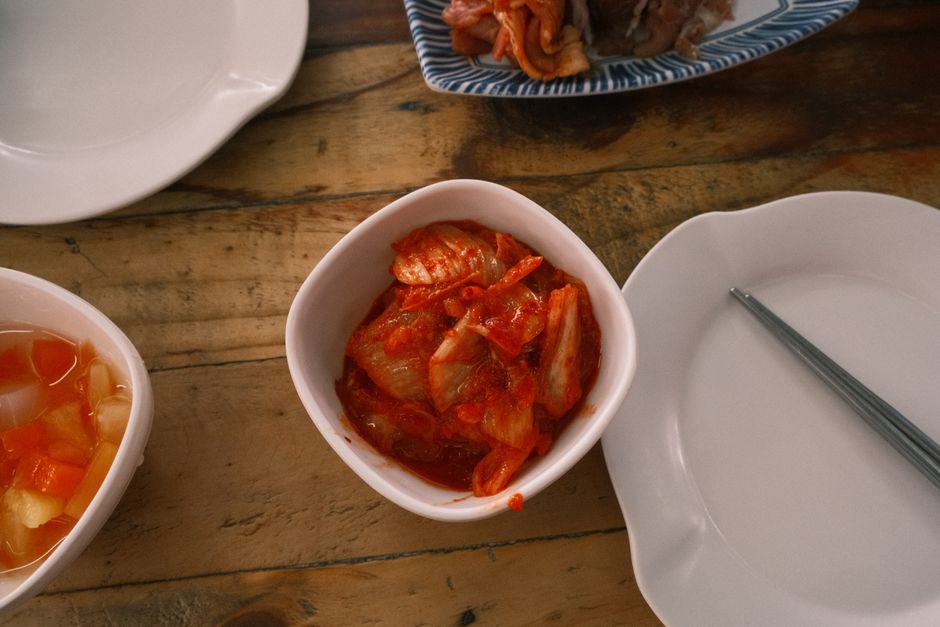
Kimchi is a fermented cabbage dish that has been a staple in Korean cuisine for centuries. Many people eat it specifically for gut health, hoping to get more beneficial bacteria into their digestive system. The honest answer is that there is no single official daily serving size for kimchi that guarantees gut health benefits. Most research studies use portions between 50 and 100 grams per day, which is roughly a third to two-thirds of a cup. That amount appears to be a reasonable target for most healthy adults, but your personal tolerance and overall diet matter more than hitting an exact number.
What Makes Kimchi Good for Gut Health?
Kimchi is a fermented food. The fermentation process allows lactic acid bacteria to grow and multiply. These bacteria break down sugars in the vegetables and produce compounds that give kimchi its tangy, sour flavor.
When you eat kimchi, you consume live microorganisms. Some of these bacteria can survive the journey through your stomach and reach your intestines. Once there, they can temporarily join the community of microbes already living in your gut. This is why fermented foods like kimchi are often described as probiotic foods.
The vegetables in kimchi also provide prebiotic fiber. Prebiotics are types of fiber that feed the good bacteria in your gut. Kimchi delivers both live bacteria and the fiber that helps those bacteria thrive. That combination is what makes it interesting for digestive health.
Not all store-bought kimchi is the same. Some commercial brands are pasteurized, which kills the live bacteria. If you want the probiotic benefit, look for unpasteurized kimchi sold in the refrigerated section. Check the label for words like “live cultures” or “raw.”
How Much Kimchi to Eat Daily for Gut Health
Research on kimchi and gut health has used various serving sizes. Some studies have participants eat 50 grams per day. Others use 100 grams per day. Both amounts have been linked to positive changes in gut bacteria composition.
For a practical daily target, 50 to 100 grams is a reasonable range. That equals roughly one-third to two-thirds of a cup. You can start at the lower end and see how your body responds.
More is not necessarily better. Eating very large amounts of kimchi means consuming a lot of sodium and potentially irritating your stomach lining. Kimchi is also spicy for many varieties, which can trigger heartburn or digestive discomfort in sensitive people.
Consistency matters more than portion size. Eating a small serving most days of the week is likely better for your gut than eating a large bowl once a week. The bacteria from fermented foods do not permanently colonize your gut. You need regular intake to keep getting the benefit.
What the Research Actually Shows
Several studies have looked at kimchi consumption and gut health. Some research suggests that regular kimchi intake can increase the diversity of gut bacteria. Greater microbial diversity is generally associated with better digestive health.
One notable study followed healthy adults who ate kimchi daily for several weeks. Researchers observed changes in the types of bacteria present in stool samples. These changes were consistent with a shift toward a more favorable gut environment.
Other research has examined whether kimchi can help with specific digestive issues. Some studies suggest it may help reduce bloating and improve bowel regularity. However, the evidence is not strong enough to claim kimchi treats any digestive disorder.
It is important to be honest about the limits of this research. Many kimchi studies are small. They often use specific kimchi recipes that may differ from what you buy at the store. Results vary depending on the individual, the kimchi batch, and the study design.
No clinical evidence currently confirms that kimchi can cure or treat any specific medical condition. It is a healthy food that supports gut health as part of a balanced diet. It is not a medicine.




Potential Side Effects and Who Should Be Careful
Kimchi is high in sodium. A single serving can contain a significant portion of your daily recommended salt intake. If you have high blood pressure or kidney disease, talk to your doctor before making kimchi a daily habit.
People with histamine intolerance may react to kimchi. Fermented foods naturally contain histamine, which can cause headaches, hives, or digestive upset in sensitive individuals.
Spicy varieties of kimchi can trigger acid reflux or heartburn. If you are prone to these issues, choose a milder version or eat smaller amounts.
Some people experience temporary bloating or gas when they first start eating fermented foods. This usually settles within a week or two as your gut adjusts. Starting with a small serving can help minimize this effect.
Pregnant women should be cautious. Kimchi is safe to eat during pregnancy if it is properly refrigerated and consumed before its expiration date. However, if you have concerns about food safety or fermentation, ask your healthcare provider.
How to Add Kimchi to Your Daily Diet
The easiest way to eat kimchi daily is to treat it as a side dish. A small bowl next to your meal is the traditional Korean approach. You can also add it to rice bowls, noodles, or soups.
Kimchi can be mixed into scrambled eggs or omelets. It works well in grilled cheese sandwiches or as a topping for tacos. Some people blend it into salad dressings or use it as a condiment for grilled meats.
Kimchi loses some live bacteria when cooked at high temperatures. If the probiotic benefit is your main goal, eat it raw and cold. Cooking kimchi still gives you the vegetable fiber and flavor, but the live cultures may not survive the heat.
Store kimchi in the refrigerator and keep it tightly sealed. It continues to ferment slowly even when cold. Over time it becomes more sour and tangy. This is normal and does not mean it has spoiled.
If you buy kimchi in bulk, check the expiration date. Fermented foods can grow harmful bacteria if stored improperly or kept past their shelf life. Trust your senses. If it smells off or has visible mold, throw it away.
Kimchi vs. Other Fermented Foods
Kimchi is not the only fermented food that supports gut health. Yogurt, kefir, sauerkraut, miso, and kombucha all provide live bacteria. Each contains different strains, so variety may be beneficial.
Yogurt and kefir are dairy-based and provide bacteria that are well studied. Sauerkraut is similar to kimchi but made from cabbage alone. It is often lower in sodium and less spicy.
Some people tolerate certain fermented foods better than others. If kimchi causes discomfort, you may do better with yogurt or kefir. Listen to your body and choose what works for you.
No single fermented food is superior for gut health. The best approach is to include a range of fermented foods in your diet. This gives your gut a wider variety of beneficial bacteria.
Frequently Asked Questions
Can I eat kimchi every day?
Yes, most healthy adults can eat kimchi daily without problems. Start with a small serving of about 50 grams and adjust based on how you feel.
Is kimchi better raw or cooked for gut health?
Raw, unpasteurized kimchi contains live bacteria that may benefit your gut. Cooking kills most of these live cultures, so eat it cold if probiotic benefits are your goal.
Can kimchi cause bloating?
Some people experience temporary bloating or gas when they first start eating fermented foods. This usually settles within a week or two as your digestive system adjusts.
Is store-bought kimchi as good as homemade?
Refrigerated, unpasteurized store-bought kimchi can be just as good as homemade. Avoid shelf-stable or pasteurized versions that do not contain live cultures.
