

One unit of blood in the United States is about 450 to 500 milliliters — roughly one pint. That is the standard volume collected during a single whole-blood donation, and it is the amount most people mean when they say “one unit.”
That pint is not pure red cells. It is whole blood, which is mostly plasma and water, with red blood cells, white blood cells, and platelets making up the rest. Once collected, that single unit is usually separated into components, and each component can be given to a different patient.
So the short answer is one pint. But the volume, the weight, and what that unit actually does inside a body all come with details worth knowing.
How Much Is One Unit of Blood in Milliliters and Pints?
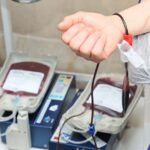
A unit of whole blood is collected in a bag that holds about 450 milliliters of blood, plus roughly 60 to 70 milliliters of anticoagulant preservative solution. That brings the total in the bag to around 500 to 520 milliliters, or a little over one pint.
The exact volume depends on the collection system and the donor. Blood banks use standard bags, and the target is set so the unit contains enough red cells to be useful while staying within safe limits for the donor. Donating a full unit typically removes around 8 to 10 percent of a person’s total blood volume.
For context, the average adult has about 4,500 to 5,700 milliliters of blood — roughly 10 to 12 pints. So one donation is a meaningful but not dangerous fraction of the total.
One common point of confusion: a “unit” of red blood cells is not the same volume as a unit of whole blood. When whole blood is spun down and separated, the red cell component is smaller in volume but carries the oxygen-carrying capacity. This is why a patient might receive “one unit of packed red blood cells” and the volume looks different from a donation bag.
What Does One Unit of Blood Weigh?
A unit of whole blood weighs about 1 pound, or roughly 450 to 500 grams. Blood is slightly denser than water, so a pint of it weighs a bit more than a pint of water would.
This matters in a few practical settings. Blood banks, hospitals, and transport services track weight because it affects storage, shipping, and how the unit is handled. It is also a useful way to picture what a donor is giving up — about a pound of fluid, most of which the body replaces within a day or so.
The plasma portion is replaced relatively quickly. Red blood cells take longer to regenerate. This is why donation centers enforce a minimum waiting period between whole-blood donations, typically 56 days in the United States.
Why Is Blood Measured in Units Instead of Volume?
Blood is measured in units because what matters clinically is not just how much liquid is given, but how much therapeutic content that liquid carries. A unit is a standardized dose, similar to how a medication is dosed in milligrams rather than by the spoonful.
Each unit of red blood cells is expected to raise a recipient’s hemoglobin by a predictable amount. Clinicians use that expectation to decide how many units to order. If blood were measured only by volume, two bags of the same size could carry very different amounts of oxygen-carrying capacity depending on how they were processed.
The unit system also protects donors. Collection bags are calibrated so that a full unit is drawn safely. If a donor is small, the bag may be filled to a lower volume to avoid taking too much, and that partial unit is handled differently.
There is one more layer of standardization worth knowing. Blood is also typed and crossmatched, and a unit is labeled with its blood group, Rh factor, and component type. The volume is only one part of what makes a unit a unit.




How Much Blood Is in One Unit of Red Blood Cells?
A unit of packed red blood cells has a volume of roughly 250 to 300 milliliters. It contains the red cells from one whole-blood donation, with most of the plasma removed.
The hematocrit — the percentage of the volume made up of red cells — is higher in packed red cells than in whole blood. That is the point. Removing plasma concentrates the oxygen-carrying part, which is usually what a patient needs.
A unit of red cells is generally expected to raise hemoglobin by about 1 gram per deciliter in an average adult, though the actual rise varies with body size, ongoing bleeding, and how the patient’s body responds. This is a widely used clinical rule of thumb, not a guaranteed outcome.
Other components come from that same original donation:
- Plasma — separated and frozen, used for clotting factor replacement in certain conditions
- Platelets — pooled from multiple donors, used in patients with low platelet counts or platelet function problems
- Cryoprecipitate — a frozen concentrate of specific clotting proteins, made from plasma
So one donation of about a pint can ultimately help more than one person.
How Much Blood Can a Person Safely Lose?
Most healthy adults tolerate losing about 14 to 15 percent of their total blood volume without serious problems. That is roughly the amount taken during a standard donation, which is why donation is generally safe for people who meet the eligibility criteria.
Below that range, the body compensates. Blood vessels narrow, heart rate rises, and fluid shifts from surrounding tissues into the bloodstream to maintain blood pressure. These are normal responses, not signs of harm.
Losing much more — typically more than 30 percent of blood volume — can cause symptoms like rapid heart rate, falling blood pressure, confusion, and eventually shock. This is the territory where transfusion becomes a medical necessity rather than an elective procedure.
The threshold for transfusion is not a single number. It depends on the patient, the reason for blood loss, and whether the bleeding is ongoing. In many stable patients, clinicians use a restrictive strategy, transfusing when hemoglobin falls below a certain level rather than at the first sign of a drop. In actively bleeding patients or those with heart disease, the approach may be different. This is a clinical judgment, not a fixed rule.
Does One Unit of Blood Raise Hemoglobin the Same in Everyone?
No. One unit raises hemoglobin by different amounts in different people. The commonly cited figure of about 1 gram per deciliter is an average, and individual results vary.
Body size matters. A smaller person will see a larger rise from the same unit than a larger person, because the same amount of red cells is diluted into a smaller blood volume.
Ongoing bleeding matters more. If a patient is still losing blood, a transfused unit may barely move the hemoglobin number because it is being lost as fast as it is replaced. In that situation, the goal is to control the bleeding source, not just to keep transfusing.
Other factors include the age and quality of the stored unit, the patient’s own bone marrow response, and whether the patient has conditions that affect red cell survival. Stored red cells also undergo changes during storage, which is one reason blood banks have storage limits and why fresher blood is not automatically better for every patient.
This variability is why clinicians check hemoglobin levels after transfusion rather than assuming a fixed result. The unit is standardized; the response is not.
How Long Does It Take to Replace One Unit of Blood?
The plasma volume from a donated unit is replaced within about 24 to 48 hours. The red blood cells take much longer.
Red blood cell regeneration depends on iron availability, bone marrow function, and the donor’s overall health. It generally takes several weeks for red cell mass to return to pre-donation levels. This is the main reason donation centers require a waiting period between whole-blood donations — commonly 56 days in the United States — to allow the body to recover.
Iron is the limiting factor for many regular donors. Each unit of blood contains a meaningful amount of iron, and frequent donation without adequate iron intake can lead to iron deficiency. Some blood centers screen for this and may recommend iron supplementation for repeat donors, but this is not universal and should be discussed with a clinician rather than assumed.
For most healthy people who donate occasionally and eat a balanced diet, recovery is uneventful. For people who donate frequently, or who have low iron stores to begin with, the picture can be different.
Frequently Asked Questions
How many mL is one unit of blood?
One unit of whole blood is about 450 milliliters of blood plus roughly 60 to 70 milliliters of anticoagulant, for a total near 500 to 520 milliliters in the bag. A unit of packed red blood cells is smaller, around 250 to 300 milliliters.
Is one unit of blood a pint?
Yes, one unit of whole blood is approximately one pint, or about 450 to 500 milliliters. The exact volume depends on the collection system and the donor.
How much does one unit of blood weigh?
A unit of whole blood weighs about 1 pound, or roughly 450 to 500 grams. Blood is slightly denser than water, so it weighs a bit more than the same volume of water.
How much does one unit of blood raise hemoglobin?
A unit of red blood cells is generally expected to raise hemoglobin by about 1 gram per deciliter in an average adult. The actual rise varies with body size, ongoing bleeding, and the patient’s own response.
