
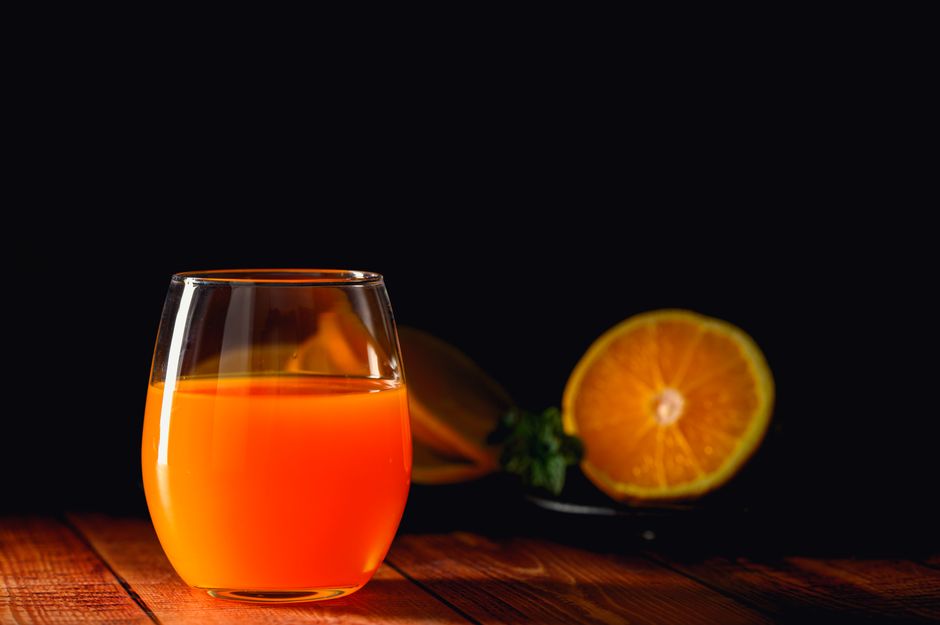
One medium orange yields about 1/4 cup (2 fluid ounces or 60 milliliters) of juice. That is the average for a standard navel orange. Larger oranges can produce closer to 1/3 cup, while smaller varieties like mandarins give far less.
How Much Is Juice Of One Orange? The Exact Numbers
A medium navel orange weighs about 150 grams. When you juice it, you get roughly 60 milliliters of liquid. That equals 2 fluid ounces, or 4 tablespoons.
Here is the breakdown by orange size:
- Small orange (100g): about 40 ml (1.4 fl oz)
- Medium orange (150g): about 60 ml (2 fl oz)
- Large orange (200g): about 85 ml (3 fl oz)
These are averages. Actual yield varies by variety, ripeness, and how hard you squeeze. A dry, overripe orange gives less. A fresh, heavy one gives more.
Why Juice Yield Varies So Much
The main factor is the orange variety. Navel oranges are the most common juicing orange in US grocery stores. They are reliable but not the juiciest. Valencia oranges, which appear in stores from spring through summer, contain more juice and fewer seeds. They are the preferred choice for commercial orange juice.
Temperature matters too. Oranges at room temperature yield more juice than cold ones straight from the fridge. Rolling the orange on the counter with light pressure before cutting can help break the juice sacs inside. This is not a myth — it physically ruptures the cell walls that hold the juice.
Ripeness also plays a role. A ripe orange feels heavy for its size. That heaviness means more water content and more juice. A puffy, light orange has thick skin and drying flesh inside.
What One Orange’s Juice Contains Nutritionally
The juice from one medium orange contains roughly 30 milligrams of vitamin C. That is about one-third of the daily recommended intake for adults. The exact amount varies with the orange’s size and growing conditions.
One orange’s juice also provides about 30 calories and 7 grams of sugar. All of that sugar is natural fruit sugar — fructose and glucose. There is no added sugar in freshly squeezed orange juice.
Potassium is present at about 120 milligrams per orange’s juice. This is a modest amount. For comparison, a medium banana contains about 422 milligrams of potassium.
One important note: the juice alone does not contain the fiber that the whole fruit does. The pulp holds some fiber, but most of the orange’s fiber is in the membranes and pith that you discard when juicing. Eating the whole orange gives you about 3 grams of fiber. Drinking only the juice gives you less than 1 gram.





How Much Juice You Need for a Glass
A standard 8-ounce glass of orange juice requires 3 to 4 medium oranges. That means a typical glass of fresh-squeezed juice contains the sugar of 3 to 4 whole fruits.
This matters for people watching their sugar intake. The American Heart Association recommends limiting added sugars, but the sugar in pure fruit juice is not considered added sugar. Still, drinking juice delivers sugar to your bloodstream faster than eating the whole fruit because the fiber is gone.
For most healthy adults, one small glass of fresh orange juice daily is reasonable. But whole fruit is the better choice for daily consumption. The fiber slows sugar absorption and keeps you full longer.
Juicing Methods and Their Effect on Yield
How you extract the juice changes how much you get. A hand reamer is the most efficient manual method. It presses the juice out completely with a twisting motion.
An electric citrus juicer works well and is faster. It can extract slightly more juice than hand squeezing because it applies more consistent pressure.
Using your bare hands is the least efficient method. You cannot apply the same pressure as a tool. Expect to lose 10 to 20 percent of the available juice this way.
One common mistake is cutting the orange incorrectly. Cut it in half across the segments, not through the stem end. This exposes the maximum number of juice sacs and makes extraction easier.
Fresh Juice Versus Store-Bought
Freshly squeezed orange juice from one orange contains no additives. Store-bought orange juice often has added calcium and vitamin D for fortification. Some brands add preservatives to extend shelf life.
Pasteurized orange juice has been heat-treated to kill bacteria. This extends shelf life but can reduce vitamin C content slightly. The loss is small — typically less than 10 percent.
Fresh juice should be consumed immediately or within 24 hours if refrigerated. It oxidizes quickly and can develop off flavors. Store-bought juice in a sealed container lasts much longer because of pasteurization.
There is no evidence that fresh juice is dramatically more nutritious than good-quality store-bought juice. The difference is mainly in taste and the absence of additives.
Is Drinking Orange Juice Good for You?
Orange juice provides vitamin C, potassium, and folate. These are real nutrients with established health benefits. Vitamin C supports immune function and collagen production. Potassium helps regulate blood pressure.
Research published in the American Journal of Clinical Nutrition has examined the relationship between fruit juice consumption and health outcomes. The findings suggest that moderate consumption — one small glass daily — is not associated with harm in healthy adults.
However, orange juice is a concentrated source of sugar. Drinking large amounts can contribute to weight gain and blood sugar spikes. People with diabetes or prediabetes should be cautious. The American Diabetes Association recommends whole fruit over juice for better blood sugar control.
Some research suggests that the flavonoids in orange juice may have anti-inflammatory effects. These compounds are present in both the juice and the pulp. But the clinical significance for disease prevention is not fully established.
How to Get the Most Juice From One Orange
Follow these steps to maximize your yield:
- Choose oranges that feel heavy for their size
- Let them warm to room temperature before juicing
- Roll the orange on the counter with gentle pressure
- Cut across the segments, not through the stem
- Use a reamer or electric juicer rather than hand squeezing
These steps can increase your yield by 10 to 20 percent compared to squeezing a cold orange with your hands. The difference is noticeable when you juice several oranges at once.
What About Orange Juice Concentrate?
Frozen orange juice concentrate is made by removing water from fresh juice. When you reconstitute it according to package directions, you get juice with the same sugar and calorie content as fresh.
Some studies suggest that concentrate may lose some volatile flavor compounds during processing. The vitamin C content is generally comparable to fresh juice because manufacturers add it back after processing.
There is no strong evidence that concentrate is less healthy than fresh juice. The main difference is taste and the presence of additives in some commercial products.
Frequently Asked Questions
How many oranges does it take to make one cup of juice?
You need 3 to 4 medium oranges to make one cup (8 ounces) of juice. Larger oranges may require only 3.
Is fresh orange juice better than store-bought?
Fresh juice has no additives and better taste, but the nutritional difference is small. Store-bought juice is pasteurized and may have added vitamins.
How much sugar is in the juice of one orange?
One medium orange’s juice contains about 7 grams of natural sugar. This is equivalent to roughly 1.5 teaspoons of sugar.
Can I drink orange juice every day?
One small glass daily is reasonable for most healthy adults. Whole oranges are a better daily choice because they contain fiber.
