
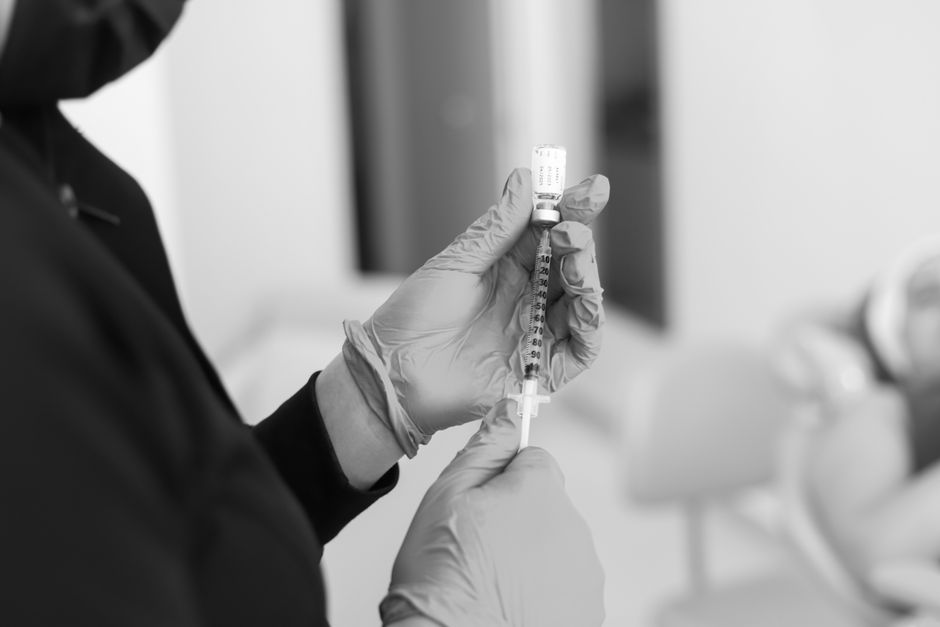
Botox is not sold by the syringe the way a vaccine or a pain injection is. That single fact explains most of the confusion around pricing. When people ask how much a syringe of Botox costs, they are usually picturing a pre-filled product with a set price tag. In practice, cosmetic Botox is priced by the unit, and a “syringe” is simply whatever amount the provider draws up for your treatment.
That means there is no standard price for a syringe of Botox. What exists instead is a price per unit, plus the number of units a given area of the face requires. Those two numbers multiplied together produce your total. Everything else — the clinic, the city, the injector’s experience — adjusts that total up or down.
How Much Is A Syringe Of Botox Pricing Explained?
Cosmetic Botox in the United States is typically priced somewhere between roughly $10 and $20 per unit, though prices outside that range exist in both directions. A full syringe used for cosmetic treatment often holds 50 to 100 units, which means a single syringe can represent anywhere from about $500 to $2,000 depending on the clinic and the dose.
The word “syringe” is doing a lot of misleading work here. A provider does not sell you a syringe. They sell you units, and the syringe is just the delivery device. Two patients can walk out of the same clinic having received “one syringe” and pay very different amounts if one needed 20 units for a forehead line and the other needed 60 units across several areas.
This is the core of why Botox pricing feels opaque. You are not buying a fixed product. You are buying a dose, and the dose is customized to your anatomy and your goals.
Why Is Botox Priced Per Unit Instead Of Per Syringe?
Botox is a prescription drug supplied as a powder that must be reconstituted, or mixed with sterile saline, before injection. Once mixed, it has a limited shelf life and must be used within a set window. That biology and logistics shape how clinics price it.
Because the product is dosed in units of biological activity, not in milliliters of liquid, the meaningful measurement is the unit. The amount of liquid in the syringe can be adjusted by the provider depending on how they reconstitute the vial. A more dilute mixture means more liquid per unit. A more concentrated mixture means less liquid per unit. Either way, the unit count is what determines both the effect and the cost.
This matters for you as a patient. If a clinic quotes you a price “per syringe” without telling you the unit count, you cannot compare it to another clinic’s price. You are comparing a volume to a dose, which is not a real comparison.
There is also a safety dimension. Botox is a regulated prescription product. Clinics buy it in vials, and pricing reflects the cost of that vial plus the provider’s time and expertise. The unit is the honest common denominator.
What Determines The Number Of Units You Need?
The number of units depends on which muscles are being treated, how strong those muscles are, and how much movement the provider is trying to reduce. It is not one-size-fits-all.
Some general patterns are well established in clinical practice:
- Smaller, thinner areas like crow’s feet near the eyes usually require fewer units than larger areas.
- The forehead and the vertical lines between the eyebrows (glabellar lines) often require moderate to higher unit counts because the muscles there are relatively strong.
- Men often need more units than women for the same area, because facial muscles tend to be larger and stronger.
- People with very active facial muscles, or those who have built up tolerance from frequent treatments, may need higher doses over time.
These are general tendencies, not rules. A provider assesses your face in person. Two people with similar-looking lines can need different doses because their muscle strength differs.
One point worth stating plainly: the FDA-approved dosing for glabellar lines, the frown lines between the eyebrows, is 20 units divided across five injection points. That is a labeled dose for one specific cosmetic indication. Other areas of the face are commonly treated but are not all covered by the same approved labeling, and the doses used are based on clinical experience rather than a single standardized number.





Why Do Prices Vary So Much Between Clinics?
Two clinics in the same city can charge very different rates for what sounds like the same treatment. Several factors drive that gap.
Injector experience and credentials. A board-certified dermatologist or plastic surgeon with years of injectable experience typically charges more than a newer provider. You are partly paying for judgment — knowing exactly where to place product and how much to use.
Geography. Urban centers and higher cost-of-living areas tend to have higher prices. This is true across most medical and cosmetic services, not just Botox.
Product brand. Botox is one brand name among several botulinum toxin type A products. Different products have different unit potencies, and units are not interchangeable between brands. A clinic using one product may quote a different unit count than a clinic using another, even for the same area.
Overhead and marketing. Rent, staffing, and advertising costs all feed into the price. A med spa running heavy promotions may price lower to draw volume, while a physician’s office may price higher and see fewer patients per day.
There is a real caution here. The cheapest option is not automatically the best value, and it is not automatically unsafe. But unusually low pricing can sometimes signal diluted product, inexperienced injectors, or non-medical settings. Botox is a prescription drug and should be administered by a licensed medical professional.
What Does A Typical Botox Treatment Actually Cost?
A realistic range for a single cosmetic area in the US often falls between roughly $200 and $600, depending on the area and the per-unit price. Treating multiple areas pushes the total higher. A full-face approach across forehead, glabellar lines, and crow’s feet can commonly land in the $600 to $1,200 range, though this varies widely.
The reason there is no single number is that the number does not exist. Anyone quoting you one flat price for “a syringe of Botox” is either quoting a package deal or simplifying for convenience. Ask for the unit count and the price per unit. That is the only way to know what you are actually paying.
It also helps to know that Botox is not permanent. Results typically last around three to four months for most people, though this varies. That means the cost is recurring if you want to maintain the effect. Over a year, that adds up, and it is worth factoring into any decision.
Does Insurance Cover Botox?
For cosmetic use, no. Insurance does not cover Botox used to smooth wrinkles, because it is considered elective and not medically necessary.
There is an important exception. Botox is also approved and used for certain medical conditions, including chronic migraine, some forms of muscle spasticity, and certain eye muscle disorders. For these, insurance may cover treatment when it is medically indicated and properly documented. Coverage rules vary by plan and condition, so this is something to confirm directly with your insurer rather than assume.
This distinction matters because the pricing structure is different. Medical Botox is often billed through insurance at negotiated rates, while cosmetic Botox is a direct out-of-pocket expense.
How Can You Compare Botox Prices Honestly?
Comparing Botox prices is only meaningful if you compare the same things. A few practical points help.
- Ask for the price per unit, not the price per syringe or per area.
- Ask how many units the provider estimates you will need.
- Ask which product brand they use, since units are not interchangeable between brands.
- Confirm who is performing the injection and their credentials.
- Be cautious of flat “per syringe” pricing that does not disclose the unit count.
If a clinic will not tell you the unit count or the per-unit price, that is a signal to ask more questions or look elsewhere. Transparent pricing is a reasonable expectation for a prescription medical treatment.
The bigger point is that the “syringe” framing is a marketing convenience, not a clinical one. Once you shift to thinking in units, the pricing stops being mysterious. It becomes a simple calculation: units needed, multiplied by price per unit, adjusted by who is doing the work and where.
Frequently Asked Questions
How much does one syringe of Botox cost?
There is no standard price for a syringe of Botox because it is priced by the unit, not by the syringe. A syringe holding 50 to 100 units typically represents roughly $500 to $2,000 depending on the clinic and the dose.
How many units are in a syringe of Botox?
A syringe used for cosmetic treatment often holds 50 to 100 units, but the exact amount depends on how the provider draws it up for your specific treatment. The unit count, not the liquid volume, is what determines the effect and the cost.
Why is Botox so expensive per unit?
Botox is a regulated prescription drug supplied as a powder that must be reconstituted and used within a limited window. The per-unit price reflects the cost of the product plus the provider’s time, training, and clinical judgment.
Does insurance cover Botox for wrinkles?
No, insurance does not cover Botox for cosmetic wrinkles because it is considered elective. It may cover Botox for certain medical conditions like chronic migraine when medically indicated, but coverage rules vary by plan.
