
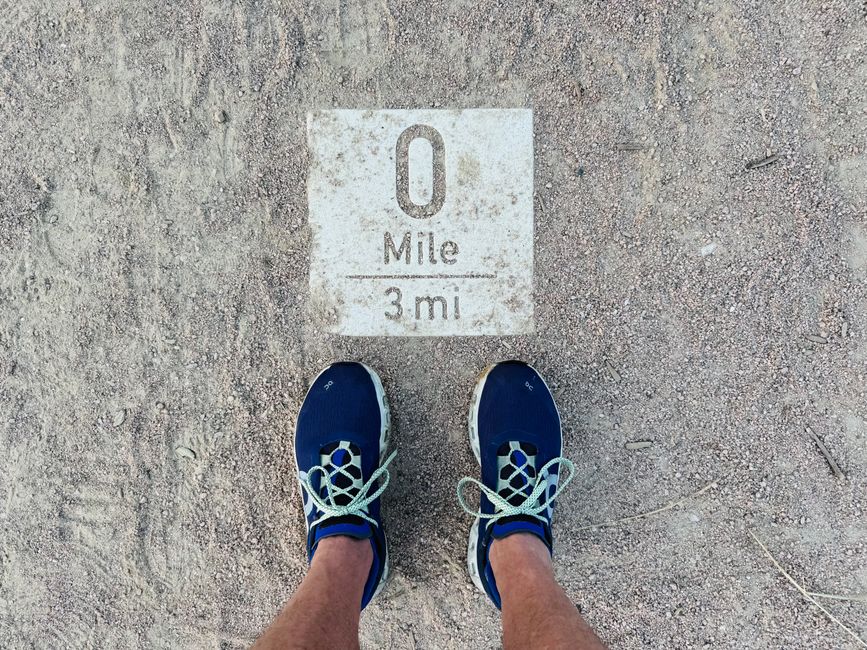
A 5K run is 3.1 miles. The “K” stands for kilometers, and 5 kilometers equals 3.10686 miles. Most races and training plans round that to 3.1 miles, which is why you will see the distance listed that way on race websites and running apps. If you have ever signed up for a “5K” and wondered how far you actually have to go, that is the whole answer: just over three miles.
How Much Is A 5K Run In Miles?
Five kilometers is 3.1 miles. The exact conversion is 3.10686 miles, because one kilometer equals 0.621371 miles.
A 5K is the shortest of the standard road race distances. It sits below the 10K (6.2 miles), the half marathon (13.1 miles), and the full marathon (26.2 miles). Because it is short, it is the most common distance for first-time racers and for community charity runs.
One thing that trips people up: the metric system and the US system do not line up neatly. A 5K is not exactly 3 miles. That extra 0.1 mile — about 528 feet, or roughly one city block and a bit — matters more than you might think on race day. Runners who train on a 3-mile loop and then race a 5K are covering about 0.1 mile more than they practiced.
Why Do Races Use 5K Instead of 3 Miles?
Road racing is governed internationally in metric distances. The 5K is a standard world athletics distance, and most countries outside the US measure running in kilometers as a matter of course.
When you enter a certified 5K in the US, the course has been measured to exactly 5 kilometers — not 3 miles. That is why race results and personal bests are recorded at 5K. It keeps American runners on the same measuring stick as runners everywhere else.
The metric standard also explains why you rarely see a “3-mile” road race on an official calendar. Three miles is a training distance, not a championship one.
How Long Does It Take to Run a 5K?
There is no single answer, and anyone who gives you one is guessing. Finish times depend on age, fitness, training, terrain, and weather.
What is clear is the spread. Elite runners finish a 5K in well under 15 minutes. Most recreational runners who train for the distance finish somewhere in the 25 to 40 minute range. First-time runners and walkers often take 45 minutes to an hour or more.
A useful way to think about pace is minutes per mile. If you run a 5K in 30 minutes, your average pace is about 9 minutes 40 seconds per mile, since 30 minutes divided by 3.1 miles works out that way. A 40-minute 5K is roughly 12 minutes 54 seconds per mile. A 25-minute 5K is about 8 minutes 4 seconds per mile.
Many organized 5Ks set a course time limit, often around an hour, after which roads reopen to traffic. Check your specific race’s rules if you plan to walk.





How Many Laps Is a 5K on a Track?
A standard outdoor running track is 400 meters per lap. That makes a 5K exactly 12.5 laps.
In practice, most people run 12 full laps and then half a lap. Some tracks are measured slightly differently at the inner and outer lanes, so the 400-meter figure applies to the innermost lane. If you train on a track, run in lane one for accurate distance.
How Many Steps Is a 5K?
There is no fixed number. Step count depends on your stride length, which varies with height, speed, and running form.
As a rough illustration only — not a target — a person taking about 2,000 steps per mile would log roughly 6,200 steps over 3.1 miles. Someone with a longer stride might take closer to 5,000, and someone with a shorter stride could exceed 7,000. These are estimates, not measurements. Your own step count will differ.
5K Distance Compared to Other Common Distances
Seeing the 5K next to other distances helps put it in context. The table below uses standard race distances.
| Distance | Miles | Kilometers |
|---|---|---|
| 1 mile | 1.0 | 1.61 |
| 5K | 3.1 | 5.0 |
| 10K | 6.2 | 10.0 |
| Half marathon | 13.1 | 21.1 |
| Marathon | 26.2 | 42.2 |
Notice the pattern: each distance roughly doubles the last. A 5K is about half a 10K, and a 10K is about half a half marathon. The marathon is the outlier — it is not double a half marathon, which is part of why it is so demanding.
Is a 5K a Good Distance for Beginners?
A 5K is widely used as a first race distance, and for good reason. It is short enough to train for without a huge time commitment, and long enough to require some preparation.
Most beginner training plans for a 5K run somewhere around 6 to 10 weeks, using a mix of walking and running that gradually shifts toward continuous running. That structure is common practice, not a rule. How fast you progress depends on your starting fitness.
One point worth being honest about: finishing a 5K and finishing it comfortably are different goals. Many beginners can complete the distance with a run-walk approach. Building up gradually lowers the risk of the overuse injuries — shin splints, knee pain, and the like — that tend to show up when people increase mileage too quickly.
If you have a heart condition, joint problems, or have been inactive for a long time, talk to a clinician before starting a running program. That is standard advice, and it is not a formality.
How Do You Convert Kilometers to Miles Yourself?
Multiply kilometers by 0.621371 to get miles. For a 5K, that is 5 × 0.621371 = 3.10686 miles.
For quick mental math, a common shortcut is to multiply kilometers by 0.6 and add a little. That gets you close but slightly under. If precision matters — say, for tracking a personal best — use the exact factor or a conversion tool.
Going the other way, multiply miles by 1.60934 to get kilometers. So 3 miles is about 4.83 kilometers, which is why a 3-mile run falls short of a full 5K.
Does the 5K Distance Change Outdoors Versus on a Treadmill?
The distance is the same — 3.1 miles either way. What differs is how it feels.
Outdoor running involves wind, hills, and changes in surface, all of which affect effort. A treadmill removes those variables and lets you set a fixed pace, but many runners find treadmill running feels harder or easier than expected because the belt assists and the stride can change subtly. Neither is “better” in a general sense; they train slightly different things.
If you are training for an outdoor 5K, doing at least some of your runs outdoors — especially on the course or similar terrain — is common advice among coaches. It is practical guidance, not a hard rule backed by large trials.
Frequently Asked Questions
Is a 5K exactly 3 miles?
No, a 5K is 3.1 miles, which is slightly longer than 3 miles. The extra 0.1 mile is about 528 feet.
How many miles is a 5K in walking distance?
A 5K is 3.1 miles whether you walk or run it. The distance does not change with pace, only the time it takes.
How long is a 5K in minutes?
There is no fixed time — finish times range from under 15 minutes for elite runners to an hour or more for walkers. Most recreational runners finish somewhere between 25 and 40 minutes.
How many laps around a track is a 5K?
A 5K is 12.5 laps of a standard 400-meter track. That is 12 full laps plus half a lap.
