
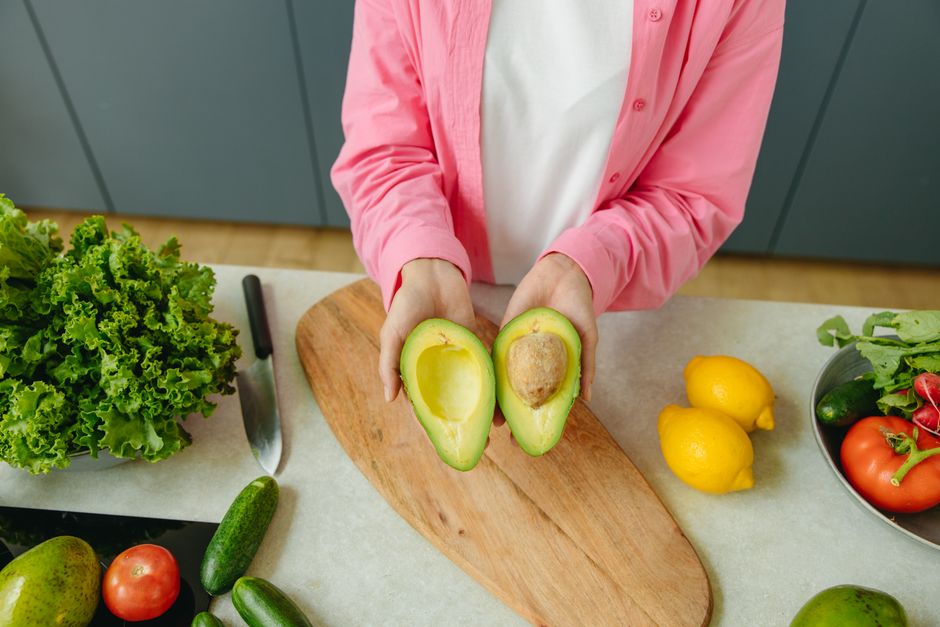
An avocado contains about 21 grams of total fat. That is roughly 15 grams in half a medium fruit. Almost all of it is unsaturated fat, the kind linked to better heart health when it replaces saturated fat in the diet. This is why avocado is often called a “healthy fat” food, and why it fits into diets like the Mediterranean pattern.
The exact amount depends on the size of the fruit. A small avocado has less fat than a large one, and the numbers shift with weight. Below is what the actual data shows, plus what that fat does in your body and how it compares to other foods.
How Much Fat Is in One Avocado?
A medium avocado weighing about 200 grams holds roughly 30 grams of fat. The USDA lists avocado at about 15 grams of fat per 100 grams of fruit, so the total scales directly with weight. A small avocado of around 150 grams carries closer to 22 grams. A large one near 300 grams can push past 40 grams.
Most avocado fat is monounsaturated. Oleic acid makes up the largest share. This is the same fat found in olive oil, and it is the main reason avocado has a reputation as a heart-friendly food.
Here is how the fat breaks down in a typical medium avocado:
- Monounsaturated fat: about 20 grams
- Polyunsaturated fat: about 4 grams
- Saturated fat: about 4 grams
The total fat content comes to roughly 30 grams for the whole fruit. If you eat half, you get about half the fat. Serving size matters more than most people expect, because avocado is calorie-dense.
One detail worth knowing: the fat in avocado does not disappear when you blend it, mash it, or cook it. The gram count stays the same. What changes is how your body absorbs other nutrients alongside it.
How Many Calories Does Avocado Fat Add?
Fat carries 9 calories per gram. That means the 30 grams of fat in a medium avocado contribute about 270 calories on their own. The whole fruit lands near 320 calories, with the rest coming from carbs and a small amount of protein.
This is the part people underestimate. Half an avocado adds around 160 calories to a meal. A whole one adds over 300. For someone watching calorie intake, that adds up fast across a week.
The calories are not “empty” though. Avocado also delivers fiber, potassium, vitamin E, vitamin K, and folate. It is a nutrient-dense food. The trade-off is that nutrient density and calorie density often travel together.
How Much Fat Is in Avocado Compared to Other Foods?
Avocado sits in a middle zone. It has far more fat than most fruits, but far less than nuts, seeds, or oils by weight. The comparison below uses standard serving sizes.
| Food | Serving | Total Fat |
|---|---|---|
| Avocado | 1 medium (200 g) | ~30 g |
| Olive oil | 1 tablespoon | ~14 g |
| Almonds | 1 ounce (23 nuts) | ~14 g |
| Peanut butter | 2 tablespoons | ~16 g |
| Banana | 1 medium | ~0.4 g |
Two tablespoons of avocado is not a fair match for two tablespoons of oil. The oil is pure fat. Avocado is mostly water, which is why a whole fruit does not carry the fat load of a few spoonfuls of oil.
Compared to other whole fruits, avocado is an outlier. A banana, apple, or orange has almost no fat. Avocado is closer to a nut or seed in its fat profile than to a typical fruit.





Is the Fat in Avocado Good for You?
The fat in avocado is mostly unsaturated, and research consistently links unsaturated fat to lower risk of heart disease when it replaces saturated fat. That replacement is the key. Adding avocado on top of a diet already high in saturated fat does not automatically improve anything.
Some studies suggest avocado can help lower LDL cholesterol, the “bad” kind, when it is part of a diet that limits saturated fat. The effect is modest and depends on what the avocado replaces. Swap butter or cheese for avocado and the numbers tend to move in a helpful direction. Add avocado to an already heavy meal and the benefit is smaller.
One practical point: fat helps your body absorb fat-soluble vitamins. Vitamins A, D, E, and K need fat to be absorbed well. Eating avocado with a salad or vegetables can increase absorption of certain carotenoids, like beta-carotene and lycopene. This is one of the few food-pairing effects with solid evidence behind it.
What avocado fat does not do is cancel out calories. It is still fat, and it still counts. The health benefit comes from what it replaces, not from eating more of it.
Does Avocado Fat Make You Gain Weight?
Avocado is calorie-dense, and eating more calories than you burn leads to weight gain over time. That basic rule applies to avocado like any other food. The fat itself does not cause weight gain on its own.
Some research indicates that people who eat avocado tend to have healthier diets overall, but this does not prove avocado causes weight loss or prevents gain. People who eat avocado may simply have other healthy habits. This kind of association is easy to misread.
The practical issue is portion size. A whole avocado is a large amount of fat and calories in one sitting. Many people treat it as a single serving when half would fit their needs better. If weight is a concern, measuring matters more than the food choice itself.
Fiber in avocado may help with fullness, which could reduce how much you eat later. That effect is real but modest. It does not override the calorie content of the fruit.
How Much Avocado Is a Reasonable Serving?
A common serving is one-third to one-half of a medium avocado. That works out to about 10 to 15 grams of fat and 100 to 160 calories. This range fits most people’s daily fat needs without crowding out other foods.
There is no official daily limit on avocado. General dietary guidance suggests keeping saturated fat under about 10 percent of daily calories and getting most fat from unsaturated sources. Avocado fits that pattern well because it is low in saturated fat.
For most adults, a few servings of avocado per week is a reasonable part of a balanced diet. The exact amount depends on your total calorie needs, activity level, and what else you eat. No clinical guidelines set a specific avocado target for the general population, and none exist for pregnant women, infants, or children.
If you have a health condition that affects fat digestion, such as gallbladder problems, talk to your doctor about how much fat fits your situation. That is a medical question, not a nutrition one.
Does Avocado Fat Differ by Type or Ripeness?
Fat content stays fairly stable across common avocado varieties. Hass, the most widely sold type in the US, has a similar fat profile to Fuerte and other varieties. The differences are small and mostly tied to size and water content.
Ripeness changes texture and taste, not fat grams. A firm avocado and a soft one contain about the same amount of fat. What changes as fruit ripens is the breakdown of starches into sugars and the softening of the flesh. The fat itself does not increase or decrease in a meaningful way.
One exception: as avocado loses water during very long storage, the fat per gram of remaining fruit can rise slightly. For normal eating, this difference is not worth tracking.
Frequently Asked Questions
How much fat is in half an avocado?
Half a medium avocado has about 15 grams of fat. That is roughly 160 calories, most of it from monounsaturated fat.
Is avocado fat healthy?
Yes, avocado fat is mostly unsaturated, which research links to heart benefits when it replaces saturated fat. The benefit depends on what it replaces in your diet, not on eating more of it.
How much fat is in a whole avocado?
A medium avocado has about 30 grams of total fat. Smaller fruits have less and larger ones have more, scaling with weight.
Can eating avocado every day make you gain weight?
It can if it pushes your total calories above what you burn. Avocado is calorie-dense, so portion size matters more than how often you eat it.
