
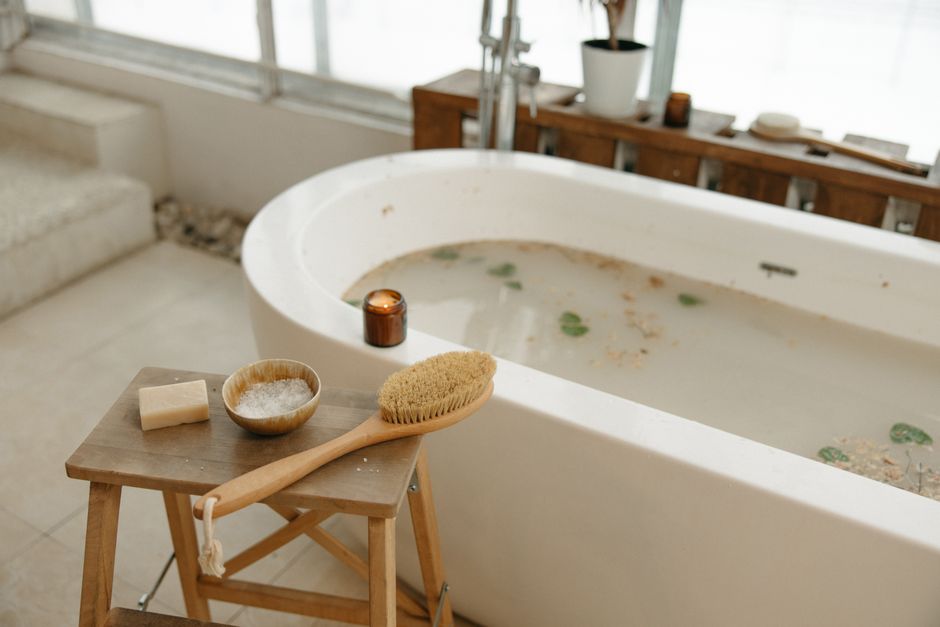
Most people use about 2 cups of Epsom salt for a standard bathtub. That equals roughly 500 grams. This amount dissolves well in a full tub of warm water and is the most common recommendation you will see. For smaller tubs or baths for children, use less — about 1 cup. The right amount also depends on why you are taking the bath and your own skin sensitivity.
What Is Epsom Salt and How Does It Work?
Epsom salt is not table salt. It is a mineral compound called magnesium sulfate. The name comes from the town of Epsom in England where it was first discovered in natural springs.
When you add it to warm water, it dissolves into magnesium and sulfate ions. The idea behind Epsom salt baths is that your skin absorbs some of this magnesium. Magnesium is an essential mineral involved in hundreds of bodily functions, including muscle relaxation and nerve signaling.
However, research on how much magnesium actually absorbs through the skin is limited. Some studies suggest absorption does happen, but the amount is small and varies from person to person. This does not mean the bath is useless — many people report feeling relaxed and less sore after soaking. But it is honest to say the evidence for significant magnesium absorption is not strong.
How Much Epsom Salt Should You Use?
For a standard-size bathtub that holds about 40 to 60 gallons of water, use 2 cups of Epsom salt. This is the amount most commonly recommended by manufacturers and healthcare providers.
For a smaller tub, a foot bath, or a bath for a child, cut the amount in half. Use 1 cup or less. Children’s skin is more sensitive, so starting with less is wise.
If you have sensitive skin or eczema, start with 1 cup and see how your skin reacts. You can always add more next time. If you are using Epsom salt for a specific issue like muscle soreness, some people use up to 3 cups. There is no strong evidence that more than 2 cups works better, so there is little reason to exceed it.
How Long Should You Soak?
Soak for 15 to 20 minutes. This is enough time to feel the effects without drying out your skin.
Longer soaks do not increase the benefit. In fact, soaking longer than 30 minutes can strip your skin of natural oils and leave it dry and irritated. Warm water is better than hot water. Hot water can irritate the skin and cause dizziness, especially when you stand up too quickly.
After the bath, rinse off with plain water. This removes any salt residue that could dry on your skin. Pat yourself dry with a towel instead of rubbing. Apply moisturizer while your skin is still slightly damp to lock in hydration.





What Are the Benefits of Epsom Salt Baths?
People take Epsom salt baths for several reasons. The most common is muscle relaxation. The warm water alone helps soothe tight muscles. The magnesium may add to this effect, though the evidence is not definitive.
Some research suggests Epsom salt baths may help with:
- Muscle soreness after exercise
- Temporary relief from minor aches and pains
- Stress reduction and relaxation
- Soothing dry or irritated skin
There is no strong clinical evidence that Epsom salt baths treat serious medical conditions. Claims that they cure infections, detoxify the body, or lower blood pressure are not supported by quality research. The word “detox” is especially misleading — your body removes waste through your liver and kidneys, not through your skin.
Are There Any Risks or Side Effects?
Epsom salt baths are generally safe for most healthy adults. But there are some important cautions.
People with kidney disease should not take Epsom salt baths without talking to their doctor first. The kidneys filter magnesium from the body. If they are not working well, magnesium levels could rise too high.
People with heart conditions or high blood pressure should also check with a healthcare provider. Soaking in warm water can affect blood pressure and heart rate. This is true for any warm bath, not just ones with Epsom salt.
People with open wounds, severe skin infections, or burns should avoid Epsom salt baths. The salt can sting and may irritate the wound further.
If you have diabetes, talk to your doctor before using foot soaks. Diabetes can reduce sensation in the feet, and you may not notice if the water is too hot.
Pregnant women should ask their obstetrician before taking Epsom salt baths. Warm baths are generally considered safe during pregnancy, but very hot water should be avoided. There is no established guideline for Epsom salt use specifically during pregnancy.
Can You Take an Epsom Salt Bath Every Day?
Yes, but it is not necessary for most people. A daily Epsom salt bath is unlikely to cause harm for a healthy person, but it can dry out your skin over time.
If you are using Epsom salt baths for muscle recovery after regular exercise, 2 to 3 times per week is reasonable. If you are using them for relaxation, even once a week may be enough.
Pay attention to how your skin feels. If it becomes dry, itchy, or irritated, reduce the frequency or the amount of salt you use.
Epsom Salt vs. Sea Salt vs. Table Salt in the Bath
These are different substances with different effects.
| Type | What It Is | Common Bath Use |
|---|---|---|
| Epsom salt | Magnesium sulfate | Muscle relaxation, soreness |
| Sea salt | Primarily sodium chloride plus trace minerals | Skin softening, exfoliation |
| Table salt | Sodium chloride with additives | Not recommended for baths |
Table salt often contains anti-caking agents and iodine. It is not designed for bathing and offers no proven benefit. Sea salt can be pleasant and may soften skin, but it does not contain magnesium sulfate. If your goal is muscle relaxation, Epsom salt is the more appropriate choice.
How to Make an Epsom Salt Bath Properly
Fill the tub with warm water before adding the salt. Running water helps the salt dissolve more evenly.
Add 2 cups of Epsom salt under the running faucet. Stir the water with your hand to make sure the salt is fully dissolved. Undissolved salt crystals can sit on the bottom of the tub and may irritate your skin.
The water should feel comfortably warm, not hot. Test it with your elbow or wrist before getting in, the same way you would test a baby’s bottle.
Step in slowly. Give your body a minute to adjust to the temperature. Relax for 15 to 20 minutes. When you are done, drain the tub and rinse off in a quick warm or cool shower.
What About Epsom Salt Foot Soaks?
For a foot soak, use about 1/2 cup of Epsom salt in a basin of warm water. A standard foot basin holds about 2 to 3 gallons.
Soak your feet for 15 to 20 minutes. This can be helpful for tired feet, minor foot aches, or just as a relaxing ritual before bed.
Do not use a foot soak if you have open sores, calluses that are cracked, or any signs of infection. If you have diabetes, check with your doctor first. Nerve damage from diabetes can make it hard to sense water temperature, and burns can happen without you feeling them.
When to See a Doctor Instead
An Epsom salt bath is not a treatment for a medical condition. If you have persistent pain, swelling, or skin problems, see a healthcare provider.
Seek medical attention if you experience:
- Severe or worsening muscle pain
- Joint swelling with redness or warmth
- Skin rash that spreads or blisters
- Dizziness, fainting, or confusion during or after a bath
These symptoms may point to something more serious than simple muscle soreness or dry skin. A warm bath with salt will not fix them.
How Much Epsom Salt Is Too Much?
Using more than 3 cups in a standard bathtub is unnecessary. There is no evidence that higher amounts provide more benefit.
Very high amounts of Epsom salt in bathwater can irritate the skin. Some people report a stinging or burning sensation when the concentration is too high. If this happens, get out and rinse off with plain water.
Swallowing Epsom salt is a different matter entirely. Epsom salt is sometimes used as an oral laxative, but it should only be taken orally under medical supervision. Ingesting too much magnesium sulfate can cause serious side effects including dangerously low blood pressure and heart rhythm problems. Keep Epsom salt out of reach of children.
Frequently Asked Questions
How much Epsom salt should I put in a bath?
Use 2 cups of Epsom salt for a standard bathtub filled with warm water. Use 1 cup or less for smaller tubs or children’s baths.
Can I use Epsom salt in a bath every day?
Yes, daily use is generally safe for healthy adults, but it can dry out your skin. Two to three times per week is enough for most people.
How long should I soak in an Epsom salt bath?
Soak for 15 to 20 minutes. Longer soaks do not increase the benefit and can dry out your skin.
Is Epsom salt safe for children’s baths?
Use no more than 1 cup for a child’s bath and always test the water temperature first. Children’s skin is more sensitive, so start with less.
