
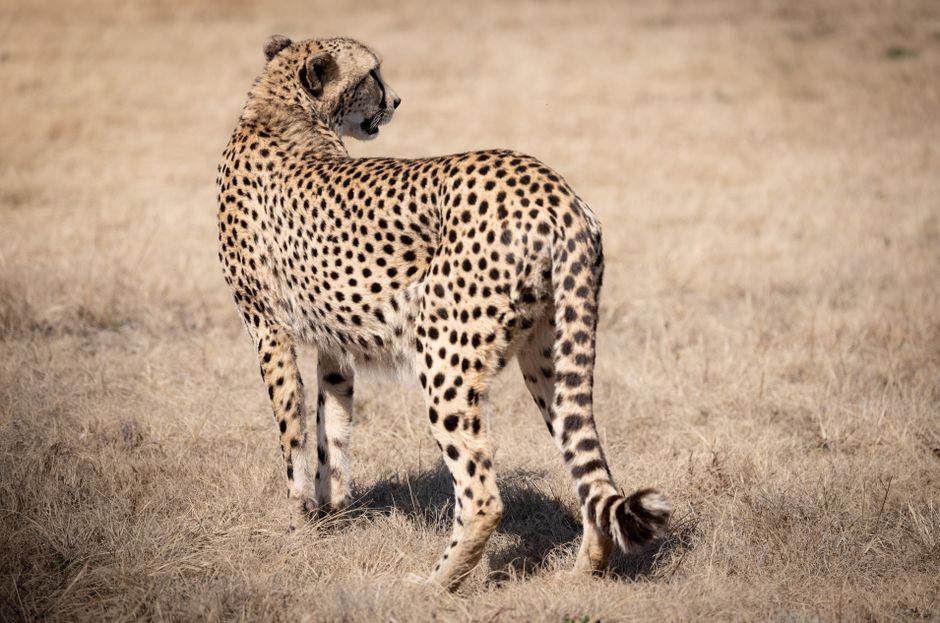
Cheetahs eat roughly 6 to 10 pounds of meat per day when food is available, though they do not eat every day. Over a full week, a wild cheetah might consume somewhere between 20 and 40 pounds of meat, depending on prey size, hunting success, and whether she is feeding cubs.
Those numbers come with a big caveat. Cheetahs are not tidy daily eaters. They might go two or three days without a meal, then eat heavily from a single kill. Averages hide that feast-or-famine rhythm.
How Much Do Cheetahs Eat In A Day And Week?
A wild cheetah typically consumes about 6 to 10 pounds (roughly 3 to 4.5 kilograms) of meat on a day when it feeds. The weekly total lands somewhere around 20 to 40 pounds, but that range is wide for a reason.
Cheetahs do not eat on a fixed schedule. A successful hunt might produce a gazelle weighing 40 to 60 pounds, and the cheetah may eat several pounds in one sitting before other predators steal the carcass. Then it may not eat again for a day or two.
Captive cheetahs eat more predictably. Zoos typically feed them once daily or several times a week, with portions adjusted to maintain a healthy body condition. Captive animals are less active than wild ones, so their calorie needs are lower. A zoo cheetah might eat 3 to 5 pounds of meat per feeding day.
Lactating females need more. A mother nursing cubs burns extra energy and may hunt more frequently. The same goes for growing cubs once they start eating solid food around 6 to 8 weeks of age.
What Prey Do Cheetahs Hunt and How Much Does Each Kill Provide?
Cheetahs prefer small to medium antelope. In East Africa, that usually means Thomson’s gazelles, impalas, and Grant’s gazelles. In southern Africa, springbok and steenbok are common targets. They also take hares, birds, and the young of larger species.
A Thomson’s gazelle weighs around 40 to 60 pounds. An impala can weigh 90 to 130 pounds. But the cheetah rarely gets the whole animal.
Lions, hyenas, leopards, and even vultures frequently steal cheetah kills. Cheetahs are built for speed, not combat. They cannot defend a carcass against a lion or a pack of hyenas. Research on cheetah behavior has found that they lose a substantial portion of their kills to other predators — some studies suggest they lose more than 10 percent, and in certain areas the loss rate is much higher.
That means the actual amount a cheetah eats from any given kill is often less than the animal’s total weight. A cheetah might eat 10 pounds from a 50-pound gazelle before being chased off.
This is one reason cheetahs hunt more often than their daily calorie needs alone would suggest. They are not just feeding themselves. They are racing other predators to the meal.
Why Cheetahs Do Not Eat Every Day
Cheetahs are built for short bursts, not long chases. A hunt usually lasts less than a minute and covers only a few hundred yards. Most hunts fail. Some estimates put success rates at around 50 to 70 percent, but that varies widely by region, prey type, and whether cubs are present.
When a hunt succeeds, the cheetah eats quickly. It has to. Every minute spent at a carcass is a minute a lion or hyena might arrive. Cheetahs often eat in a tense, hurried way, scanning for threats between bites.
After eating, a cheetah may rest for hours. Digestion takes energy, and a full stomach makes running difficult. If the cheetah fails to catch anything the next day, it simply goes hungry. Cheetahs can tolerate going a day or two without food, though extended fasting weakens them.
This irregular pattern is normal for wild cheetahs. It is not a sign of illness or starvation unless it continues for many days.
How Does a Cheetah’s Diet Change With Life Stage?
Cubs start eating meat around 6 to 8 weeks old, but they are still nursing. The mother brings them small pieces of prey, and they gradually transition to solid food over the next few months.
By about 6 months, cubs are eating mostly meat but still depend on the mother’s kills. They do not hunt effectively on their own until they are around 18 months to 2 years old. Even then, siblings often stay together for several months, hunting as a group.
Adult females with cubs have the highest energy demands. A mother may need to hunt almost daily to feed herself and her litter. Litters can range from one to six cubs, though three or four is typical. The more cubs, the more food she needs.
Adult males that hold territories also have elevated needs. They patrol large areas and may fight off rival males, both of which burn calories.
Older cheetahs may hunt less efficiently. Injuries, worn teeth, and slower reflexes reduce success rates. There is limited research on how much geriatric cheetahs eat in the wild, but captive animals often need softer food and smaller portions as they age.
How Much Do Captive Cheetahs Eat Compared to Wild Ones?
Captive cheetahs eat less than wild ones. They do not hunt, do not patrol territories, and do not face competition from lions or hyenas. Their calorie needs are lower.
Zoos typically feed cheetahs a commercial carnivore diet or raw meat — often beef, horse meat, or whole prey like rabbits. Portions are adjusted to keep the animal at a healthy weight. A typical adult captive cheetah might eat 3 to 5 pounds of meat per day, sometimes less.
Some facilities fast cheetahs one day a week. This practice mimics the natural feast-or-famine cycle and may help prevent obesity and digestive issues. Whether fasting is beneficial for captive cheetahs is debated among zoo veterinarians, and practices vary.
Captive cheetahs also tend to live longer than wild ones. Wild cheetahs face predation, injury, and starvation. Captive animals receive veterinary care and consistent food. That changes their nutritional needs over time.
What Does a Cheetah’s Diet Look Like in Calories?
Meat is calorie-dense. A pound of lean antelope meat contains roughly 600 to 800 calories, depending on fat content. A cheetah eating 6 to 10 pounds in a day might take in 4,000 to 8,000 calories.
That sounds like a lot, but cheetahs burn enormous energy during hunts. A single sprint can exceed 60 miles per hour, though only for a few seconds. The acceleration and deceleration alone are physically taxing.
Between hunts, cheetahs rest. They conserve energy by lying in shade, often near a termite mound or tree that offers a vantage point. This low-activity pattern between high-intensity bursts is part of what makes their calorie needs hard to average.
There is no official calorie guideline for wild cheetahs. Researchers estimate energy expenditure using GPS collars, accelerometers, and field observations, but these methods have limits. The numbers above are approximations, not precise measurements.
Do Cheetahs Drink Water?
Cheetahs drink water when they can find it, but they can go long periods without drinking. They get moisture from prey. A fresh kill is roughly 60 to 70 percent water.
In arid regions, cheetahs may go days without drinking. They are not as water-independent as some desert antelope, but they are more tolerant of dry conditions than lions or hyenas, which need more frequent access to water.
Captive cheetahs always have water available. Wild cheetahs drink at rivers, streams, and waterholes when they encounter them, but they do not seem to seek out water as deliberately as some other predators.
How Does Cheetah Feeding Compare to Other Big Cats?
Cheetahs eat less per day than lions or tigers. A lion can eat 15 to 25 pounds of meat in a single sitting and may go several days between meals. Tigers eat similarly large amounts when they make a kill.
Leopards eat less than lions but more than cheetahs. They also cache kills in trees, which cheetahs cannot do. That caching behavior lets leopards eat over several days from one kill. Cheetahs eat fast and lose what they cannot finish.
The cheetah’s smaller size — adults weigh 70 to 140 pounds — partly explains the smaller portions. But behavior matters too. Cheetahs cannot afford to linger at a kill. They eat what they can and move on.
Frequently Asked Questions
How many pounds of meat does a cheetah eat in a day?
A wild cheetah typically eats about 6 to 10 pounds of meat on a day when it feeds. Captive cheetahs eat less, usually around 3 to 5 pounds per feeding day.
Do cheetahs eat every day?
No. Cheetahs often go a day or two between meals, especially if hunts fail or kills are stolen by larger predators. Captive cheetahs usually eat on a more regular schedule.
How much does a cheetah eat in a week?
A wild cheetah might eat 20 to 40 pounds of meat over a week, though this varies widely with hunting success, prey size, and whether the cheetah is feeding cubs.
What do cheetahs eat most often?
Cheetahs mostly hunt small to medium antelope such as gazelles and impalas. They also eat hares, birds, and the young of larger animals when they can catch them.
