
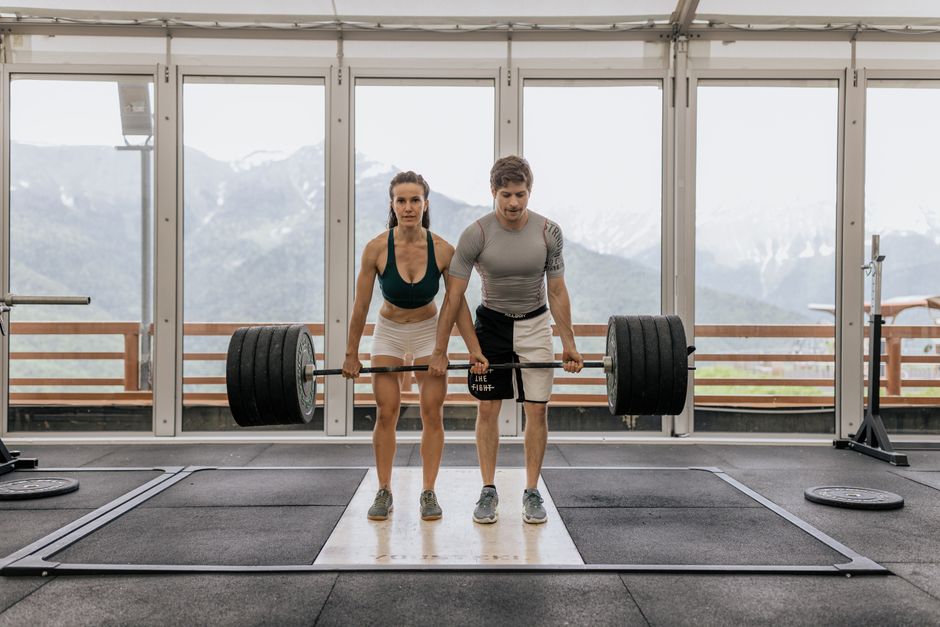
Most pregnant women can safely continue lifting the same weights they handled before pregnancy, provided their pregnancy is uncomplicated and their healthcare provider has not restricted activity. The real question is not about a specific pound limit but about listening to your body, maintaining proper form, and adjusting as your pregnancy progresses. This guide breaks down what the evidence says about lifting during pregnancy, when to modify, and when to stop.
Is There a Safe Weight Limit for Lifting While Pregnant?
No universal weight limit exists for pregnant women. Guidelines from major obstetric organizations do not set a specific pound amount that applies to everyone. Instead, the guidance focuses on your individual baseline.
The general principle is simple: if you lifted it comfortably before pregnancy, you can likely continue lifting it during pregnancy. The concern arises with new heavy lifting, sudden increases in weight, or lifting that causes discomfort.
Some occupational guidelines suggest that women in physically demanding jobs should limit lifting to about 23 pounds (10 kilograms) after the 20th week of pregnancy. However, these guidelines apply to workplace settings, not to women who are already conditioned to lifting heavier weights through regular exercise.
A woman who regularly deadlifts 150 pounds before pregnancy is in a different situation than one who has never lifted anything heavier than a grocery bag. The evidence supports maintaining your established exercise routine rather than imposing an arbitrary limit that ignores your fitness level.
How Much Can You Lift While Pregnant If You Are New to Lifting?
Pregnancy is not the time to start a heavy lifting program. If you were not lifting weights before pregnancy, beginning a strenuous resistance training routine now carries more risk than benefit.
Starting with light weights — think 5 to 10 pounds — and focusing on bodyweight exercises is reasonable for beginners. The goal is maintaining fitness and preparing for the physical demands of labor, not building new strength.
Your body produces a hormone called relaxin during pregnancy. Relaxin loosens your joints and ligaments to prepare for childbirth. This increased joint laxity means your joints are less stable, which raises the risk of injury even with light weights.
For new lifters, the safest approach is bodyweight exercises, resistance bands, and very light dumbbells. Focus on movement quality over load. If an exercise causes pain, joint instability, or discomfort, stop and choose a different movement.
What Are the Risks of Heavy Lifting During Pregnancy?
The main risks of lifting during pregnancy are musculoskeletal, not fetal. The most common issues are back strain, joint pain, and falls caused by your shifting center of gravity.
As your uterus grows, your center of gravity shifts forward. This changes your balance and puts extra stress on your lower back. Heavy lifting compounds this stress and can lead to muscle strains or ligament pain.
Your abdominal muscles stretch and weaken as the baby grows. The rectus abdominis muscles — the “six-pack” muscles — can separate down the middle in a condition called diastasis recti. Heavy lifting that involves crunching or twisting motions can worsen this separation.
There is no strong evidence that lifting causes miscarriage or preterm labor in women with uncomplicated pregnancies. Some older studies raised concerns, but more recent research has not confirmed a link between normal lifting and pregnancy loss.
However, falls are a genuine concern. A fall during pregnancy carries direct risk to you and your baby. If lifting a weight makes you feel off-balance or unsteady, that weight is too heavy regardless of what you could lift before pregnancy.





When Should You Stop Lifting or Reduce Weight?
Certain symptoms mean you should stop lifting immediately and contact your healthcare provider. These include vaginal bleeding, leaking fluid, dizziness, shortness of breath, chest pain, headache, muscle weakness, decreased fetal movement, or regular painful contractions.
Beyond these red flags, several situations call for reducing your weights. If you feel sharp pain in your joints or back, reduce the load. If you cannot maintain proper form, reduce the load. If you feel lightheaded or excessively short of breath, stop and rest.
Your balance becomes less reliable as pregnancy progresses, particularly in the third trimester. Exercises that require standing on one leg, sudden direction changes, or lifting weights overhead become riskier. Modify these exercises or reduce the weight to maintain stability.
Some women develop pregnancy-related conditions that require activity restrictions. These include preeclampsia, placenta previa, cervical insufficiency, or a history of preterm labor. If your healthcare provider has placed you on activity restriction, follow their instructions exactly. Their guidance overrides any general recommendations.
What Lifting Techniques Are Safest During Pregnancy?
Proper form matters more during pregnancy than at any other time. Use your legs to lift, not your back. Keep the weight close to your body. Avoid twisting while holding weight.
Brace your core before lifting, but be aware that your core strength is reduced during pregnancy. The abdominal muscles are stretched and cannot provide the same support they did before.
Exhale as you lift or push the weight. Never hold your breath during exertion. Holding your breath while straining — called the Valsalva maneuver — can spike your blood pressure and reduce blood flow to the uterus.
Consider these adjustments to common exercises:
- Switch from barbell back squats to goblet squats or box squats to reduce lower back strain
- Use machines instead of free weights when balance becomes an issue
- Perform overhead presses seated rather than standing
- Avoid exercises that require lying flat on your back after the first trimester
- Use a wider stance for stability during any standing exercise
Lying flat on your back after roughly 20 weeks can compress a major blood vessel called the vena cava. This can reduce blood flow to your uterus and make you feel dizzy or nauseated. If you feel unwell while lying flat, roll onto your side immediately.
How Does Lifting During Pregnancy Affect the Baby?
Research consistently shows that moderate exercise during pregnancy is safe for the baby and offers benefits. Babies of women who exercise during pregnancy are not born smaller or earlier than babies of sedentary women.
Exercise during pregnancy can reduce your risk of excessive weight gain, gestational diabetes, and cesarean delivery. It also improves your cardiovascular fitness, which helps you handle the physical demands of labor.
No credible evidence suggests that lifting weights within your normal capacity harms the developing baby. The uterus is well-protected by your pelvis, abdominal muscles, and amniotic fluid.
The key distinction is between maintaining your established routine and attempting new personal records. Pregnancy is not the time to chase strength gains. The goal is maintenance of fitness, not progression.
When Should You Get Medical Clearance to Lift?
You should discuss exercise with your healthcare provider at your first prenatal visit. Most women with uncomplicated pregnancies receive clearance to continue their normal exercise routine.
You need specific medical clearance before continuing heavy lifting if you have any of the following conditions: heart disease, lung disease, poorly controlled diabetes or high blood pressure, cervical insufficiency, placenta previa after 26 weeks, a history of preterm labor, or severe anemia.
Multiple pregnancy — carrying twins or more — may also warrant additional caution. Some providers recommend reducing exercise intensity for women carrying multiples, though the evidence for this is not definitive.
If your provider restricts your activity, ask specifically what you can and cannot do. Some restrictions are absolute, meaning no lifting at all. Others are relative, meaning you can lift but at reduced weights or with modified exercises.
What Is the Best Approach to Lifting in Each Trimester?
In the first trimester, most women can continue their pre-pregnancy routine with minimal changes. Fatigue and nausea may affect your energy, but the physical demands of exercise itself are generally safe. Your center of gravity has not shifted yet, and your joints are not significantly looser.
The second trimester brings visible changes. Your belly grows, your balance shifts, and relaxin levels rise. Reduce weights if your joints feel unstable. Switch to seated exercises when balance becomes an issue. Avoid lying flat on your back.
The third trimester requires the most modification. Your center of gravity is dramatically shifted, and your balance is less reliable. Reduce weights further and prioritize stability. Many women naturally decrease their lifting volume during this time, which is entirely appropriate.
Throughout all trimesters, the same rule applies: you should be able to lift with good form and without pain. If you cannot complete a repetition with proper technique, the weight is too heavy. Lower it and continue.
Can Lifting During Pregnancy Cause Diastasis Recti?
Diastasis recti is the separation of the rectus abdominis muscles along the midline of the abdomen. It is very common during pregnancy, affecting up to 60 percent of women in the third trimester.
Lifting does not cause diastasis recti. The separation is primarily caused by the growing uterus pushing the abdominal muscles apart and by hormonal changes that soften connective tissue.
However, certain lifting techniques can worsen the separation. Exercises that involve crunching, twisting, or heavy loading of the abdominal wall put extra pressure on the already-stretched connective tissue. Planks and push-ups are generally safer than crunches and sit-ups.
If you already have diastasis recti, avoid heavy lifting that causes your abdominal wall to bulge outward. Focus on exercises that engage the deep core muscles — the transverse abdominis — which wrap around your waist like a corset and support the abdominal contents.
Frequently Asked Questions
Can I lift my toddler while pregnant?
Yes, lifting your toddler is generally safe if your pregnancy is uncomplicated and you use proper lifting technique. Toddlers typically weigh 20 to 30 pounds, which is within the range most pregnant women can handle comfortably, but you should avoid lifting them if you experience pain or have been placed on activity restriction.
What weight is too heavy to lift when pregnant?
There is no universal weight limit, but the general guidance is to avoid lifting anything that requires significant strain or causes discomfort. If you were lifting heavy weights before pregnancy, you can usually continue, but you should not attempt personal records or lift to the point of exhaustion.
Can lifting heavy things cause a miscarriage?
No strong evidence links normal lifting to miscarriage in women with uncomplicated pregnancies. The uterus is well-protected by the pelvis and abdominal muscles, and most pregnancy losses occur due to chromosomal abnormalities unrelated to physical activity.
Is it safe to lift weights in the third trimester?
Yes, lifting weights in the third trimester is safe for most women if they use lighter loads and maintain proper form. The main concerns are balance and joint stability, so prioritize seated exercises and reduce weights to accommodate your shifting center of gravity.
