
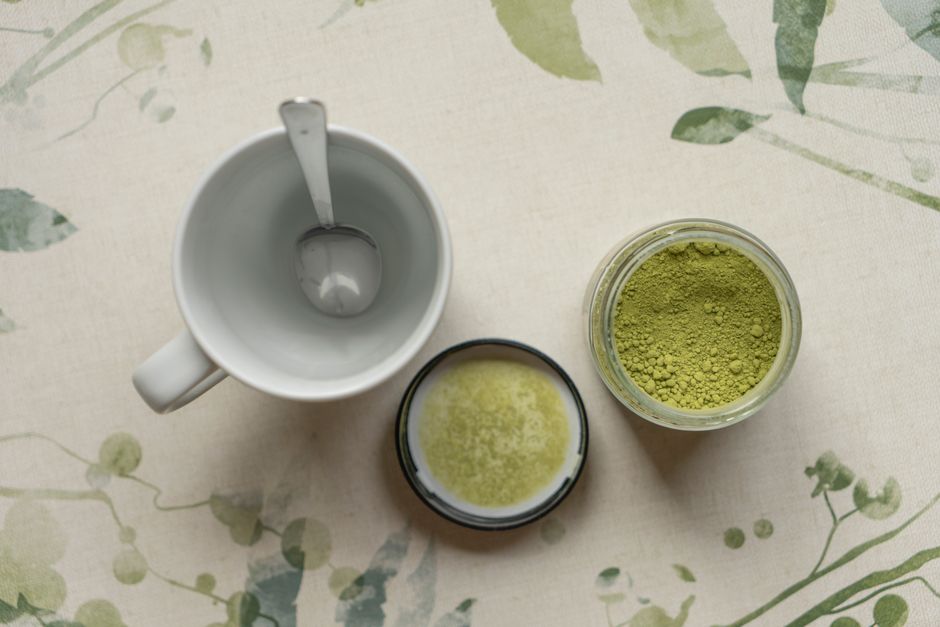
Matcha contains about 19–44 mg of caffeine per half-teaspoon (1 gram) serving, which is roughly 30–70 mg per standard cup depending on how much powder you use. That places it between a cup of green tea and a cup of brewed coffee. The exact amount depends on the grade of matcha, the serving size, and how it is prepared. This guide breaks down the numbers, how matcha compares to other drinks, and what the caffeine content means for you.
How Much Caffeine Is In A Standard Cup Of Matcha?
A standard serving of matcha is typically 1 to 2 grams of powder, which is about half a teaspoon to a full teaspoon. That serving mixed with water or milk produces roughly 30 to 70 mg of caffeine.
Here is the breakdown by common serving sizes:
- Half teaspoon (about 1 gram): 19–44 mg caffeine
- One teaspoon (about 2 grams): 38–88 mg caffeine
- One tablespoon (about 3 grams): 57–132 mg caffeine
Most people use one teaspoon of matcha per cup. That means a typical homemade matcha latte contains roughly 40 to 70 mg of caffeine. A traditional thin matcha (usucha) prepared in a tea ceremony uses less powder and lands on the lower end. A thick matcha (koicha) uses more and lands higher.
The wide range exists because matcha is a natural product. The caffeine content varies by harvest season, growing conditions, and processing. Younger leaves from the first harvest tend to have more caffeine than older leaves from later harvests.
How Does Matcha Caffeine Compare To Coffee And Other Teas?
Matcha sits between regular green tea and brewed coffee in caffeine content. This matters because people often assume all green teas are the same, and they are not.
| Drink | Standard Serving | Caffeine Range |
|---|---|---|
| Matcha (1 tsp powder) | 2 grams | 38–88 mg |
| Brewed coffee | 8 oz (240 ml) | 80–100 mg |
| Espresso | 1 oz (30 ml) | 63 mg |
| Black tea | 8 oz (240 ml) | 40–70 mg |
| Regular green tea | 8 oz (240 ml) | 20–45 mg |
| Decaf coffee | 8 oz (240 ml) | 2–5 mg |
The coffee figures come from USDA data and are averages. Actual amounts vary by bean type, roast, and brewing method. The important takeaway is that matcha is not a low-caffeine drink. A strong matcha can deliver as much caffeine as a cup of coffee.
One key difference is how the caffeine is delivered. Coffee is brewed and filtered, so you get the caffeine from the water extract. Matcha is the whole leaf ground into powder, so you consume the entire leaf. That means matcha also delivers more of the compounds found in the leaf, including L-theanine.
Does L-Theanine Change How Matcha Caffeine Feels?
Matcha contains L-theanine, an amino acid that is naturally present in tea leaves. Green tea has the highest L-theanine content among common teas, and matcha contains it in concentrated form because you consume the whole leaf.
L-theanine has been studied for its effects on alertness and relaxation. Some research suggests that L-theanine combined with caffeine improves attention and reaction time more than caffeine alone. This combination is often described as producing a “calm alertness” rather than the jittery feeling some people get from coffee.
The evidence for this effect is real but modest. Studies have used specific doses of L-theanine and caffeine, typically around 50 mg of caffeine with 100 mg of L-theanine. A typical cup of matcha contains far less L-theanine than those study doses. So while the calming effect is plausible, it should not be overstated.
What is clear is that matcha contains less caffeine per serving than coffee for most people. If you are sensitive to caffeine, that difference matters. If you are not sensitive, matcha may still feel different because of the L-theanine and other compounds in the leaf, but individual responses vary widely.

Does The Grade Of Matcha Affect Caffeine Content?
Ceremonial grade matcha is often marketed as higher quality and smoother tasting. Culinary grade is used for cooking and baking. People sometimes assume ceremonial grade has more caffeine because it is more expensive. That assumption is not supported by reliable data.
The caffeine content of matcha depends primarily on the age of the leaves and the harvest time, not the grade label. First-harvest leaves tend to have more caffeine. Shade-grown leaves also tend to have more caffeine than leaves grown in full sun, because shading increases the plant’s caffeine and L-theanine production.
Both ceremonial and culinary grade matcha can come from first-harvest leaves. The grade label mostly reflects flavor quality, color, and texture, not caffeine content. If you want to control your caffeine intake, your serving size matters far more than the grade you buy.
One practical note: culinary grade matcha is often used in larger amounts for cooking, like in baked goods or smoothies. A recipe using two tablespoons of culinary matcha will deliver much more caffeine than a single ceremonial matcha tea serving. Pay attention to the amount of powder, not just the label.
How Long Does Matcha Caffeine Last And When Should You Drink It?
Caffeine has a half-life of roughly 4 to 6 hours in most healthy adults. That means if you drink a matcha with 60 mg of caffeine at 2 PM, about 30 mg is still in your system at 6–8 PM. For people sensitive to caffeine, that can interfere with sleep.
Individual metabolism varies significantly. Some people clear caffeine quickly due to genetic factors. Others metabolize it slowly. Smoking speeds up caffeine clearance. Pregnancy slows it down. Certain medications can also affect how your body processes caffeine.
If you are sensitive to caffeine or have trouble sleeping, it is reasonable to stop consuming matcha by early afternoon. For most people, a morning or early afternoon matcha is unlikely to disrupt sleep. But if you notice sleep problems, try moving your matcha earlier in the day or reducing your serving size.
There is no universal cutoff time that works for everyone. The half-life of caffeine is well established, but how that affects your sleep depends on your sensitivity, your total daily caffeine intake, and your sleep habits.
Who Should Be Careful With Matcha Caffeine?
Certain groups should pay closer attention to caffeine intake from matcha.
Pregnant women are advised to limit caffeine. Major health organizations recommend keeping caffeine under 200 mg per day during pregnancy. A single matcha serving of 40–70 mg fits within that limit, but it adds up if you also drink coffee, soda, or other caffeinated beverages. If you are pregnant, track total daily caffeine from all sources.
People with anxiety disorders or heart conditions may be more sensitive to caffeine’s effects. Caffeine can increase heart rate and trigger feelings of nervousness or panic in susceptible individuals. If you have a heart condition or anxiety disorder, talk to your doctor about how much caffeine is safe for you.
Children and adolescents should consume less caffeine than adults. No established guideline exists for children specifically, but pediatric organizations generally recommend limiting caffeine in this age group. Matcha is not a typical children’s drink, but it appears in smoothies and desserts, so be mindful of serving sizes.
People taking certain medications should check for interactions. Some antibiotics, asthma medications, and antidepressants can slow caffeine metabolism. This can make caffeine’s effects stronger and last longer than expected.
Can You Reduce The Caffeine In Matcha?
You cannot remove caffeine from matcha once it is in the powder. But you can control your intake by adjusting how you prepare it.
Use less powder. A half teaspoon instead of a full teaspoon cuts the caffeine roughly in half. This is the simplest and most reliable way to reduce caffeine.
Choose a different tea for later in the day. Regular green tea, white tea, or herbal teas contain less caffeine or none at all. If you want the taste of matcha without the caffeine, some companies sell decaffeinated matcha, but the decaffeination process is not standardized and the caffeine content of these products is not always verified by third-party testing.
There is no way to brew matcha that removes caffeine while keeping the flavor. Unlike loose leaf tea, where the leaves are discarded after steeping, matcha is consumed entirely. The caffeine stays with the powder.
Frequently Asked Questions
Is matcha higher in caffeine than coffee?
No. A standard cup of brewed coffee contains about 80–100 mg of caffeine, while a typical matcha serving contains 40–70 mg. A very strong matcha can approach coffee levels, but it is not usually higher.
How much matcha powder should I use for a low-caffeine drink?
Use half a teaspoon of matcha powder, which delivers roughly 19–44 mg of caffeine. That is comparable to a cup of regular green tea.
Can I drink matcha at night?
Drinking matcha in the evening may interfere with sleep because caffeine stays in your system for several hours. If you are sensitive to caffeine, avoid matcha within 6–8 hours of bedtime.
Does ceremonial grade matcha have more caffeine than culinary grade?
Not necessarily. The grade label reflects flavor and quality, not caffeine content. Caffeine levels depend on harvest time and growing conditions, not the grade.
