
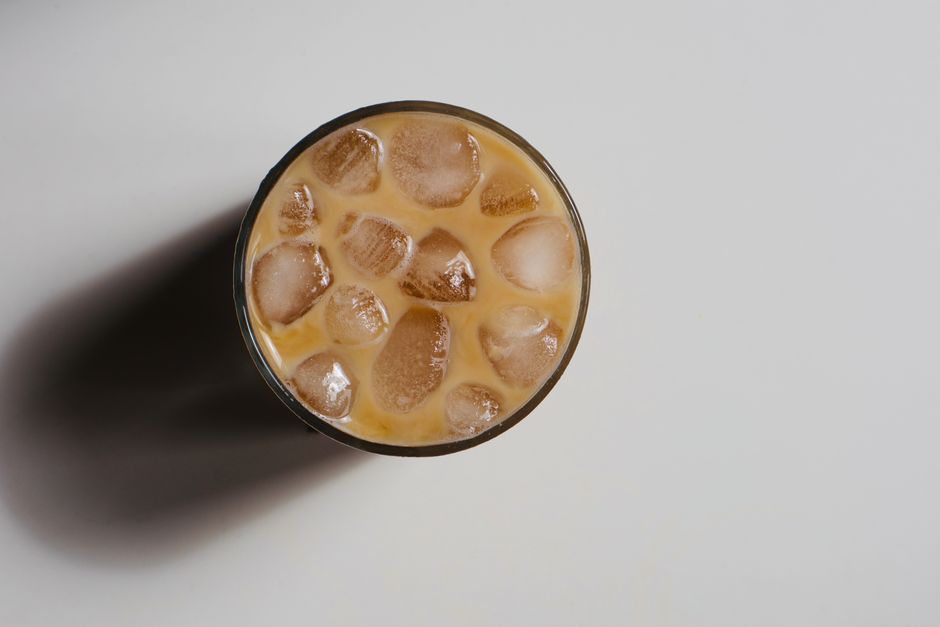
An iced coffee at McDonald’s contains about 180 mg of caffeine in a large size, roughly 140 mg in a medium, and around 90 mg in a small. The exact amount depends on the size you order and whether you add flavor shots, which do not change the caffeine content. For comparison, that large iced coffee has more caffeine than two standard 12-ounce cans of Coca-Cola combined.
McDonald’s brews its iced coffee from the same coffee concentrate used across its McCafé drink line, then pours it over ice and typically adds cream and liquid sugar unless you ask otherwise. The caffeine comes entirely from the coffee itself, not from any added ingredient.
How Much Caffeine Is In An Iced Coffee From McDonald’s by Size?
Size is the single biggest factor in how much caffeine you get. McDonald’s iced coffee comes in three sizes, and each step up adds a meaningful amount.
Based on McDonald’s published nutrition information, the approximate caffeine content is:
- Small (about 16 fl oz): roughly 90 mg
- Medium (about 21 fl oz): roughly 140 mg
- Large (about 32 fl oz): roughly 180 mg
These figures apply to the standard iced coffee with cream and liquid sugar. Adding vanilla, caramel, or hazelnut syrup does not add caffeine. Switching to decaf, where available, removes most of it.
One clarification worth making: caffeine content in brewed coffee is not perfectly consistent. Bean origin, roast level, brewing strength, and how much ice melts into the drink can all shift the final number by a modest amount. The published figures are averages, not exact measurements for every single cup.
How Does That Compare to Other McDonald’s Drinks?
McDonald’s iced coffee sits in the middle of the chain’s caffeine range. It is stronger than a soft drink but weaker than a dedicated espresso drink of similar size.
A few reference points help put it in context:
- A 12-ounce can of Coca-Cola has about 34 mg of caffeine
- A standard 8-ounce cup of brewed hot coffee has roughly 95 mg
- A McDonald’s latte or cappuccino varies by size and number of espresso shots
- McDonald’s iced coffee is generally milder per ounce than its hot brewed coffee because ice dilutes it as it melts
That last point matters. As the ice melts, the drink becomes weaker over time. If you sip slowly, the caffeine you actually consume per ounce drops as the cup sits.
Is 180 mg of Caffeine a Lot?
For most healthy adults, 180 mg is a moderate amount. It falls well below the 400 mg per day that the U.S. Food and Drug Administration cites as an amount not generally associated with negative effects in healthy adults.
Context helps here. A large McDonald’s iced coffee delivers roughly the same caffeine as two standard cups of home-brewed coffee. That is meaningful but not extreme.
Where it becomes a concern is when it stacks on top of other caffeine sources across the day. Energy drinks, soda, tea, chocolate, and pre-workout supplements all add up. Someone who has a large iced coffee in the morning, a soda at lunch, and an energy drink in the afternoon can easily cross into territory where sleep, heart rate, and anxiety symptoms are affected.
Caffeine sensitivity also varies widely between people. Genetics, medications, liver function, and pregnancy all change how fast the body clears caffeine. Two people can drink the same iced coffee and have very different experiences.




Who Should Be Careful With Caffeine?
Some groups have specific reasons to limit caffeine. The general guidance here is well established.
- Pregnant people: Major health organizations generally advise limiting caffeine to about 200 mg per day during pregnancy. A large McDonald’s iced coffee at roughly 180 mg would use up most of that allowance in one drink.
- People with heart conditions: Caffeine can raise heart rate and blood pressure temporarily. Anyone with an arrhythmia or uncontrolled hypertension should discuss caffeine with their doctor.
- People with anxiety disorders: Caffeine can worsen anxiety symptoms in some people.
- People taking certain medications: Some drugs interact with caffeine and change how it is metabolized.
- Children and adolescents: Caffeine is not recommended for young children, and adolescents are generally advised to keep intake low.
No clinical guidelines set a specific caffeine limit for every individual. The 400 mg figure for healthy adults and the 200 mg figure for pregnancy are population-level recommendations, not personalized prescriptions.
Does the Ice or the Milk Change the Caffeine?
Ice and milk do not change how much caffeine is in the cup. They change the concentration and the volume, not the total caffeine.
Here is the distinction. If McDonald’s pours a fixed amount of brewed coffee into a cup and then adds ice and cream, the caffeine is already in the coffee. Adding ice does not remove caffeine. It dilutes the drink as it melts, so each sip later in the drink contains less caffeine per ounce, but the total in the cup stays the same.
Milk, cream, and sugar add calories, fat, and carbohydrates. They add no caffeine. This is a common point of confusion, especially with drinks that taste sweeter or creamier. Sweetness has nothing to do with caffeine content.
How Does McDonald’s Iced Coffee Compare to Starbucks and Dunkin’?
McDonald’s iced coffee is generally on the lower end of caffeine content compared to similar-sized iced coffees at other major chains. The difference comes down to brewing strength and cup size.
Starbucks iced coffee, for example, tends to be brewed stronger and served in comparable or larger sizes, which usually means more caffeine per drink. Dunkin’ iced coffee falls somewhere in a similar range to McDonald’s, though exact numbers vary by size and preparation.
These comparisons are approximate. Chains reformulate drinks, change cup sizes, and update nutrition information over time. If caffeine content matters to you for medical reasons, the most reliable approach is to check the current nutrition information published by the specific chain.
One practical note: espresso-based drinks like lattes and macchiatos get their caffeine from shots, not brewed coffee. A large latte with two shots may have less caffeine than a large iced coffee, even though it tastes stronger. Taste intensity and caffeine content are not the same thing.
How Can You Lower the Caffeine in Your Iced Coffee?
The simplest way to reduce caffeine is to order a smaller size. Dropping from large to medium cuts roughly 40 mg. Dropping to small cuts it further.
Other options:
- Ask whether decaf iced coffee is available at your location (availability varies)
- Order a half-caff version if the store can make it
- Choose a smaller size and add more ice
- Skip a second caffeinated drink later in the day
There is no way to remove caffeine from an already-brewed iced coffee. Once it is in the cup, it stays. The only real control points are size, decaf substitution, and what else you drink that day.
What About the Sugar and Calories?
Caffeine is only part of the picture. A standard McDonald’s iced coffee with cream and liquid sugar carries a substantial amount of added sugar and calories, and those numbers climb with size.
If you are watching sugar intake, ordering it black or with milk instead of cream and skipping the liquid sugar makes a large difference. The caffeine stays the same. Only the sugar, fat, and calories change.
This is worth separating clearly: caffeine and sugar are independent variables. You can have a high-caffeine, low-sugar drink or a low-caffeine, high-sugar drink. They do not move together.
Frequently Asked Questions
How much caffeine is in a large McDonald’s iced coffee?
A large McDonald’s iced coffee contains roughly 180 mg of caffeine. This is based on McDonald’s published nutrition information and applies to the standard recipe with cream and liquid sugar.
Is McDonald’s iced coffee high in caffeine?
It is moderate. A large at about 180 mg is well under the 400 mg daily amount the FDA says is not generally linked to negative effects in healthy adults, but it is more than two cans of Coke.
Does adding flavor syrup change the caffeine in McDonald’s iced coffee?
No. Vanilla, caramel, and hazelnut syrups add sugar and flavor but no caffeine. Only the coffee itself contributes caffeine.
Can I get decaf McDonald’s iced coffee?
Decaf availability varies by location and is not guaranteed at every McDonald’s. If caffeine intake matters to you for medical reasons, ask at the specific store before ordering.
