
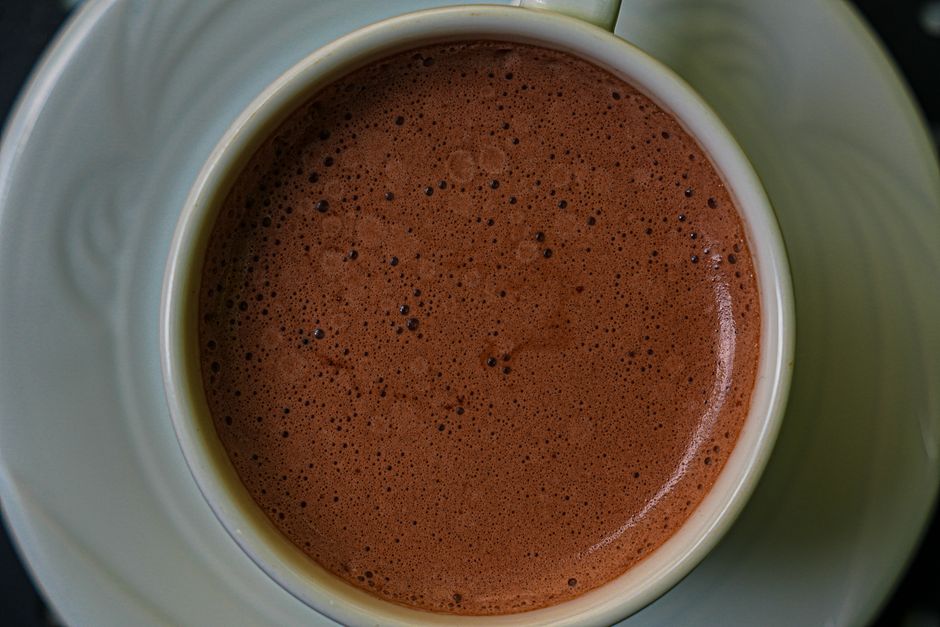
Drinking chocolate usually contains very little caffeine — often just 2 to 10 milligrams per cup. That is a fraction of the roughly 95 milligrams in an 8-ounce cup of brewed coffee. The exact amount depends on whether the drink is made from cocoa powder, dark chocolate, or milk chocolate, and how much of it goes into the cup.
If you are watching your caffeine for sleep, pregnancy, or a sensitive stomach, drinking chocolate is on the low end of the scale. But “low” is not the same as “zero,” and the type of chocolate matters a lot.
How Much Caffeine Is in Drinking Chocolate?
A typical cup of drinking chocolate made with cocoa powder contains about 2 to 10 milligrams of caffeine. Hot chocolate made from milk chocolate sits at the very low end of that range. Dark drinking chocolate sits higher.
The reason is simple. Caffeine comes from the cacao bean itself. The more pure cacao solids in your drink, the more caffeine it carries. Milk chocolate is mostly sugar and milk with a small amount of cocoa. Dark chocolate and pure cocoa powder are the opposite.
For context, here is how drinking chocolate compares with common caffeine sources:
| Drink (8 oz unless noted) | Approximate caffeine |
|---|---|
| Milk hot chocolate | 2–5 mg |
| Cocoa powder drink | 5–10 mg |
| Dark drinking chocolate | 10–25 mg |
| Brewed coffee | ~95 mg |
| Black tea | ~47 mg |
| Cola (12 oz) | ~34 mg |
These figures come from USDA nutritional data and standard beverage composition references. They are averages. Your actual cup can land higher or lower depending on the brand and the recipe.
Does Chocolate Contain Caffeine or Theobromine?
Chocolate contains both caffeine and theobromine. This is one of the most misunderstood points about chocolate, so it is worth getting straight.
Theobromine is a mild stimulant that is chemically related to caffeine. It is the main stimulant in chocolate by quantity. Cocoa solids contain far more theobromine than caffeine. So when people feel a gentle lift from dark chocolate, theobromine is doing most of the work.
The two compounds are not identical in effect. Theobromine is milder on the central nervous system and is a weaker stimulant than caffeine. It also acts as a mild diuretic and can relax certain smooth muscles. Caffeine is the stronger, faster-acting stimulant.
This matters for anyone counting caffeine. If you are tracking caffeine specifically, you are counting only the caffeine — not the theobromine. A dark chocolate drink may feel more “stimulating” than its caffeine number suggests, because theobromine is present in larger amounts.
Why Does Dark Chocolate Have More Caffeine Than Milk Chocolate?
Dark chocolate has more caffeine because it contains more cacao solids. Caffeine lives in the cacao bean, so the percentage of cacao in a product drives the caffeine content directly.
Milk chocolate is often around 10 to 30 percent cacao. Dark chocolate can range from 50 percent up to 90 percent or more. A 70 percent dark chocolate bar carries noticeably more caffeine and theobromine than a milk chocolate bar of the same weight.
For drinking chocolate, the same logic applies:
- Instant hot cocoa mixes are usually low in cacao and low in caffeine.
- Cocoa powder drinks use pure cocoa and land in the middle.
- Drinking chocolate made by melting dark chocolate into milk sits highest.
One practical note: “drinking chocolate” and “hot cocoa” are often used interchangeably, but they are not the same product. Drinking chocolate is typically made from real chocolate and is richer and thicker. Hot cocoa is made from cocoa powder. That difference shows up in the caffeine count.





Is the Caffeine in Drinking Chocolate Enough to Affect Sleep?
For most adults, the caffeine in a cup of drinking chocolate is too small to meaningfully disrupt sleep. Two to ten milligrams is a tiny dose compared with the 95 milligrams in coffee.
But there are real exceptions. Caffeine sensitivity varies widely between people. Some people are slow metabolizers of caffeine due to genetics and liver enzyme activity, and they feel even small amounts. For those individuals, an evening cup of dark drinking chocolate could be noticeable.
Theobromine also has a longer half-life than caffeine in the body, meaning it clears more slowly. That said, the amounts in a typical cup are small.
If you are sensitive, the sensible move is to treat dark drinking chocolate as the higher-risk option and milk hot chocolate as the lower one. Timing matters too — a cup in the early evening is less likely to matter than one right before bed.
How Much Caffeine in Drinking Chocolate During Pregnancy?
Drinking chocolate is generally a low-caffeine choice during pregnancy, but it is not caffeine-free. Major health organizations advise limiting total caffeine during pregnancy, commonly to around 200 milligrams per day. A cup of drinking chocolate uses only a small slice of that budget.
The bigger consideration during pregnancy is not caffeine — it is theobromine and overall sugar. Some guidance suggests moderating very high-cacao dark chocolate during pregnancy because of theobromine, though the amounts in a normal serving are small.
This is a case where you should follow the guidance of your own prenatal care provider rather than a general article. Caffeine limits can be adjusted for individual circumstances, and no single number fits everyone.
For children, caffeine sensitivity is higher relative to body weight. A small cup of milk hot chocolate is a very different thing from a large dark drinking chocolate. There are no established caffeine limits specifically for young children in most national guidance, so portion size and chocolate type are the practical levers.
Does Drinking Chocolate Have Other Caffeine-Like Effects?
Drinking chocolate can feel more stimulating than its caffeine number suggests, and theobromine is the main reason. It is a milder stimulant, but it is present in much larger amounts than caffeine in the same drink.
There is also the sugar. A sweetened hot chocolate can spike blood sugar, and the resulting energy swing can feel like a stimulant effect — then a crash. That is not caffeine. It is glucose. This is an easy thing to misattribute.
If you want the clearest picture of what a drink is doing to you, separate the three inputs: caffeine, theobromine, and sugar. They act differently and on different timelines.
How Can You Reduce Caffeine in Drinking Chocolate?
You can lower the caffeine in drinking chocolate by choosing milk chocolate over dark, using less cocoa powder, and keeping the serving size small. These are the same levers that control theobromine.
A few practical options:
- Choose milk chocolate or a low-cacao cocoa mix instead of dark drinking chocolate.
- Use a smaller scoop of cocoa powder per cup.
- Blend cocoa with more milk or a milk alternative to dilute the cacao content.
- Look for “caffeine-free” cocoa products, though these are less common and the label should be checked.
White chocolate is worth a mention. It contains cocoa butter but no cocoa solids, so it has essentially no caffeine and no theobromine. A white hot chocolate is about as close to caffeine-free as a chocolate drink gets.
If your goal is to cut caffeine entirely, drinking chocolate is not the right target — it is already very low. Coffee, tea, energy drinks, and some sodas are where the caffeine actually lives.
Frequently Asked Questions
How much caffeine is in a cup of hot chocolate?
A typical 8-ounce cup of hot chocolate contains roughly 2 to 10 milligrams of caffeine, depending on the type of chocolate used. Milk chocolate drinks sit at the low end, while dark drinking chocolate sits higher.
Does hot chocolate have more caffeine than coffee?
No. Hot chocolate has far less caffeine than coffee — often under 10 milligrams per cup versus about 95 milligrams in an 8-ounce brewed coffee. The gap is roughly ten times or more.
Is there caffeine in white hot chocolate?
White chocolate contains cocoa butter but no cocoa solids, so white hot chocolate has essentially no caffeine and no theobromine. It is the closest chocolate drink to caffeine-free.
Can drinking chocolate keep you awake?
For most adults, the caffeine in a cup of drinking chocolate is too small to disrupt sleep. People who are genetically sensitive to caffeine may notice an effect, especially from dark drinking chocolate in the evening.
