
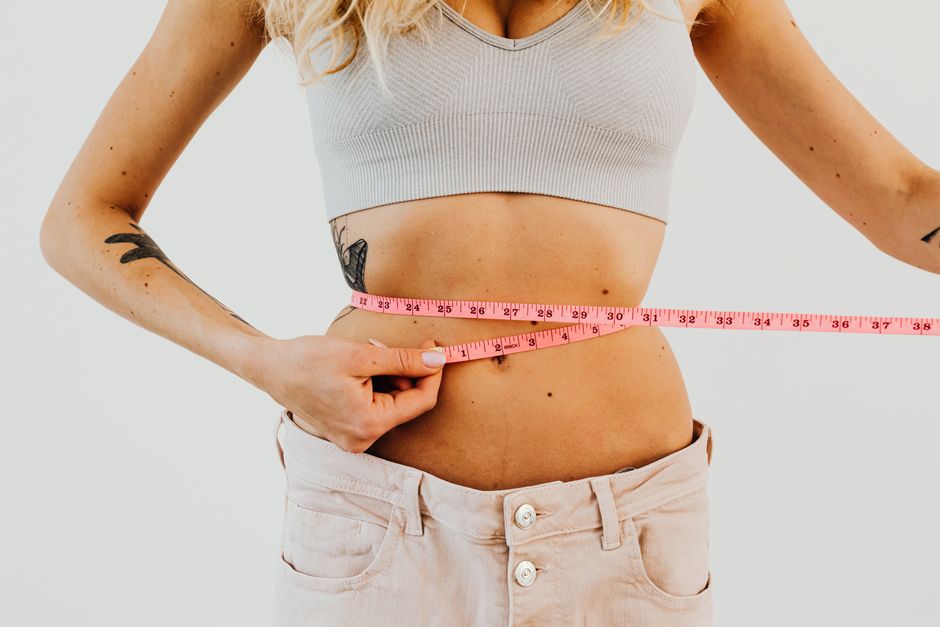
There is no single body fat percentage that is right for every age. Body fat ranges shift with age, and what counts as healthy at 25 is not the same at 55. For most adults, healthy body fat falls roughly between 8 and 20 percent for men and 21 and 33 percent for women, but the specific target depends on your age, sex, and how your body changes over time.
Body fat is not a flaw to eliminate. It cushions organs, stores energy, and helps regulate hormones. The goal is not the lowest number possible. It is the range where your body functions well and your health risks stay low.
What Is a Healthy Body Fat Percentage by Age?
Healthy body fat ranges are broad, and they move upward with age for both men and women. These ranges come from body composition standards used in clinical and fitness settings, and they reflect how lean mass naturally declines over the decades.
Here is a general reference for adults. These are widely used ranges, not a diagnosis, and individual targets vary.
| Age Group | Men | Women |
|---|---|---|
| 20–39 | 8–19% | 21–32% |
| 40–59 | 11–21% | 23–33% |
| 60–79 | 13–24% | 24–35% |
These numbers are a guide, not a strict rule. A 45-year-old man at 22 percent body fat is not automatically unhealthy, and a 30-year-old woman at 20 percent is not automatically healthier than one at 24 percent. Context matters.
One thing people often miss: the upper end of these ranges is not a warning line. Being slightly above a range is different from being far above it. The health risks linked to body fat rise gradually, not at a single cutoff.
Why Does Body Fat Change With Age?
Body composition shifts steadily as you get older, and most of that shift happens without any change in your habits. Two things drive it: loss of lean muscle and changes in where fat is stored.
After roughly age 30, adults lose muscle mass gradually unless they actively work to maintain it. This process is called sarcopenia. Less muscle means a lower resting metabolic rate, so the same food intake can lead to more fat storage over time.
Fat distribution also changes. Fat that once sat under the skin (subcutaneous fat) tends to accumulate more around the organs (visceral fat) with age. Visceral fat is the type most strongly linked to metabolic problems, including insulin resistance and cardiovascular risk.
Hormones play a role too. In women, the drop in estrogen around menopause is associated with a shift toward more abdominal fat. In men, gradually declining testosterone is linked to similar changes. These are normal biological shifts, not personal failures.
Does Body Fat Percentage Matter More Than BMI?
For many people, body fat percentage gives a more useful picture than BMI. BMI compares weight to height, and it cannot tell muscle from fat. A muscular person can have a high BMI while carrying very little fat.
Body fat percentage measures the share of your weight that is fat tissue. That makes it a better reflection of body composition, especially for people who are active or who carry weight differently than average.
That said, BMI is not useless. At a population level, it tracks health risk reasonably well, and it is cheap and easy to measure. The problem is at the individual level, where it can mislead in both directions.
Neither measure captures everything. Where fat sits matters, and so does fitness, blood pressure, blood sugar, and cholesterol. No single number tells the whole story of your health.
How Do You Measure Body Fat Accurately?
No at-home method is perfectly accurate, and each has real limitations. The most reliable options are in a clinical or research setting, but practical tools can still give you a useful trend over time.
- DXA scan — Uses low-dose X-rays to estimate fat, muscle, and bone. Considered one of the more accurate methods available outside research labs.
- Hydrostatic weighing — Underwater weighing. Accurate but impractical for most people.
- Bod Pod — Measures body volume by air displacement. Reasonably accurate, less common.
- Bioelectrical impedance — Scales and handheld devices that send a small current through the body. Convenient but sensitive to hydration, food, and time of day.
- Skinfold calipers — Inexpensive, but accuracy depends heavily on the skill of the person measuring.
Here is the part most people do not hear: the exact number matters less than the trend. If you measure the same way, under the same conditions, over months, you get useful information about direction. Chasing a single reading to the decimal is not meaningful, because the error range on consumer devices can be several percentage points.
If you want a reliable baseline, a DXA scan is the most practical accurate option for most people. Repeat it only when you genuinely need to know how things have changed.
What Body Fat Level Is Too Low?
Body fat can go too low, and the health consequences are real. Essential fat — the minimum needed for normal function — is roughly 3 to 5 percent for men and 8 to 12 percent for women. Dropping near or below these levels is not a sign of health.
Women are especially vulnerable. Very low body fat can disrupt menstruation, a condition sometimes called hypothalamic amenorrhea, because the body senses insufficient energy availability. This can affect bone density and fertility.
In both sexes, extremely low body fat is associated with hormone disruption, weakened immune function, poor temperature regulation, and reduced bone strength. Athletes in lean sports are a group where these risks are well documented.
Lower is not better past a point. The healthiest body fat is the range your body can maintain while functioning normally, not the lowest number you can force.
What Actually Moves Body Fat in the Right Direction?
Body fat responds to sustained energy balance and muscle maintenance, not to quick fixes. The fundamentals are well established, even if the marketing around them is not.
To reduce body fat, you need a modest calorie deficit — eating somewhat less than you burn — while keeping protein intake adequate and doing resistance training. Resistance training matters because it helps preserve muscle while you lose fat. Losing weight without protecting muscle can lower your metabolic rate and make the change harder to keep.
Sleep and stress are not side notes. Short sleep and chronic stress are associated with changes in appetite hormones and with storing more fat around the abdomen. These are established patterns, though the effect size varies from person to person.
There is no food or supplement that reliably targets body fat on its own. No clinical evidence currently confirms that any product “spot reduces” fat or melts it away. Claims like these are marketing, not science.
If you have a medical condition, are pregnant, or take medication, talk to a clinician before making significant changes to diet or exercise. General guidance does not account for individual circumstances.
When Should You Stop Worrying About the Number?
For most people, body fat percentage is a useful guide, not a score to optimize endlessly. If your weight is stable, your energy is good, your blood pressure and blood sugar are in healthy ranges, and you can do the physical things you want to do, you are likely in a reasonable place.
The number becomes more important when it is far outside a healthy range, when it is changing quickly without explanation, or when it comes with other warning signs. Those are situations worth discussing with a clinician.
Body fat is one measure among many. It is worth knowing roughly where you stand. It is not worth letting a single number define how you feel about your health.
Frequently Asked Questions
What is a healthy body fat percentage for a 50-year-old woman?
A commonly used healthy range for women aged 40 to 59 is about 23 to 33 percent body fat. Individual targets vary with muscle mass, health status, and lifestyle.
Does healthy body fat percentage increase with age?
Yes, the healthy range shifts upward with age for both men and women. This reflects the natural loss of lean muscle and changes in fat distribution over the decades.
Is 25 percent body fat healthy for a man?
For most adult men, 25 percent sits slightly above commonly used healthy ranges, which top out around 21 to 24 percent depending on age. A single measure does not define health, so other factors like fitness and metabolic markers matter too.
Can you be healthy with high body fat?
Some people with higher body fat have normal blood pressure, blood sugar, and cholesterol, a pattern sometimes called metabolically healthy obesity. The evidence on long-term risk is mixed, and higher body fat still carries elevated risk for many people over time.
