
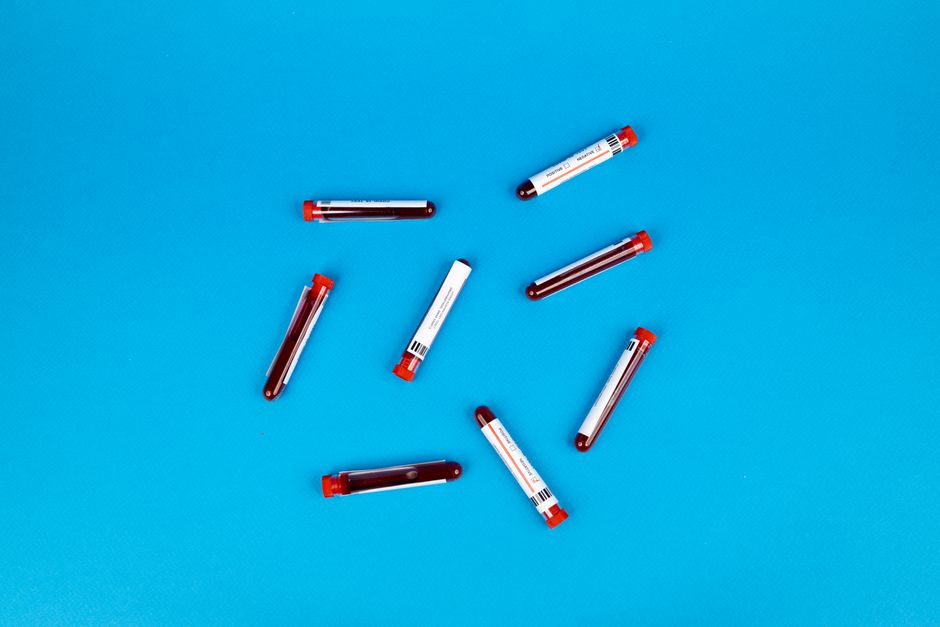
A standard blood draw vial holds between 2 and 10 milliliters of blood, depending on the tube size and what the test requires. Most routine adult blood tests use tubes in the 3 to 5 milliliter range. Even a full panel of a dozen tests usually collects well under 30 milliliters total — roughly two tablespoons. The human body holds about 4,500 to 5,700 milliliters of blood, so a typical blood draw removes less than one percent of your total blood volume.
How Much Blood Is In a Vial for a Blood Test?
Vials used for blood collection come in a small number of standard sizes. The tube your phlebotomist fills is called a vacutainer — a sealed tube with a colored stopper that creates a vacuum, pulling blood in until the tube is full. The vacuum stops the draw at a set volume, so the tube fills to a predictable amount every time.
Common draw volumes by tube size:
- Pediatric or small-draw tubes: 1 to 4 milliliters
- Standard adult tubes: 3 to 6 milliliters
- Larger tubes for specialized testing: up to 10 milliliters
The color of the stopper tells you what additive is inside, not how much blood the tube holds. A lavender-top tube (used for complete blood count testing) and a gold-top tube (used for chemistry panels) may hold different volumes even though they look similar in size. The volume is printed on the tube label, and phlebotomists choose tube sizes based on how much blood each test needs and how many tests are ordered.
How Much Blood Is Drawn for Common Blood Tests?
A single test usually needs only a small tube. A complete blood count, for example, typically requires one lavender-top tube in the 3 to 4 milliliter range. A basic metabolic panel needs one tube of similar size. When several tests are ordered together, the lab may combine them into fewer tubes when the additives are compatible.
A typical annual physical with a standard panel — blood count, metabolic panel, cholesterol, thyroid — often uses two to four tubes. Total volume commonly falls between 10 and 20 milliliters. That is about one to two teaspoons.
Larger draws happen in specific situations. Blood donation collects about 450 to 500 milliliters in a single sitting, which is roughly ten times a routine lab draw. Blood cultures, which test for infection in the bloodstream, require multiple bottles of 8 to 10 milliliters each because the bacteria need to grow in liquid. Therapeutic phlebotomy — removing blood for medical treatment rather than testing — can remove several hundred milliliters at a time. These are not typical lab draws, and the volumes reflect different purposes.
Is a Typical Blood Draw a Lot of Blood?
No. A routine blood draw removes a very small fraction of your blood volume. For an average adult, that is well under one percent of total blood.
The body replaces the fluid portion of blood — plasma — within hours of a draw. You may notice mild thirst afterward. Drinking water before and after helps. The cells themselves are replaced over weeks as part of normal turnover, which happens continuously regardless of whether you had blood drawn.
People sometimes worry about feeling weak or anemic after a blood test. A single routine draw does not cause anemia. Anemia is a low red blood cell count or low hemoglobin level, and it develops over time from causes like iron deficiency, blood loss elsewhere in the body, or chronic disease. A few milliliters drawn for testing does not move hemoglobin enough to matter clinically.
Repeated draws are a different situation. Hospitalized patients can have blood drawn many times per day, and cumulative volumes over a long stay can become significant. This is a recognized concern in critical care, and hospitals have protocols to limit unnecessary draws. For a healthy outpatient getting routine testing, the volume is not a concern.
Does the Tube Color Change How Much Blood Is Needed?
Yes, in a specific way. The additive inside the tube determines how much blood must be drawn for the test to work correctly, and some tubes require a precise fill.
Coagulation tests — the ones that check how fast your blood clots — use light blue tubes containing sodium citrate. The citrate is calibrated to the blood volume. If the tube is underfilled, the ratio of citrate to blood changes and the test result can be falsely prolonged. For this reason, coagulation tubes must be filled to the marked line. A short draw on a coagulation tube is a reason to redraw.
Most other tubes are more forgiving. Chemistry tubes with serum separator gel, EDTA tubes for blood counts, and heparin tubes tolerate slight underfilling without invalidating the result. Still, best practice is to fill tubes to their stated volume whenever possible.
What Determines How Many Tubes Are Drawn?
The number of tubes depends on the tests ordered and the additives each test requires. A single test may need one tube. A broad panel may need several. The lab groups tests by tube type to keep the total number of tubes as low as possible.
Some tests require special handling that affects tube count. A glucose tolerance test involves multiple draws over a few hours, each in its own tube. A blood culture requires several bottles drawn from different sites. A test that must be run on serum requires the blood to clot first, which means a different tube than a test run on plasma.
Test ordering also matters. If your clinician orders a broad screening panel, more tubes are needed than for a single focused test. If you are curious about how much blood a specific order will require, the lab or your clinician’s office can usually tell you.
Can You Ask for a Smaller Draw?
Sometimes. Pediatric tubes and small-volume tubes exist, and they are used routinely for infants and small children. For adults, smaller tubes are used when a test only requires a small sample or when a patient has difficult veins.
Not every test can run on a small-volume tube. Some instruments require a minimum sample volume to function, and some tests are calibrated for specific tube types. If you have concerns about the volume of blood being drawn — for example, because of a bleeding disorder, severe anemia, or a history of fainting with blood draws — tell the phlebotomist and your clinician. They can adjust the approach, use smaller tubes where the lab allows, or combine tests to reduce the number of tubes.
Fainting during blood draws is common and not a sign that too much blood was taken. It is a vasovagal response — a reflex that drops heart rate and blood pressure briefly. Lying down during the draw and drinking water beforehand reduces the chance of it happening.
Why the Volume Matters Less Than You Might Think
The body’s blood volume is large and stable. For an average adult, total blood volume is roughly 4,500 to 5,700 milliliters, or about 70 milliliters per kilogram of body weight. A 20-milliliter draw — a fairly large routine panel — is less than half a percent of that total.
The body regulates blood volume tightly through mechanisms involving the kidneys, hormones, and blood vessel tone. A small loss of fluid is compensated for quickly. This is why blood donors can give nearly 500 milliliters and feel fine after a snack and some water, and why a routine lab draw is a minor event for the body’s fluid balance.
The more relevant question for most people is not volume but frequency and necessity. If you are having blood drawn often, it is reasonable to ask whether every test is needed and whether results from recent draws can be reused. That conversation is worth having with your clinician. For a single routine draw, the volume is small and the body handles it easily.
Frequently Asked Questions
How many mL is a standard blood test tube?
Most standard adult blood collection tubes hold between 3 and 6 milliliters, with the exact volume printed on the tube label. Larger tubes for specialized testing can hold up to 10 milliliters.
How much blood is taken for a full blood count?
A complete blood count typically requires one lavender-top tube holding about 3 to 4 milliliters. That is less than a teaspoon.
Does a blood test take a lot of blood?
No. A routine panel usually draws 10 to 20 milliliters total, which is about one to two teaspoons. That is well under one percent of an adult’s total blood volume.
Can a blood test make you anemic?
No. A single routine blood draw does not cause anemia. Anemia develops over time from causes like iron deficiency or chronic disease, not from a few milliliters drawn for testing.
