
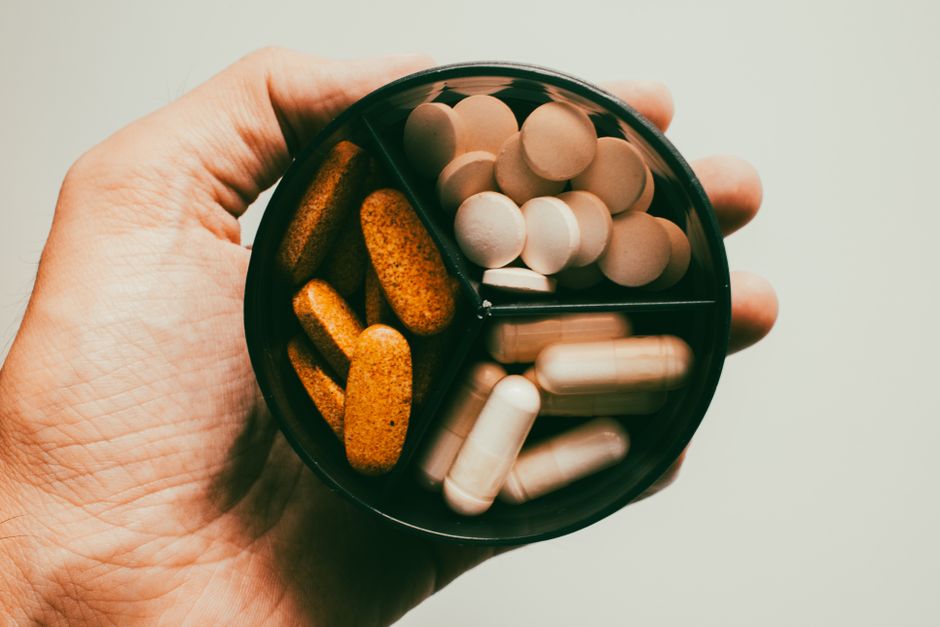
There is no single official daily biotin requirement for most adults, because no Recommended Dietary Allowance (RDA) has been established for this vitamin. Instead, the National Institutes of Health lists an Adequate Intake (AI) level of 30 micrograms (mcg) per day for adults, which is based on estimated intake in healthy populations rather than a proven minimum need. Most people in the US meet this level through diet alone, and biotin deficiency is rare in people who eat a varied diet.
How Much Biotin Daily Do You Actually Need?
The National Institutes of Health sets the Adequate Intake for biotin at 30 mcg daily for adults. That number applies to men and women age 19 and older, including during pregnancy.
For breastfeeding women, the AI is 35 mcg per day. This is the only life stage with a different number.
An Adequate Intake is not the same as an RDA. An RDA is set when scientists have enough data to estimate the average requirement for nearly everyone. An AI is set when that data is missing. It reflects the amount that appears to keep healthy people healthy, based on observed intake, not a measured minimum.
That distinction matters. It means 30 mcg is a reasonable reference point, not a target you must hit every single day. Biotin is water-soluble, so your body does not store large amounts, but it does recycle some of what you take in.
What Is the Upper Limit for Biotin?
No tolerable upper intake level has been set for biotin. The Institute of Medicine, which sets these limits for most vitamins and minerals, did not establish one because no evidence of toxicity from high biotin intake has been documented in humans.
That does not mean very high doses are proven safe. It means the research needed to set a ceiling has not been done.
Clinical labs have flagged a real concern with high-dose biotin. Large doses can interfere with certain immunoassay blood tests, including some thyroid and cardiac tests. This can produce falsely high or falsely low results. The FDA has issued a safety communication about this. If you take high-dose biotin and need blood work, tell your doctor. Some labs recommend stopping biotin for at least 72 hours before certain tests, though guidance varies by test type.
This is not a toxicity issue. It is a testing accuracy issue. The distinction is worth understanding.
How Much Biotin Is in Food?
Food sources of biotin are widespread, which is part of why deficiency is uncommon. The amounts below come from USDA data.
- Cooked egg, whole: about 10 mcg per egg
- Salmon, cooked, 3 ounces: about 5 mcg
- Sweet potato, cooked, 1/2 cup: about 2.4 mcg
- Almonds, 1/4 cup: about 1.5 mcg
- Spinach, cooked, 1/2 cup: about 0.5 mcg
- Broccoli, raw, 1/2 cup: about 0.4 mcg
Liver and some nuts and seeds also contain biotin, though exact values vary by source and preparation.
One important note about eggs. Raw egg whites contain a protein called avidin that binds biotin and blocks its absorption. Cooking denatures avidin, so cooked eggs do not cause this problem. Eating large amounts of raw egg whites over a long period can contribute to biotin deficiency. This is well documented.




Who Is at Risk for Biotin Deficiency?
Biotin deficiency is rare in healthy adults eating a mixed diet. When it does occur, it usually has a clear cause.
Groups at higher risk include:
- People who have consumed large amounts of raw egg whites over months or years
- People with certain inherited disorders of biotin metabolism
- People on long-term parenteral nutrition without biotin supplementation
- Some people taking certain anti-seizure medications, though the evidence here is limited and the mechanism is not fully clear
- Pregnant women, who may show mildly reduced biotin levels in some studies, though the clinical significance is debated
Some research suggests that marginal biotin deficiency may be more common in pregnancy than previously thought. What is not clear is whether this matters for outcomes. The evidence does not currently support routine high-dose biotin supplementation in pregnancy, and no clinical guidelines recommend it.
Symptoms of true biotin deficiency can include hair thinning, a scaly skin rash, and neurological symptoms. These symptoms have many other causes, so they do not point to biotin deficiency on their own.
Does Taking Extra Biotin Help Hair, Skin, or Nails?
The evidence here is weak, and this is where most marketing claims fall apart.
Biotin does play a role in keratin production, and keratin is a structural protein in hair, skin, and nails. That mechanism is real. But having a role in a process is not the same as showing that taking more of it improves that process in people who are not deficient.
No large, well-controlled human trials have confirmed that biotin supplements improve hair growth, skin quality, or nail strength in people who are not biotin deficient. Some small studies and case reports exist, but they are not strong enough to support a general recommendation.
This is a common pattern in nutrition. A nutrient is involved in a biological pathway, so companies market it as if more of it will enhance the outcome. The logic sounds reasonable. The clinical evidence does not back it up.
If you have genuine biotin deficiency, correcting it may resolve related symptoms. If you do not, there is no established reason to expect benefit. For hair loss or nail problems, a doctor can help identify the actual cause, which may have nothing to do with biotin.
How Much Biotin Is in Supplements?
This is where the numbers get far apart from what the body needs.
Supplement doses commonly range from 1,000 mcg to 10,000 mcg per day, and sometimes higher. That is many times the Adequate Intake of 30 mcg.
These high doses are not based on a demonstrated requirement. They exist because biotin is water-soluble and widely assumed to be harmless at high doses, and because larger numbers sell better on a label.
Because biotin is not stored in large amounts, your body excretes what it does not use through urine. This is one reason toxicity has not been observed. It does not mean the extra biotin is doing anything useful.
If you take a biotin supplement, the most important thing to know is not the dose. It is that high doses can distort certain lab tests. Tell any doctor ordering blood work that you take it.
How Much Biotin Daily Is Too Much?
There is no established toxic dose of biotin in humans, so no upper limit has been set. This is an honest statement of what is known, not a green light for unlimited doses.
The real concern with high-dose biotin is not poisoning. It is test interference. This has been documented and reported by regulators.
If you are taking biotin for a diagnosed deficiency, follow your doctor’s guidance on dose and duration. If you are taking it for general hair, skin, or nail support without a deficiency, the evidence does not show a benefit, and the dose on most labels far exceeds any established need.
For most healthy adults eating a varied diet, meeting the 30 mcg Adequate Intake through food is enough. There is no proven reason to take more.
Frequently Asked Questions
How much biotin should I take daily?
The National Institutes of Health lists an Adequate Intake of 30 mcg per day for adults and 35 mcg for breastfeeding women. No official Recommended Dietary Allowance exists for biotin.
Is 10,000 mcg of biotin a day safe?
No upper limit has been set, and toxicity has not been documented in humans, but high doses can interfere with certain blood tests. Tell your doctor if you take high-dose biotin before any lab work.
Can I get enough biotin from food alone?
Yes, for most healthy adults. Biotin is found in eggs, salmon, sweet potato, almonds, and many other foods, and deficiency is rare in people who eat a varied diet.
Does biotin actually help hair grow?
No large, well-controlled trials have confirmed that biotin supplements improve hair growth in people who are not deficient. The evidence for this claim is weak.
