
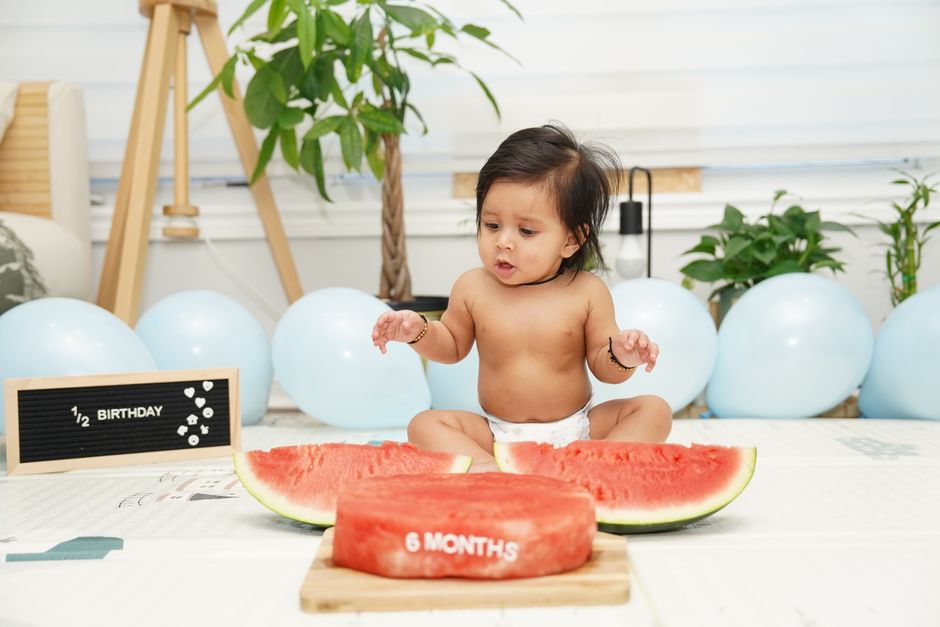
At six months, a baby’s main source of nutrition is still breast milk or formula. Solid foods are a supplement, not a replacement. A typical starting amount is about 1 to 2 tablespoons of a single-ingredient puree once or twice a day, gradually increasing as your baby gets used to eating.
That small amount surprises many parents. It helps to understand that at this stage, food is about learning, not filling up. Your baby’s stomach is small, and milk still supplies nearly all the calories and nutrients they need.
How Much Baby Food Does A 6 Month Old Need?
Start with small portions and let your baby set the pace. A reasonable beginning is 1 to 2 tablespoons of food at a feeding, offered once or twice a day. Over several weeks, many babies work up to roughly 2 to 4 tablespoons per meal, two to three times a day.
These are general starting points, not rules. Appetite varies widely from one baby to the next and from one day to the next. Some six-month-olds take a few tastes and turn away. Others are eager for more. Both are normal.
The reliable guide is your baby, not the bowl. Watch for signs they are done — turning the head away, closing the mouth, leaning back, or losing interest. Pushing food past those signals works against the goal, which is helping your baby learn to recognize fullness.
At this age, breast milk or formula still provides the bulk of nutrition. The American Academy of Pediatrics and other health bodies describe solid foods at six months as a gradual introduction alongside milk, not a switch away from it.
Why Solid Food Is a Supplement at Six Months
Breast milk or formula remains the primary source of energy and nutrients through the first year of life. Iron-fortified infant formula and breast milk supply the calories, fat, and protein a growing baby needs in a form their body handles well.
Solid foods at six months serve a different purpose. They introduce flavors and textures. They teach the mechanics of eating — moving food around the mouth and swallowing. They also begin to supply nutrients that breast milk alone cannot fully cover later in infancy, particularly iron and zinc.
This is why the portions look small. A six-month-old is not meant to get most of their calories from purees. Milk stays central. Food is a skill being practiced, and the amount grows as the skill develops.
One point that often gets lost: introducing solids does not mean reducing milk feeds. In most cases, milk intake stays roughly the same at first while solid food is added on top. Cutting back on milk too early can leave a baby short on the nutrition they still rely on.
Signs Your Baby Is Ready for Solids
Readiness is about development, not just age. Around six months, most babies show a set of signs that suggest they can handle solid food safely.
- Can sit up with little or no support and hold their head steady
- Shows interest in food, such as watching you eat or reaching for food
- Can coordinate hand, eye, and mouth to bring things to their mouth
- Has lost the tongue-thrust reflex that pushes food back out
- Can swallow food rather than only pushing it forward
These signs matter because they reflect the physical skills needed to eat without choking. A baby who cannot sit steadily with good head control is not yet ready, even if they seem interested in food.
Age is a guide, not a strict deadline. Most babies are ready around six months, but some are ready a little earlier and some a little later. Talk with your pediatrician if you are unsure about your baby’s readiness.
What a Typical Day of Food Looks Like
There is no single correct schedule. A common pattern at six months is milk feeds as usual, with one or two small solid meals added in. Many parents offer food when the baby is alert and not overly hungry, so they are calm enough to practice.
A simple early routine might look like this:
- Morning: breast milk or formula as usual
- Midday: a small solid meal of 1 to 2 tablespoons, followed by milk if wanted
- Afternoon and evening: milk feeds as usual
- Early on, a second small solid meal may be added as appetite grows
Timing around milk feeds is flexible. Some parents offer solids between milk feeds. Others offer them after a partial milk feed so the baby is not too hungry or too full. Both approaches are used, and neither is clearly better in the research.
Start with single-ingredient foods and offer one new food at a time. This makes it easier to notice any reaction. There is no strong evidence that delaying common allergenic foods helps prevent allergies. Current guidance generally favors introducing them in an age-appropriate form, though you should follow your pediatrician’s advice for your child.
How to Tell If Your Baby Is Getting Enough
You cannot measure a baby’s intake the way you measure formula in a bottle. Instead, you read the signs. A baby who is getting enough is generally content, active, and growing along their own curve.
Watch for these signs of adequate intake:
- Steady weight gain and growth tracked at checkups
- Regular wet diapers and normal bowel habits
- Contentment and energy between feeds
- Interest in eating without distress or gagging that does not settle
Signs that may warrant a call to the pediatrician include refusing most feeds, poor weight gain, frequent vomiting, or distress around eating. These are not necessarily serious, but they are worth checking.
Growth charts are the most reliable measure of whether a baby is getting enough overall nutrition. Your pediatrician tracks weight, length, and head size over time. A single small meal is not what determines this — the whole picture of milk and food together does.
Textures and Progression Over the Next Few Months
Six months is the beginning of a progression, not a fixed stage. The amount and texture of food change steadily as skills develop.
Early foods are usually smooth purees. Over the following weeks and months, textures thicken and lumps appear. By around eight to ten months, many babies handle soft, mashed, and finger foods. The exact timing varies, and there is no need to rush.
Progression matters because it builds chewing and swallowing skills. Staying on smooth purees for too long can make it harder for a baby to accept new textures later. Moving forward gradually, at the baby’s pace, supports that development.
A common question is whether to spoon-feed or let the baby self-feed. Both are used. Spoon-feeding allows a parent to offer food directly. Self-feeding with soft finger foods lets the baby practice hand-to-mouth coordination. Many families combine the two. The evidence does not show one method is superior for all babies, so the choice often comes down to what works for the family and the child.
Safety and Choking Basics
Choking is the main safety concern when starting solids. A six-month-old is still learning to swallow, and certain foods and habits raise the risk.
Always have your baby seated upright and supervised during meals. Never leave a baby alone with food. Avoid foods that are round, firm, or sticky in a form a baby cannot manage — whole grapes, whole nuts, chunks of raw carrot, and similar shapes are common choking hazards. Soften, cut, or mash foods to a safe texture.
Gagging is not the same as choking. Gagging is a normal reflex that helps move food forward, and it often looks alarming but is part of learning. Choking is silent or involves difficulty breathing. Learning to tell the two apart helps parents respond appropriately.
Offer water in a cup with meals once solids begin, but do not replace milk feeds with water. Breast milk or formula remains the main drink through the first year.
Frequently Asked Questions
How many tablespoons of baby food should a 6 month old eat?
A typical starting amount is 1 to 2 tablespoons per feeding, once or twice a day. Many babies gradually work up to about 2 to 4 tablespoons per meal over several weeks.
Should a 6 month old still drink the same amount of milk?
Yes, milk usually stays the main source of nutrition at six months, and solid food is added alongside it. Most babies continue roughly the same milk intake at first.
How do I know when my 6 month old has had enough baby food?
Watch for signs like turning the head away, closing the mouth, or leaning back. These signals mean your baby is full, and it is best to stop offering food at that point.
Can a 6 month old eat three meals a day?
Some babies work up to two or three small meals a day, but many start with just one or two. The right number depends on your baby’s appetite and readiness, not a fixed schedule.
