
The air you breathe is about 21% oxygen. The rest is mostly nitrogen at about 78%, with small amounts of argon, carbon dioxide, and other gases making up the final 1%. This 21% figure is remarkably consistent across the planet, from sea level to high altitudes, and it is the single most important number for understanding human respiration.
What Is the Exact Percentage of Oxygen in the Air?
Dry atmospheric air contains 20.95% oxygen by volume. This is a well-established scientific constant, confirmed by decades of atmospheric measurements. The percentage stays the same whether you are in a city, a forest, or over the ocean.
Water vapor changes the picture slightly. Humid air contains water molecules that displace some of the other gases. On a very humid day, the oxygen percentage can drop to around 20.9% because water vapor takes up space. The actual amount of oxygen you inhale per breath is lower in humid air, but the difference is too small to notice.
Altitude does not change the percentage of oxygen. The air at 10,000 feet still contains 21% oxygen. What changes is the barometric pressure. At higher altitudes, the air is thinner, meaning there are fewer total molecules in each breath. You still breathe 21% oxygen, but you take in fewer oxygen molecules overall. This is why climbers and high-altitude travelers feel short of breath.
Why Is Oxygen Only 21% of the Air?
Earth’s atmosphere is the product of billions of years of biological and geological processes. The dominant gas, nitrogen at 78%, is largely inert. It does not easily react with other elements, so it has accumulated in the atmosphere over time.
Oxygen, by contrast, is highly reactive. It is constantly being consumed by respiration, combustion, and chemical weathering. The reason it stays at 21% is that photosynthesis continuously replenishes it. Plants, algae, and cyanobacteria release oxygen as a byproduct of converting sunlight into chemical energy.
This balance is not static. During the Carboniferous period, roughly 300 million years ago, oxygen levels reached as high as 35%. That era supported giant insects because their respiratory systems relied on passive diffusion, which works better with more oxygen in the air. Today’s 21% is a stable equilibrium maintained by the global carbon cycle.
In enclosed spaces, the oxygen percentage can drop dangerously. A sealed room with people breathing will slowly consume oxygen and produce carbon dioxide. This is why ventilation requirements exist for submarines, spacecraft, and underground workplaces. Oxygen levels below 19.5% are considered unsafe for human occupancy by workplace safety standards.
How Much Oxygen Does the Human Body Actually Use?
At rest, an average adult inhales about 12 to 20 times per minute. Each breath brings in roughly 500 milliliters of air. Of that, about 21% is oxygen, meaning a single breath contains approximately 105 milliliters of oxygen.
Your body does not absorb all of it. Exhaled air still contains about 16% oxygen. The difference between the 21% you inhale and the 16% you exhale represents the oxygen your body actually extracts. That is roughly 5% of each breath, or about 25 milliliters of oxygen per breath at rest.
The body’s oxygen consumption changes dramatically with activity. During intense exercise, oxygen uptake can increase by 15 to 20 times above resting levels. Your breathing rate increases, your heart pumps faster, and your muscles extract more oxygen from the blood. This is why you breathe heavily after running up stairs — your body is trying to match oxygen supply to demand.
The brain is particularly sensitive to oxygen supply. It accounts for about 20% of the body’s total oxygen consumption despite being only 2% of body weight. Brain cells begin to suffer damage within minutes of complete oxygen deprivation, which is why stroke and cardiac arrest are medical emergencies.
What Happens When Oxygen Levels Change?
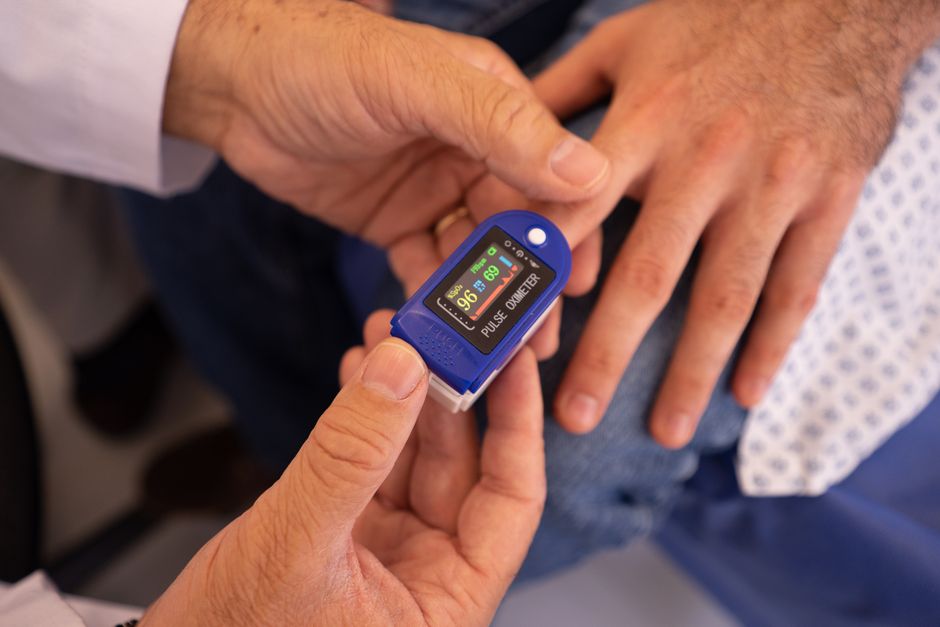
Normal room air keeps blood oxygen saturation at 95% to 100%. This is the measurement a pulse oximeter displays when clipped to your finger. The device measures the percentage of hemoglobin in your blood that is carrying oxygen.
When the oxygen in the air drops, your body responds. At 15% oxygen, which is roughly the equivalent of being at 8,000 feet, most people notice mild breathlessness during exertion. At 12% oxygen, equivalent to about 15,000 feet, mental performance declines and coordination suffers. At 10% or below, unconsciousness can occur quickly.
Carbon monoxide is a different threat. It binds to hemoglobin about 200 times more strongly than oxygen. Even in normal air with 21% oxygen, carbon monoxide can displace oxygen from your blood and cause tissue hypoxia. This is why carbon monoxide detectors are essential in homes with gas appliances or attached garages.
Supplemental oxygen is prescribed when blood oxygen levels fall below normal. Medical oxygen is typically delivered at 1 to 6 liters per minute through nasal cannulas. The goal is to keep blood oxygen saturation above 90%. Some patients with chronic lung disease require continuous oxygen therapy, while others only need it during sleep or exertion.
How Is the Oxygen Percentage Measured?
Atmospheric oxygen is measured using instruments called oxygen analyzers. The most common type uses an electrochemical sensor that produces a small electrical current proportional to the oxygen concentration. These devices are used in hospitals, industrial settings, and environmental monitoring.
The original measurements of atmospheric composition were done chemically. In the late 18th century, scientists like Antoine Lavoisier demonstrated that air contains a reactive component that supports combustion and respiration. He called it oxygen. The modern understanding of atmospheric composition was refined through the 19th and 20th centuries with increasingly precise analytical methods.
For everyday purposes, you do not need to measure oxygen yourself. The 21% figure is reliable for outdoor air anywhere on Earth. The exceptions are enclosed spaces, high altitudes, and environments where combustion or chemical processes may have consumed oxygen.
Why Does This Matter for Your Health?
Understanding that air is 21% oxygen helps you interpret medical information. When a doctor says your oxygen saturation is low, it means your blood is not carrying enough oxygen, even if the air around you is normal. Lung disease, heart conditions, and anemia can all cause low blood oxygen despite breathing room air.
For healthy people, the 21% oxygen in ambient air is sufficient for all normal activities. There is no benefit to breathing higher concentrations of oxygen at rest. In fact, breathing pure oxygen for extended periods can cause lung irritation and oxidative stress. Medical oxygen is a treatment, not a wellness product.
Oxygen bars and hyperbaric oxygen therapy have become popular wellness trends, but the evidence for their benefits in healthy people is limited. Hyperbaric oxygen therapy has proven medical uses for specific conditions like decompression sickness and non-healing wounds. For general wellness, there is no evidence that extra oxygen provides any benefit.
Frequently Asked Questions
Is oxygen 21% of the air we breathe?
Yes, dry atmospheric air contains 20.95% oxygen by volume. This percentage is consistent worldwide at sea level and remains the same at higher altitudes.
What is the oxygen level in a normal room?
A normal, well-ventilated room has the same oxygen level as outdoor air, around 21%. Sealed rooms can have lower oxygen if people are breathing without adequate ventilation.
At what oxygen level do you need supplemental oxygen?
Medical guidelines generally recommend supplemental oxygen when blood oxygen saturation drops below 90%. This is measured with a pulse oximeter and is different from the oxygen percentage in the air.
Can too much oxygen be harmful?
Yes, breathing high concentrations of oxygen for prolonged periods can damage lung tissue. Medical oxygen should only be used when prescribed by a healthcare provider.
