
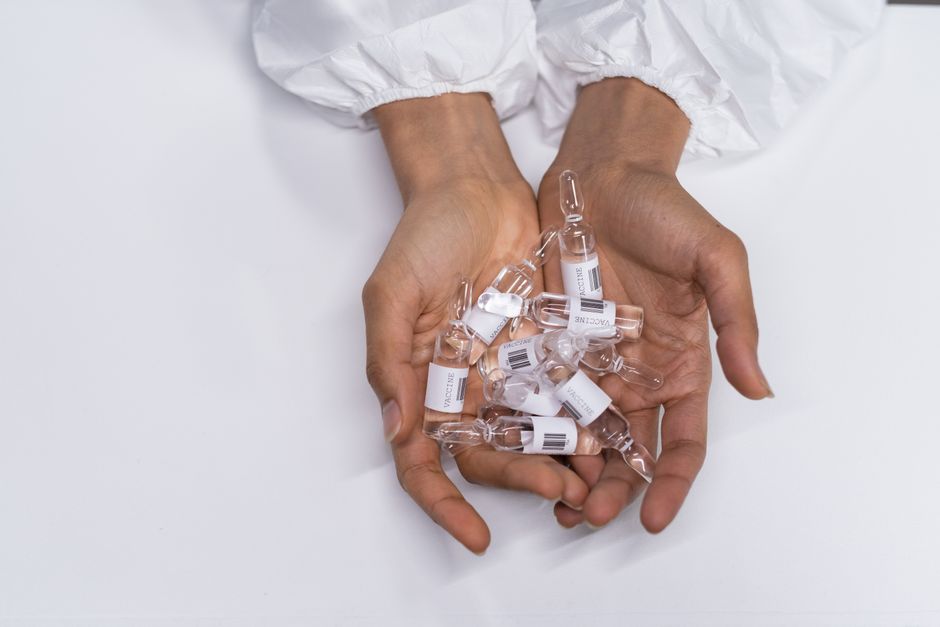
Botox vials come in a standard size of 100 units, though 50-unit and 200-unit vials also exist for specific clinical needs. The number of units in a vial does not translate to a fixed number of injections—it depends entirely on the treatment area, the patient’s anatomy, and the desired effect. A single vial can treat multiple small areas or one larger area, and a skilled clinician decides how many units to use for each patient.
What Exactly Is a Unit of Botox?
A unit of Botox is a measure of biological activity, not a measure of volume or weight. One unit is defined as the amount of toxin that kills 50% of a specific test population of lab mice under controlled conditions. This is called the LD50 (lethal dose for 50% of subjects).
In practical terms, a unit is the standard way doctors measure how much Botox to inject. The concentration is typically 100 units dissolved in 2.5 mL of saline, or 40 units per milliliter. But the concentration can be adjusted by the clinician depending on the procedure.
How Many Vials Do You Need for Common Treatments?
The number of vials needed depends on the treatment area and the severity of the condition being treated. These are general ranges based on established clinical practice. Individual results vary based on muscle strength, age, and treatment goals.
| Treatment Area | Typical Units Used | Vials Needed (100-unit size) |
|---|---|---|
| Glabella (frown lines between eyebrows) | 20–40 units | 1 vial (with product left over) |
| Forehead lines | 10–30 units | 1 vial or less |
| Crow’s feet (around eyes) | 10–30 units per side | 1 vial |
| Neck bands | 25–50 units | 1 vial |
| Underarm sweating (hyperhidrosis) | 50–100 units per armpit | 1–2 vials |
| Chronic migraine | 155–195 units across multiple head and neck sites | 2 vials |
| Upper limb spasticity | 200–400 units | 2–4 vials |
These numbers represent typical ranges in clinical practice. A provider may use more or less based on your specific situation. The key point is that one vial is rarely used for a single cosmetic treatment. Most cosmetic procedures use 30–60 units total, meaning one vial often covers more than one treatment area or is shared between patients.
Why Do Clinicians Dilute Botox Differently?
Botox comes as a powder that must be mixed with sterile saline before injection. The amount of saline used changes the concentration but not the total units. A vial of 100 units can be mixed with 1 mL, 2 mL, or even 4 mL of saline—the total remains 100 units.
Higher dilution (more saline) means a larger volume spread over a wider area. Lower dilution means a smaller, more precise injection. Some clinicians prefer higher dilutions for large areas like the forehead, while others use lower dilutions for precise spots like the corners of the eyes.
This is why two patients may receive the same number of units but different injection volumes. The units are what matter for effect. The dilution affects how the product spreads once injected.





How Many Units In A Vial Of Botox Explained: The 100-Unit Standard
The 100-unit vial is the industry standard. It is the most common size used in clinics worldwide. The 50-unit vial is sometimes used for smaller treatments or for practitioners who want to minimize waste. The 200-unit vial is primarily used for large-volume treatments like spasticity or severe hyperhidrosis.
Botox is a prescription medication. It is not sold over the counter. Only licensed healthcare providers can purchase and administer it. The vial itself is single-use and should be discarded after opening, even if some product remains. This is a safety measure to prevent contamination.
Once mixed with saline, Botox is typically used within 24 hours. Some clinicians use it within 4–8 hours. The manufacturer’s instructions specify that reconstituted Botox should be refrigerated and used within 24 hours. Using product beyond this window risks reduced effectiveness or contamination.
Does One Vial Equal One Patient?
Not necessarily. A single 100-unit vial can be divided among multiple patients if the clinic follows proper sterile technique. Many cosmetic practices draw up the exact units needed for each patient and use one vial for several patients in a single day.
This is a common practice, but it has raised concerns. Some states and countries have regulations about multi-dose vials. The FDA labels Botox as a single-dose vial, meaning it should be used for one patient only. In practice, many clinics still use one vial for multiple patients to reduce cost and waste.
If you are concerned about how your clinic handles vials, ask. A reputable clinic will explain their process. You should never see a vial that has been punctured multiple times over several days. That violates safety standards.
What Happens If You Get Too Many or Too Few Units?
Too few units means the effect is weak or short-lived. The muscles do not relax enough, and wrinkles or spasms return quickly. Too many units can cause unwanted effects like a frozen expression, drooping eyelids, or difficulty swallowing if injected near certain muscles.
This is why the skill of the injector matters as much as the product itself. A provider who understands facial anatomy can achieve good results with fewer units than someone who injects blindly. More units do not mean better results—they mean more risk.
The effects of Botox typically last 3–4 months for cosmetic use. This is because the nerve endings eventually regenerate and form new connections with the muscle. When that happens, muscle activity returns and the wrinkles reappear.
What Is the Maximum Safe Dose?
The maximum recommended dose for a single treatment session is 400 units in adults. This is based on clinical guidelines for conditions like spasticity. For cosmetic use, the maximum is far lower—most cosmetic treatments stay under 100 units total.
Going above 400 units increases the risk of serious side effects, including muscle weakness far from the injection site. Botox can spread from the injection area and affect muscles involved in breathing or swallowing. This is rare but possible, especially at high doses.
Certain medical conditions increase risk. People with neuromuscular disorders like myasthenia gravis or Lambert-Eaton syndrome should not receive Botox. Pregnant and breastfeeding women should also avoid it, as no adequate studies have confirmed its safety in these populations.
Why Do Prices Vary So Much?
Clinics price Botox per unit, but the per-unit price varies widely. You might see prices from $8 to $20 per unit. The total cost of a treatment depends on how many units you need, not just the per-unit price.
A clinic charging $10 per unit for a 40-unit treatment costs $400. A clinic charging $15 per unit for the same treatment costs $600. But a clinic charging $15 per unit might use fewer units overall because the injector is more precise. The final price can end up similar.
Beware of unusually low prices. If a clinic charges $5 per unit, they may be diluting the product more than standard, using expired product, or cutting corners on safety. Botox is a regulated prescription drug with a set manufacturing cost. Prices far below market average should raise questions.
How to Verify You Are Getting Real Botox
Real Botox comes in a sealed glass vial with a holographic label. The box has a unique lot number and expiration date. Your provider should be able to show you the vial before your injection.
Counterfeit Botox is a real problem. Some counterfeit products contain no active ingredient, while others contain harmful substances. The FDA has issued warnings about counterfeit Botox found in the United States.
Ask your provider these questions before treatment:
- Is this genuine Botox (onabotulinumtoxinA) or a different brand?
- Can I see the vial and check the lot number?
- How many units are you planning to use for my treatment?
- Where do you purchase your product?
A reputable provider will answer these questions without hesitation. If a provider is evasive or refuses to show the vial, that is a red flag.
Alternatives to Botox
Botox is not the only neuromodulator on the market. Dysport (abobotulinumtoxinA), Xeomin (incobotulinumtoxinA), and Jeuveau (prabotulinumtoxinA) are similar products. They work the same way but have slightly different unit measurements.
One unit of Botox is not equal to one unit of Dysport. The conversion ratio is roughly 1 unit of Botox to 2.5–3 units of Dysport. This is why you cannot compare prices per unit across brands. A treatment that uses 40 units of Botox might use 100–120 units of Dysport.
These products are not interchangeable without adjusting the dose. A clinician who switches brands must recalculate the dose carefully. Using the wrong dose can lead to under-treatment or over-treatment.
What to Expect After Your Injection
Results are not immediate. It takes 3–7 days for Botox to take full effect, with peak results at about 2 weeks. If you do not see results after 2 weeks, the dose may have been too low or the product may have been injected incorrectly.
Side effects are usually mild and temporary. Redness, swelling, or bruising at the injection site is common and resolves within days. Headache can occur in the first 24–48 hours after treatment. Drooping eyelids are a possible complication, but they are temporary and resolve as the Botox wears off.
If you experience difficulty breathing, swallowing, or speaking after a Botox injection, seek medical attention immediately. These are signs of toxin spread and require urgent evaluation.
Frequently Asked Questions
How many units are in a standard Botox vial?
A standard Botox vial contains 100 units. Vials of 50 and 200 units also exist but are less common.
How many units of Botox do I need for forehead lines?
Forehead lines typically require 10–30 units. The exact amount depends on your muscle strength and the depth of your wrinkles.
Can one Botox vial be used for multiple patients?
Technically yes, but the FDA labels Botox as a single-dose vial. Using one vial for multiple patients requires strict sterile technique and should be done within 24 hours of mixing.
How much does one Botox vial cost?
A 100-unit vial typically costs a clinic between $400 and $800. Your out-of-pocket cost depends on how many units you receive and the clinic’s per-unit pricing.
