
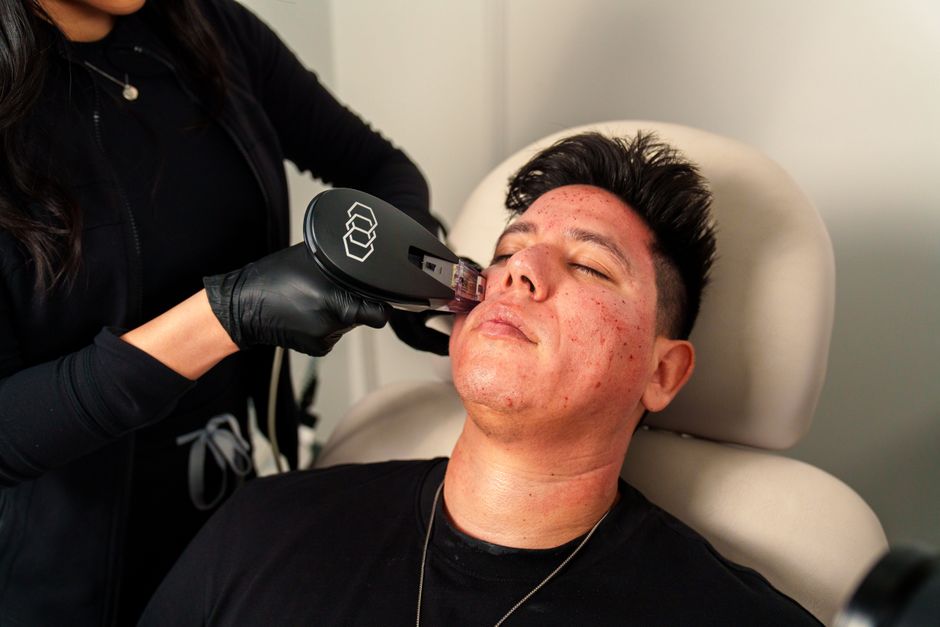
Masseter Botox dosing is not one-size-fits-all. The number of units depends on your specific goal, your muscle size, and your anatomy. For most adults, a single treatment session uses between 25 and 50 units per side, but the exact amount varies based on whether you are treating clenching, jaw grinding, or a square jawline.
What Is Masseter Botox Used For?
Botox injections into the masseter muscle serve two primary purposes. The first is medical: reducing jaw tension, teeth grinding, and pain from temporomandibular joint (TMJ) disorders. The second is cosmetic: slimming the lower face by shrinking an overdeveloped masseter muscle.
The masseter is one of the strongest muscles in the body. It runs from the cheekbone to the lower jaw and does the heavy lifting when you chew. When it is overworked — from grinding, clenching, or chewing tough foods — it grows larger. Botox temporarily weakens that muscle, which reduces both its power and its size.
The same injection works for both goals. The difference is the dose and the precise placement.
How Many Units For Masseter Botox Dosing By Goal?
For jaw clenching and teeth grinding, most clinicians start with 25 to 30 units per side. For cosmetic jaw slimming, the typical range is 30 to 50 units per side. These ranges overlap because the two goals are closely related — a smaller muscle also produces less force.
Your total dose for a full session usually lands between 50 and 100 units when both sides are treated. Some people need less. People with very strong jaw muscles or a very square jawline may need more. Most practitioners do not exceed 50 units per side in a single session.
The dose is not based on body weight. It is based on muscle mass and the strength of your bite. A person who grinds their teeth at night with significant force will typically need more units than someone who simply wants a slightly softer jawline.
Why Dosing Matters More Than You Think
Too few units and you get little to no effect. The muscle keeps firing and the symptoms or appearance do not change. Too many units and you risk side effects that are difficult to reverse.
The most common complication from over-dosing is a crooked smile. The masseter works with other facial muscles, and when it is weakened too much, the smile can pull to one side. This is temporary — it resolves as the Botox wears off — but it can last for two to three months.
Another risk is difficulty chewing. The masseter provides real chewing power. If it is weakened too aggressively, eating firm foods becomes noticeably harder. This is why starting with a conservative dose and adjusting later is the standard approach.
Clinicians cannot guess your ideal dose from a photo or a video call. They assess your muscle by feeling it while you clench your jaw. This physical examination is the single best predictor of how many units you need.



How Long Does Masseter Botox Last?
Results typically last three to six months. The duration depends on your metabolism, the dose used, and how hard your jaw muscle works. People who grind their teeth heavily often metabolize the product faster and need treatment more frequently.
Cosmetic results build over time with repeat treatments. After several sessions, the muscle shrinks enough that the jawline remains slimmer even after the Botox wears off. Some people find they can stretch the interval between treatments to six months or longer once this happens.
For clenching and grinding, the effect is not permanent. The muscle regains strength as the Botox fades. Ongoing treatment is required for continued symptom relief.
What Happens During The Procedure
The procedure itself takes about 10 minutes. A clinician marks the injection points on your jaw, then uses a fine needle to deliver small amounts of Botox directly into the masseter muscle. Most people describe the sensation as a quick pinch.
No anesthesia is required, though some clinicians apply a numbing cream beforehand. You can return to normal activities immediately after the appointment. The main instruction is to avoid rubbing or massaging the area for the rest of the day so the product stays where it was injected.
You will not see results right away. The full effect develops over one to two weeks. Plan accordingly if you are getting this done for a specific event.
Who Should Not Get Masseter Botox
Botox is not appropriate for everyone. Pregnant and breastfeeding women should not receive it — no clinical studies have established its safety in these groups. People with certain neuromuscular conditions, such as myasthenia gravis, should also avoid it.
If you have an infection at the injection site, treatment should be postponed. If you are taking blood thinners, you may bruise more easily, but this is not a hard contraindication — your clinician will advise you.
Always disclose your full medical history and all medications before treatment. This includes supplements like fish oil and vitamin E, which can increase bruising.
How Much Does Masseter Botox Cost?
Cost varies by geographic region and provider. Botox is typically priced per unit, usually between $10 and $20 per unit. A session using 60 total units (30 per side) would therefore cost between $600 and $1,200.
Some providers charge a flat fee per treatment area rather than per unit. This can be more predictable but does not necessarily mean you are getting a better deal. Ask for the exact number of units included in any flat fee quote.
Medical treatments for TMJ or bruxism are sometimes covered by dental or medical insurance, but cosmetic jaw slimming is never covered. Check with your insurer before assuming coverage.
Choosing A Qualified Provider
This is not a treatment to bargain-hunt. The difference between a good and a poor result often comes down to the injector’s skill. A provider who understands facial anatomy will place the product precisely and avoid complications.
Look for a board-certified dermatologist, plastic surgeon, or a dentist with specific training in masseter injections. Dentists are often particularly well-suited for this because they understand jaw mechanics and bite force in depth.
Ask how many masseter procedures they have performed. Ask to see before-and-after photos of their actual patients. A provider who cannot answer these questions clearly is not the right choice.
Be cautious of extremely low prices. If a deal seems too good to be true, the product may be diluted, counterfeit, or administered by someone without adequate training.
What To Expect After Treatment
Mild swelling, redness, or bruising at the injection sites is normal and resolves within a few days. Some people notice a feeling of weakness when chewing during the first week. This is expected and confirms the muscle is responding.
If you are being treated for clenching, you may notice that you still grind your teeth but with less force. The habit itself may not stop — the muscle just cannot generate the same pressure. Some clinicians recommend combining Botox with a night guard for the best protection of your teeth.
If you notice a change in your smile, a drooping eyelid, or difficulty swallowing, contact your provider immediately. These are uncommon but warrant prompt evaluation.
Frequently Asked Questions
How many units of Botox for masseter slimming?
Most people need 30 to 50 units per side for cosmetic jaw slimming. Your exact dose depends on your muscle size and how square your jawline is.
How many units of Botox for jaw clenching?
Treatment for clenching typically starts at 25 to 30 units per side. People with very strong grinding may need up to 50 units per side.
How many units of Botox for masseter is too much?
Most practitioners avoid exceeding 50 units per side in a single session. Higher doses increase the risk of a crooked smile and difficulty chewing.
How often can you get masseter Botox?
Treatments are typically repeated every three to six months. You should wait until the muscle function returns before getting another round.
