
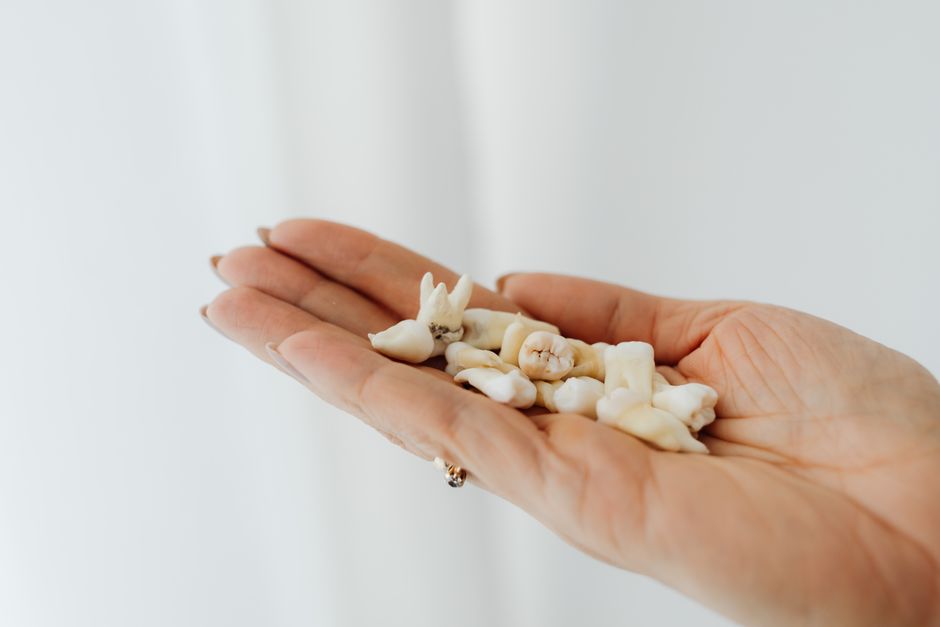
Most adults have 32 teeth, including four wisdom teeth. Children have 20 teeth, which start falling out around age 6 to make room for the adult set. The number you end up with as an adult depends partly on whether your wisdom teeth come in — and many people never develop all four.
Teeth are the hardest structures in the human body. They cut, tear, and grind food, help you speak clearly, and give your face its shape. But the count changes across your lifetime, and there is real variation between people. Here is what the numbers actually look like, and why they differ.
How Many Teeth Do We Have at Each Stage of Life?
The count starts at zero and changes over time. Babies are born without visible teeth, though their tooth buds are already forming under the gums.
The first baby tooth usually appears around 6 months of age, though the timing varies a lot. By about age 3, most children have their full set of 20 primary teeth. These are also called baby teeth or deciduous teeth.
Around age 6, the first permanent molars come in behind the baby teeth. This is also when the front baby teeth start to loosen. The mixed stage — some baby teeth, some adult teeth — lasts several years.
By the early teens, most people have 28 permanent teeth. The last four, the wisdom teeth, may appear between the late teens and mid-twenties. If all four come in, the total reaches 32.
- Primary (baby) teeth: 20
- Permanent teeth before wisdom teeth: 28
- Permanent teeth including four wisdom teeth: 32
Those 32 teeth are split into four types. Each has a job.
- Incisors: 8 total. The four front teeth on top and bottom. They cut food.
- Canines: 4 total. The pointed teeth beside the incisors. They tear food.
- Premolars: 8 total. Also called bicuspids. They crush and grind.
- Molars: 12 total, including the four wisdom teeth. They do the heavy grinding at the back of the mouth.
That adds up to 32. The layout is the same in most people: a set on the upper jaw, called the maxilla, and a matching set on the lower jaw, called the mandible.
Why Do Some People Have Fewer Than 32 Teeth?
Having 32 teeth is the textbook number, not a guarantee. Plenty of adults have 28, 29, or 30 and are perfectly healthy.
The most common reason is wisdom teeth. Many people never develop all four. Others have them but they stay trapped under the gum, a condition called impaction. Wisdom teeth are the most frequently removed teeth, and removal is common clinical practice. It is worth being clear that not every impacted wisdom tooth needs to come out — some dentists recommend removal, while others monitor wisdom teeth that cause no problems. The decision depends on the individual case.
Beyond wisdom teeth, some people are simply born with fewer teeth than usual. This is called hypodontia. It most often affects the wisdom teeth, the upper lateral incisors, and the second premolars. Genetics play a role. So does the environment during tooth development.
Tooth loss later in life is another factor. Gum disease and tooth decay are the leading causes of adult tooth loss. Injury, grinding, and certain medical treatments can also lead to extractions. So the number of teeth a person has at 60 may be lower than the number they had at 20.
On the other side, a small number of people develop extra teeth. This is called hyperdontia, and it is uncommon. Extra teeth most often appear near the front of the upper jaw.
Are Wisdom Teeth Always Part of the Count?
No. Wisdom teeth are the most variable part of the human mouth. Some people get all four. Some get one, two, or three. Some never get any.
Wisdom teeth are also known as third molars. They sit at the very back of each jaw. They are the last teeth to form and the last to try to come through, usually in the late teens or early twenties.
Because they arrive last, there is often no room left. That is why they frequently become impacted, meaning they cannot fully break through the gum. Impacted wisdom teeth can cause pain, crowd nearby teeth, or lead to infection. But many impacted wisdom teeth cause no symptoms at all and are found only on an X-ray.
Whether to remove them is a case-by-case call. Some dentists recommend removal to prevent future problems. Others take a watch-and-wait approach when there are no signs of trouble. There is no single rule that fits everyone, and the evidence on routine removal of symptom-free wisdom teeth is not clear-cut. If you are unsure, that is a conversation to have with your own dentist.





How Do Baby Teeth and Adult Teeth Differ?
Baby teeth and adult teeth are built from the same materials, but they differ in number, size, and strength.
Children have 20 baby teeth. Adults have up to 32 permanent teeth. Baby teeth are smaller and have thinner enamel, the hard outer layer. That thinner enamel is one reason baby teeth are more prone to decay.
Baby teeth also have a different job. They hold space in the jaw so the adult teeth can come in straight. Losing a baby tooth too early, whether from decay or injury, can affect how the adult teeth line up later.
The timeline of the swap is fairly predictable in broad strokes, though individual timing varies:
- Front baby teeth usually loosen and fall out first, starting around age 6.
- Most children have a mix of baby and adult teeth from about age 6 to age 12.
- By around age 12 to 13, most of the permanent teeth except wisdom teeth are in place.
There is a simple way to remember the difference between the two sets. Baby teeth are placeholders and training teeth. Permanent teeth are meant to last a lifetime. That is why protecting them matters so much.
Why Does the Number of Teeth Matter for Health?
Teeth are not just for chewing. The number you keep, and the health of those teeth, connects to your overall health in ways researchers are still working out.
Chewing well supports good nutrition. People who have lost many teeth sometimes avoid hard or fibrous foods like raw vegetables, fruit, and nuts. Over time, that can affect diet quality.
Missing teeth can also change how you speak and how your jaw moves. When a tooth is lost and not replaced, nearby teeth can shift, and the bite can change.
Gum disease, the main cause of adult tooth loss, is also linked to other health conditions. Research has found associations between gum disease and heart disease, diabetes, and other conditions. It is important to be careful here. An association is not the same as proof of cause. Gum disease and these conditions often occur together, and researchers continue to study whether one drives the other or whether shared risk factors explain the link.
The practical takeaway is not complicated. Keeping your teeth healthy is worth doing for its own sake. Brushing twice a day with fluoride toothpaste, cleaning between the teeth daily, limiting sugary drinks, and seeing a dentist for regular checkups are the standard recommendations from dental and health organizations. Those habits protect the teeth you have, whatever the final count turns out to be.
Does the Number of Teeth Change With Age?
Yes. The count goes up through childhood and can go down in adulthood.
You start with none. You reach 20 as a young child. You reach 28 by your early teens. You may reach 32 if your wisdom teeth come in. Then, over the following decades, the number can drop if teeth are lost to decay, gum disease, or injury.
This is why two adults can both answer the question “how many teeth do you have?” differently and both be correct. The number 32 is the full set. It is not a rule that everyone keeps.
For most of human history, tooth loss was far more common than it is today. Better dental care, fluoride, and awareness of gum health have changed that. Still, the World Health Organization and other health bodies treat tooth loss as a major public health issue, and it remains common in older adults.
One point worth making: a full set of 32 teeth is not automatically healthier than a set of 28. What matters is whether the teeth you have are sound, and whether your gums are healthy. A person with 28 well-cared-for teeth is in better shape than someone with 32 teeth and untreated gum disease.
Frequently Asked Questions
How many teeth do adults have?
A full adult set is 32 teeth, including four wisdom teeth. Many adults have 28 to 32, depending on whether their wisdom teeth came in or were removed.
How many teeth do children have?
Children have 20 baby teeth, which usually all come in by about age 3. These start falling out around age 6 as permanent teeth replace them.
Is it normal to have fewer than 32 teeth?
Yes, it is common. Some people never develop all four wisdom teeth, and others lose teeth to decay or gum disease later in life.
Do you have to remove wisdom teeth?
No, not always. Removal is often recommended when a wisdom tooth is impacted or causing problems, but symptom-free wisdom teeth are sometimes monitored instead.
