
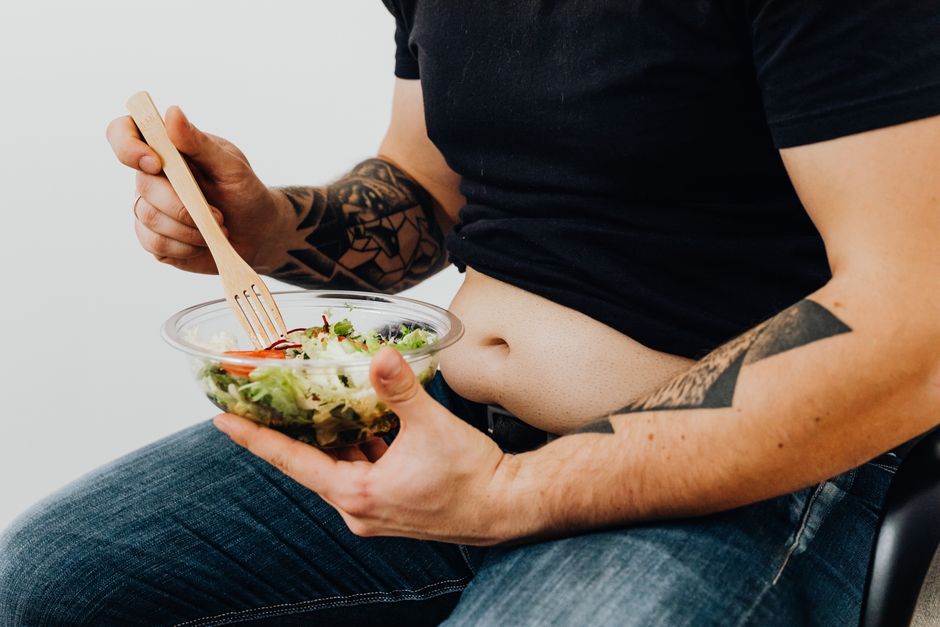
There is no number of squats a day that will specifically burn belly fat. Spot reduction — the idea that exercising a body part melts fat from that same area — does not work. Squats build and strengthen the muscles of your legs and hips, and they burn calories, but your body decides where it pulls stored fat from based on genetics, hormones, and overall energy balance, not on which muscle you just worked. Fat loss happens across your whole body at once, and belly fat is often the last to show the change.
Why Can’t Squats Target Belly Fat Directly?
Fat is stored as triglycerides inside fat cells distributed throughout your body. When you burn more energy than you take in, hormones signal those cells to release fat, and it travels through the bloodstream to be used as fuel. That process is systemic. It does not happen locally at the muscle you happen to be training.
Researchers have tested this idea directly. Studies that had people train one side of the body or one specific muscle group found that fat loss was not concentrated in the area being exercised. The muscle may get stronger and larger, but the fat sitting on top of it does not disappear just because the muscle underneath is working.
This is why hundreds of crunches have never given anyone a flat stomach on their own. The same principle applies to squats and your belly. The exercise is real and useful — it just does not have a direct line to the fat around your waist.
One non-obvious point: where you lose fat first is largely out of your control. Two people on identical programs can lose inches from completely different places in the same order. That is genetics and hormone patterns, not effort.
How Many Squats a Day to Lose Belly Fat?
There is no official daily squat count for fat loss, because the number that matters is total energy burned versus energy eaten. Squats contribute to that equation, but they are a small piece of it.
For general muscle strength and joint health, common fitness guidance suggests working the major muscle groups two or more days per week. For squats specifically, a reasonable starting point for most healthy adults is two to three sets of 10 to 15 repetitions on those days. That builds strength. It will not, by itself, produce meaningful fat loss.
Here is the math problem. A set of bodyweight squats burns a modest number of calories — far fewer than most people assume. Doing 100 squats a day sounds impressive, but the calories involved are small compared with what you eat in a single snack. You cannot out-squat a diet that keeps you in a calorie surplus.
If fat loss is the goal, squats are a supporting player, not the lead. The lead is your overall calorie intake, supported by total daily activity and the amount of muscle you carry.
What Actually Reduces Belly Fat?
A sustained calorie deficit is the foundation. You need to take in less energy than you burn over time. How you create that deficit matters less than whether you can stick with it.
Two things make squats genuinely useful in that effort. First, they work large muscle groups, which means more total energy burned per rep than a small isolation exercise. Second, they build muscle, and muscle supports your metabolism and your ability to stay active as you age. Resistance training of this kind is a smart part of a fat-loss plan — it just is not the engine.
What the evidence consistently supports for reducing belly fat:
- A calorie deficit you can maintain, built on whole foods and adequate protein
- Regular aerobic activity spread across the week
- Resistance training two or more days per week to preserve muscle while you lose fat
- Sleep and stress management, which affect appetite hormones and eating behavior
- Limiting alcohol, which adds calories and is linked to fat storage around the waist
Belly fat deserves attention for reasons beyond appearance. Visceral fat — the fat packed around your internal organs — is linked to higher risk of heart disease and type 2 diabetes. It also tends to respond to diet and exercise changes, sometimes more readily than the fat you can pinch. That is genuinely good news, and it is a stronger reason to act than how your midsection looks.





Do Squats Have Any Effect on Belly Fat at All?
Yes, indirectly. Squats burn calories, build muscle, and improve how your body handles blood sugar. Muscle tissue uses glucose, and more muscle means more places to store it. Over months, that supports better metabolic health, which is part of the picture for anyone carrying excess belly fat.
Squats also strengthen your core. Not by burning fat off it, but by training the muscles that stabilize your trunk during the movement. A stronger core can improve posture and how your midsection looks and feels.
Be careful with claims you see online about squats “melting” belly fat or reshaping your waist. No study has confirmed that squats reduce fat specifically around the waist. What studies do show is that resistance training combined with a calorie deficit helps people lose fat while keeping muscle — and that is the honest benefit.
How Should You Add Squats to a Fat-Loss Plan?
Start where your body is, not where an influencer is. If you are new to squats, begin with bodyweight versions and focus on form before volume. Bad reps done hundreds of times build nothing but irritation.
A practical approach: do squats two or three days a week as part of a full-body strength routine, not every single day. Muscles need recovery to adapt. Daily high-volume squatting raises injury risk and rarely helps fat loss enough to justify it.
Pair that with daily movement outside the gym — walking is one of the most underrated tools for fat loss because it is sustainable and adds up. And keep your eye on the kitchen. The squat rack cannot fix what the plate undoes.
If you have knee, hip, or back problems, or you are returning from injury, check with a physical therapist or your doctor before starting a squat program. Form matters, and so does the condition of your joints.
The Bottom Line on Squats and Belly Fat
Squats are a strong, worthwhile exercise. They build leg and hip strength, support your metabolism, and belong in almost any fitness plan. But they are not a belly-fat solution, and no daily squat count will get you there on its own.
Belly fat comes off through a calorie deficit, regular activity, and patience. Squats can be part of that — a helpful part — but they are not the answer by themselves. Anyone promising that a set number of squats a day will flatten your stomach is selling something the evidence does not support.
Frequently Asked Questions
How many squats a day to lose belly fat?
There is no set number, because squats do not target belly fat directly. Any daily count only helps as part of an overall calorie deficit and active lifestyle.
Do squats burn belly fat?
Squats burn calories and build muscle, which can support fat loss indirectly. They do not burn fat from your belly specifically, because spot reduction does not work.
Can I lose belly fat by doing 100 squats a day?
Probably not on its own. One hundred bodyweight squats burn a modest number of calories, and belly fat loss depends mainly on your overall diet and total daily activity.
What is the fastest way to lose belly fat?
There is no fast fix with strong evidence behind it. A sustainable calorie deficit, regular aerobic and strength exercise, good sleep, and limited alcohol are what the research consistently supports.
