
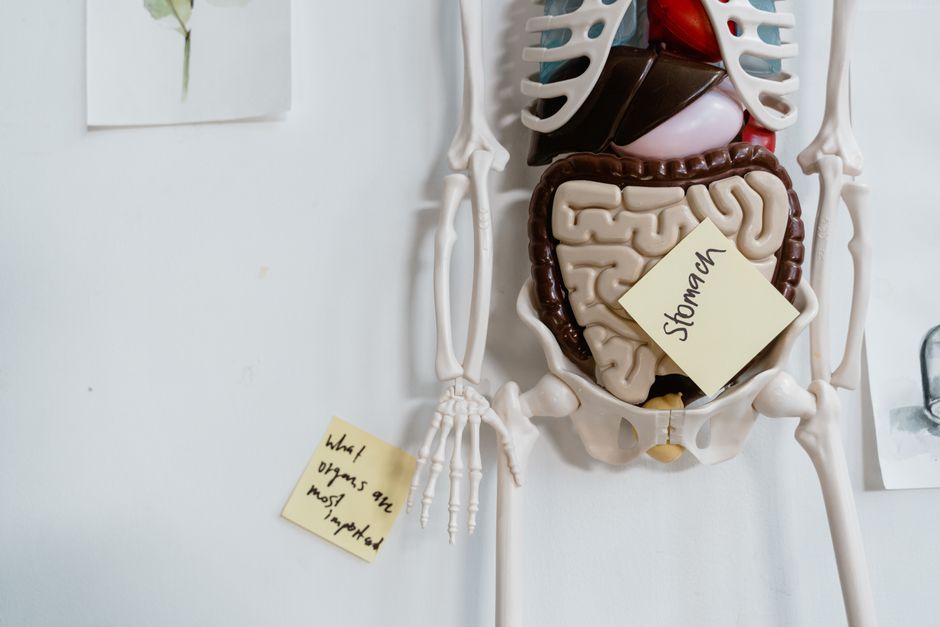
Most people have 12 ribs on each side of the chest, for a total of 24. That count is consistent across sexes and most body types. It is also one of the few things in human anatomy that almost never varies — except when it does, which is more interesting than the standard answer.
Ribs are curved bones that form a cage around the heart and lungs. They are not just a shield. They move every time you breathe, and they anchor some of the muscles you use to cough, sneeze, and lift things.
How Many Ribs Do We Have On Each Side?
Twelve on the left, twelve on the right. That is the standard human count, and it is set early in development.
Not all 12 pairs are built the same way. Anatomists divide them into three groups based on how each rib connects to the sternum, the flat bone in the center of your chest.
- True ribs (ribs 1–7): Each one attaches directly to the sternum through its own strip of cartilage.
- False ribs (ribs 8–10): These connect to the cartilage of the rib above them instead of reaching the sternum directly.
- Floating ribs (ribs 11–12): These attach only to the spine at the back. They have no connection to the sternum at all.
The floating ribs are shorter and more mobile than the rest. That mobility is part of why they are less protected — and more prone to certain injuries.
Why Do Some People Have More or Fewer Ribs?
Variation exists, but it is uncommon. The most well-documented pattern is an extra rib at the top of the rib cage, called a cervical rib.
A cervical rib grows from the seventh cervical vertebra, above the normal first rib. Estimates vary, but it appears in roughly 1 in 200 to 1 in 500 people. Many people who have one never know it. It is often found by accident on a chest X-ray taken for something else.
When a cervical rib does cause problems, it is usually because it presses on nerves or blood vessels running to the arm. That condition is called thoracic outlet syndrome. Symptoms can include numbness, tingling, or weakness in the arm and hand. It is not common, and most cervical ribs never produce symptoms.
Missing ribs are rarer still and are usually linked to a broader developmental condition rather than occurring on their own.
Do Men and Women Have the Same Number of Ribs?
Yes. Men and women both normally have 12 pairs. There is no anatomical difference in rib count between the sexes.
This is worth stating plainly because a persistent myth claims men have one fewer rib than women, based on the biblical story of Eve. That story has no anatomical basis. The number is the same.
What does differ between individuals — of any sex — is the size and shape of the rib cage. Body size, age, and certain medical conditions can change how the cage looks and moves. None of that changes the count.





What Do the Ribs Actually Do?
Ribs do three main jobs, and the breathing one is easy to overlook.
First, they protect. The heart, lungs, and major blood vessels sit inside the cage. The liver and spleen are partly shielded by the lower ribs as well.
Second, they move. When you inhale, the muscles between your ribs and the diaphragm contract. The rib cage lifts and expands, creating space for the lungs to fill. When you exhale, it relaxes back down. Without this motion, breathing would be far less efficient.
Third, they anchor muscle. Muscles used for breathing, posture, and movement of the upper body attach to the ribs. So do muscles in the back and abdomen. The rib cage is a working structure, not a fixed box.
Can You Live Without Some of Your Ribs?
Yes. People can and do live without one or more ribs, and sometimes surgeons remove them on purpose.
One common reason is a procedure called a rib resection, used to treat thoracic outlet syndrome when other approaches have not worked. Another is to gain access to structures behind the rib cage during certain surgeries. In some cases, ribs are removed because of tumors or severe infection.
Living without a rib or two is generally tolerated well. The chest wall is a connected system, and the remaining ribs and muscles compensate. That said, removal is not risk-free. It can affect breathing mechanics, cause pain, or leave the area more vulnerable to injury. Whether to remove a rib is a decision made case by case, based on the specific problem and the person’s overall health.
When Should Rib Pain Be Taken Seriously?
Most rib pain is not an emergency. Muscle strain, a minor injury, or inflammation where rib meets cartilage can all cause discomfort. But some causes are serious, and the difference is not always obvious from the pain alone.
Seek urgent medical care if rib pain comes with any of the following:
- Shortness of breath or difficulty breathing
- Chest pressure, tightness, or pain spreading to the arm, jaw, or back
- Pain after a fall or impact, especially if it hurts to press on the area
- Coughing up blood, or a cough that will not go away
- Fever along with the pain
These signs can point to a broken rib, a lung problem, a heart issue, or another condition that needs prompt evaluation. Chest pain is not something to wait out.
One detail worth knowing: a broken rib is not always obvious. A crack can hurt when you breathe deeply or press on the spot, without any visible bruising. If pain follows a fall or a hard hit, it is worth getting checked.
Common Myths About Ribs
A few ideas about ribs circulate widely and are worth correcting.
Myth: Men have fewer ribs than women. They do not. Both sexes normally have 12 pairs.
Myth: You can “pop” a rib back into place on your own. Ribs do not dislocate the way a shoulder can. What people often call a “slipped rib” is usually irritation or inflammation at the joint where the rib meets cartilage. It is treated differently from a dislocation, and self-manipulation can make things worse.
Myth: Ribs are fixed and do not move. They move constantly with breathing. That movement is essential to how your lungs work.
Myth: Everyone has exactly 24 ribs, no exceptions. Most people do. But cervical ribs and other variations mean the number is not universal.
What the Rib Count Tells Us
The standard answer — 12 pairs, 24 total — is correct for the vast majority of people. It is a stable feature of human anatomy that does not change with sex, and it is set long before birth.
The exceptions are what make the topic worth understanding. A cervical rib is uncommon but real, and it can cause symptoms that are easy to misattribute to something else. Knowing the basic count, and knowing that variation exists, helps you make sense of what a doctor might find on an X-ray.
If you ever hear a rib count that does not match 24, it is not necessarily an error. It may just be one of the exceptions.
Frequently Asked Questions
How many ribs do humans have in total?
Most humans have 24 ribs in total — 12 on each side. This count is the same for men and women.
Do men have one fewer rib than women?
No. Men and women both normally have 12 pairs of ribs. The idea that men have one fewer comes from a story, not from anatomy.
Can you have an extra rib?
Yes, though it is uncommon. An extra rib at the top of the rib cage, called a cervical rib, appears in a small percentage of people and often causes no symptoms.
Can you live without a rib?
Yes. People can live without one or more ribs, and surgeons sometimes remove a rib to treat a specific condition. Removal carries some risks, so it is decided case by case.
