
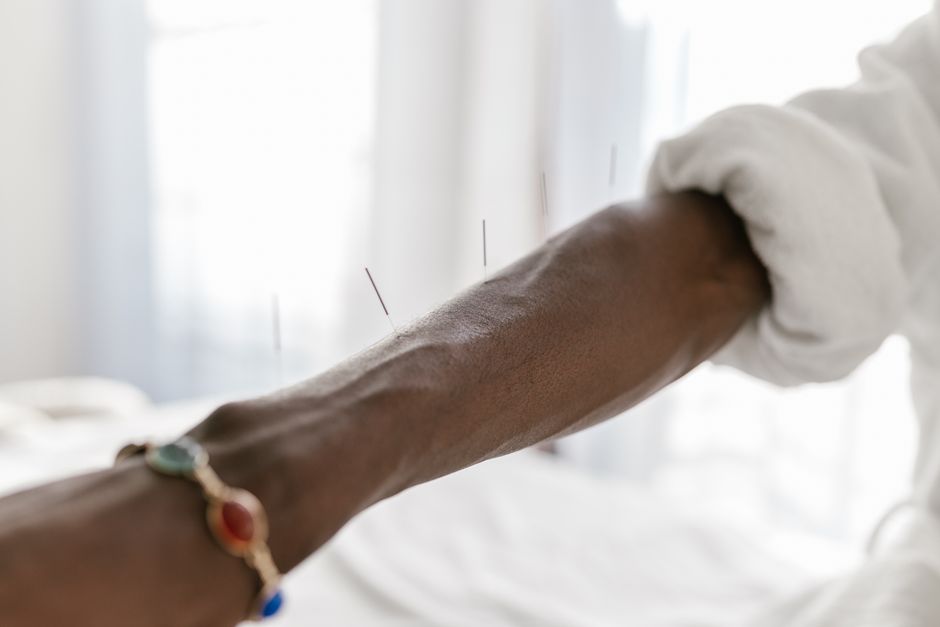
There is no single, official number of pressure points on the human body. The count depends entirely on which tradition or system you consult. Traditional Chinese medicine charts hundreds of acupuncture points along energy pathways. Japanese martial arts traditions name far fewer vital points. Modern anatomy does not recognize “pressure points” as a defined structure at all. What exists is a set of anatomical locations where nerves, blood vessels, or sensitive tissue sit close to the surface, and those spots can be mapped and counted in different ways.
That gap between traditions is the first thing to understand. When someone asks how many pressure points there are, the honest answer is that the question has several valid answers, and none of them is a medical fact in the way a blood pressure reading is.
How Many Pressure Points On The Human Body Do Different Traditions Count?
Traditional Chinese medicine is the source of the largest and most formalized count. Classical acupuncture texts describe a system of several hundred points along pathways called meridians, and the number grew over centuries as practitioners added locations. Modern acupuncture references commonly list a few hundred standard points, with additional “extra” points outside the main channels.
Japanese martial arts took a different approach. Systems like kyusho and atemi identify a smaller set of target areas, often described in the dozens rather than hundreds. These are chosen for combat relevance, not healing. The overlap with acupuncture points is partial and inconsistent.
Western massage and bodywork traditions use the term loosely. Trigger points, which are tender spots in muscle tissue, are a separate concept with a separate count. Some references list dozens of common trigger points, but the number is not fixed and varies by practitioner and textbook.
So the counts range from a few dozen to several hundred depending on the framework. None of these numbers reflects a structure that anatomists would identify on a dissection table.
What Are Pressure Points Anatomically?
Modern anatomy does not use the term “pressure point” as a formal category. What the traditions point to are real anatomical features: peripheral nerves, arteries, and areas where tissue is thin over bone.
When you press on the inside of your elbow or the side of your neck, you are pressing near a nerve or a blood vessel. The sensation you feel is real. The nerve is real. What is not established is that these locations form a connected system the way traditional charts describe.
Some spots are genuinely sensitive because a nerve runs close to the surface there. The ulnar nerve at the elbow, often called the “funny bone,” is a clear example. Pressing it produces a sharp tingling sensation that travels into the hand. That is nerve compression, not energy flow.
Other spots sit over arteries. The carotid arteries in the neck are a well-known example. Pressure there can affect blood flow to the brain. This is why some martial arts techniques target the neck, and it is also why pressing hard on the neck is genuinely dangerous.
Why Is There No Official Medical Count?
Medicine counts things it can define and measure. Pressure points do not meet that standard. There is no agreed definition of what qualifies as one, no imaging test that reveals them, and no consensus map.
Acupuncture points have been studied with imaging and electrical resistance measurements. Some studies report differences in electrical conductance at acupuncture points compared with surrounding skin. The findings are inconsistent across studies, and no widely accepted anatomical basis has been established. The evidence here is genuinely limited.
This does not mean the sensations people feel are imaginary. It means the system described by tradition has not been confirmed as a measurable anatomical network. Those are two different claims, and it matters to keep them separate.
Are Pressure Points Dangerous to Press?
Most light pressure on most body areas is harmless. The risk depends entirely on where and how hard you press. A few locations carry real danger.
- The front and sides of the neck. The carotid arteries supply blood to the brain. Hard pressure there can reduce blood flow and, in rare cases, dislodge plaque. This is a genuine hazard, not a theoretical one.
- The throat. The windpipe and airway sit unprotected at the front of the neck. Pressure here can impair breathing.
- The eyes. Direct pressure on the eyeball can cause injury.
- Over an artery anywhere. The femoral artery in the groin and the brachial artery in the upper arm are examples. Sustained hard pressure is not something to experiment with.
Martial arts pressure point techniques are taught with control for a reason. The targets that work are the ones near nerves and vessels, and those are exactly the ones that can cause harm if applied without restraint.
If you have carotid artery disease, a bleeding disorder, or are taking blood thinners, hard pressure on the neck or groin is a particular concern. Talk to a clinician before any bodywork that involves deep pressure in those areas.
Do Pressure Points Work for Pain or Other Conditions?
The evidence for using pressure points to treat pain or other conditions is mixed and generally weak. Some studies suggest acupressure may reduce certain symptoms like nausea, and some research indicates benefit for specific pain conditions. Results vary widely between studies, and many trials are small or poorly designed.
Acupuncture has been studied more extensively. Some clinical guidelines list it as an option for certain types of chronic pain, though the effect sizes tend to be modest and the mechanism remains debated. A common finding is that sham acupuncture, where needles are placed at non-point locations, often produces similar results. That pattern raises real questions about whether the specific point locations matter.
This is where honesty matters most. The fact that a treatment is widely used does not establish that it works. And the fact that a mechanism is not understood does not prove a treatment is useless. The evidence sits in the middle, and anyone claiming certainty in either direction is overstating what is known.
What About Trigger Points and Reflexology?
Trigger points and reflexology are often confused with pressure points, but they are separate concepts with separate evidence.
Trigger points are defined as hyperirritable spots within taut bands of muscle. They are a Western clinical concept, not a traditional one. Some clinicians diagnose and treat them with massage or dry needling. The evidence for trigger point diagnosis is debated, and different practitioners often disagree about where the points are. No standard count exists.
Reflexology maps the feet and hands to organs elsewhere in the body. The claim is that pressing specific spots on the foot affects the corresponding organ. No clinical evidence currently confirms this mapping. The relaxing effect of foot massage is real and well documented, but that is a different claim from the organ-mapping theory.
Keeping these apart matters. The relaxation people feel from a foot massage is genuine. The idea that a spot on your heel corresponds to your kidney is not supported by anatomy.
How Should You Think About Pressure Points?
Treat the concept as a cultural and historical framework rather than a medical map. That framework has produced real practices, some of which have modest evidence of benefit and some of which do not. It has also produced real warnings about dangerous locations, and those warnings are grounded in anatomy.
The most useful distinction is between sensation and structure. You can feel something when you press certain spots. Nerves and vessels explain much of that. What remains unproven is that these spots form a system with predictable effects on organs or health.
If you are curious about acupressure or acupuncture for a specific problem, the reasonable path is to ask a clinician who knows your history whether it is worth trying alongside standard care. Do not use it to replace treatment for a diagnosed condition. And be cautious with any technique that involves firm pressure on the neck, throat, or groin.
Frequently Asked Questions
How many pressure points are on the human body?
There is no single official number. Traditional Chinese medicine charts several hundred acupuncture points, while martial arts traditions name a few dozen, and modern anatomy does not recognize pressure points as a defined structure.
Are pressure points real?
The locations often sit near real nerves and blood vessels, so the sensations are real. What is not established is that these spots form a connected system with predictable effects on organs or health.
Is it safe to press on pressure points?
Light pressure on most areas is harmless. Hard pressure on the neck, throat, eyes, or groin carries real risk because major arteries and the airway sit close to the surface there.
Do pressure points work for pain relief?
The evidence is mixed and generally weak. Some studies suggest acupressure may help certain symptoms, but results vary and many trials are small, so no firm conclusion is established.
