
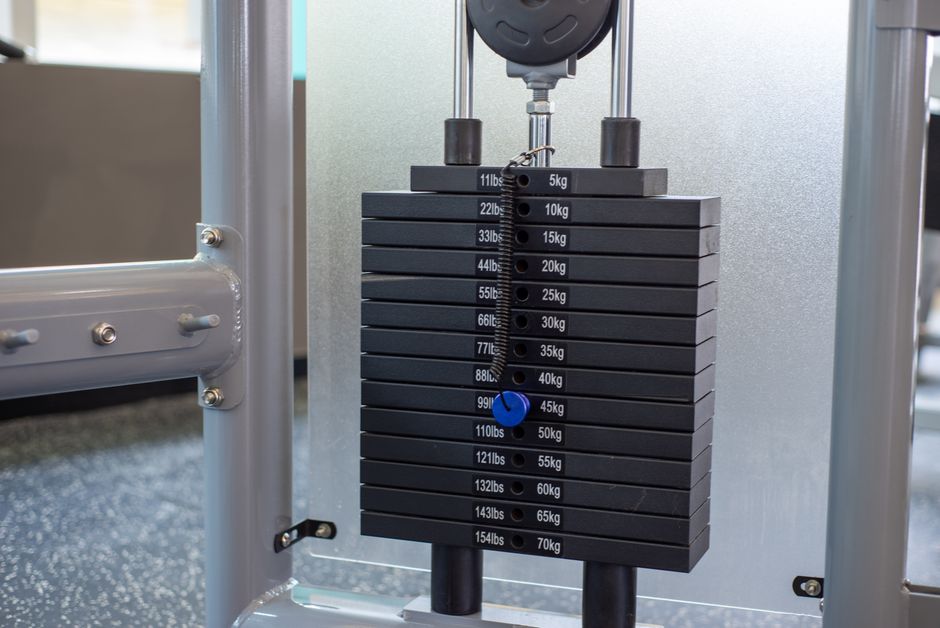
One kilogram equals about 2.2 pounds. The exact conversion is 2.20462 pounds per kilogram, a figure fixed by international agreement since 1959. If you are converting body weight, luggage, produce, or a gym plate, that single number is all you need.
The math is simple, but the reason behind it is not obvious. A kilogram is a unit of mass. A pound, in everyday use, is a unit of weight. On Earth they track closely enough that the difference rarely matters. In a few situations, it does.
How Many Pounds One Kilogram Is, Exactly
One kilogram is exactly 2.20462262 pounds. That number is not an estimate. It comes from the international avoirdupois pound, defined in 1959 as exactly 0.45359237 kilograms by agreement among the United States, the United Kingdom, and other English-speaking nations.
Flip that definition and you get the kilogram-to-pound figure. Because the pound is now defined by the kilogram, not the other way around, the conversion is exact by definition. It will not drift.
For everyday use, round to 2.2. The rounding error is small. Over 100 kilograms, using 2.2 instead of the exact figure puts you off by roughly half a pound. That is fine for a suitcase. It is not fine for a medication dose, which is why clinical dosing never uses this kind of rounding.
How Do You Convert Kilograms to Pounds?
Multiply the number of kilograms by 2.20462. To go the other direction, divide pounds by 2.20462, or multiply pounds by 0.45359237.
Most people do not need five decimal places. Here is a quick reference for common values:
- 1 kg = 2.20 lb
- 5 kg = 11.02 lb
- 10 kg = 22.05 lb
- 20 kg = 44.09 lb
- 50 kg = 110.23 lb
- 70 kg = 154.32 lb
- 80 kg = 176.37 lb
- 100 kg = 220.46 lb
For a rough mental conversion, double the kilograms and add about 10 percent. So 70 kg becomes 140 plus 14, which gives 154. The exact answer is 154.32. The shortcut lands close enough for most purposes and is easy to do without a calculator.
Kilograms vs Pounds: What Is the Actual Difference?
The kilogram measures mass. The pound, as most people use the word, measures weight. Mass is the amount of matter in an object. Weight is the force gravity exerts on that mass.
This distinction sounds academic until you leave Earth. An astronaut with a mass of 70 kilograms still has a mass of 70 kilograms on the Moon. Their weight, however, drops to roughly one-sixth of what it is on Earth. A bathroom scale calibrated in pounds would read about 26 pounds there. A balance scale comparing masses would still show 70 kilograms.
In daily life on Earth’s surface, gravity is essentially constant, so the two units behave interchangeably. That is why nutrition labels, medical records, and shipping forms can list either one without confusion.
One more wrinkle worth knowing: the United States customary pound and the British imperial pound are the same unit today. That was not always true. Historical pounds varied by region and by what was being weighed — a pound of feathers and a pound of gold were once genuinely different quantities. The 1959 agreement ended that.
Why Does the US Still Use Pounds?
The United States is one of only a few countries that has not adopted the metric system as its primary standard for everyday measurement. The reasons are historical and practical rather than scientific.
The US actually legalized metric measurement in the 1860s and formally defined its customary units in terms of metric ones. In other words, the American pound has been officially tied to the kilogram for well over a century. The country simply never completed the switch in daily life.
Attempts at voluntary conversion in the 1970s stalled. Industry, infrastructure, and public habit all favored the existing system. Today, metric use in the US is common in specific fields — science, medicine, manufacturing for export, and athletics — while pounds and feet dominate consumer life.
This creates a practical split. A doctor may record your weight in kilograms while you think in pounds. A package may list both. A recipe from another country will almost certainly use grams.
Where the Kilogram-Pound Conversion Matters Most
Most conversions are casual. A few carry real consequences.
Medication dosing. Pediatric doses are frequently calculated by body weight in kilograms. This is one reason hospitals weigh patients in kilograms. Converting a child’s weight incorrectly, even by a small margin, can shift a dose. Clinical settings use the exact conversion factor and double-check it, and caregivers should never convert a prescribed dose themselves.
Aviation and shipping. Cargo weight limits, aircraft loading, and freight charges depend on accurate figures. Mixing units has caused real incidents in aviation history, which is why the industry standardizes on one system per context.
Fitness and body weight. Gym plates are often metric in countries that use kilograms and imperial in the US. Tracking body weight across a scale that switches units can create confusion if the conversion is rounded inconsistently.
Cooking and baking. Gram measurements are more precise than volume measures for dry ingredients. A kitchen scale set to grams is genuinely more accurate than measuring cups, though the conversion between grams and pounds rarely matters in a home kitchen.
How Accurate Does the Conversion Need to Be?
For body weight, luggage, produce, and general reference, 2.2 is accurate enough. The error is under one part in a thousand relative to the exact factor.
For anything involving money, safety, or medicine, use the exact figure. Freight billing, aircraft loading, and clinical dosing all rely on the precise conversion because small errors compound across large quantities or narrow safety margins.
A useful rule: if the number will be used to make a decision with consequences, do not round. If it is for your own understanding, rounding is fine.
There is also a common misconception worth clearing up. Some people believe the kilogram is defined by a physical object sitting in France. That was true for over a century — a platinum-iridium cylinder called the International Prototype of the Kilogram served as the standard. In 2019, the definition changed. The kilogram is now defined by a fixed value of the Planck constant, a fundamental constant of physics. The change was invisible to everyday users. A kilogram is still a kilogram.
Quick Reference: Common Conversions
Here is a compact table for the values people look up most often.
| Kilograms | Pounds (exact) | Pounds (rounded) |
|---|---|---|
| 0.5 kg | 1.10 lb | 1.1 lb |
| 1 kg | 2.20 lb | 2.2 lb |
| 2 kg | 4.41 lb | 4.4 lb |
| 5 kg | 11.02 lb | 11 lb |
| 10 kg | 22.05 lb | 22 lb |
| 25 kg | 55.12 lb | 55 lb |
| 50 kg | 110.23 lb | 110 lb |
| 75 kg | 165.35 lb | 165 lb |
| 100 kg | 220.46 lb | 220 lb |
Notice how the rounding error grows with the number. At 1 kilogram it is negligible. At 100 kilograms it is nearly half a pound. This is why the shortcut works best for small values and why precise fields skip it entirely.
Converting Body Weight Between Systems
Body weight is the most common reason people search for this conversion. A US scale reads pounds. A medical record, a fitness app, or a foreign label may use kilograms.
To convert your weight from pounds to kilograms, divide by 2.20462. A person weighing 180 pounds has a mass of about 81.6 kilograms. To go the other way, multiply kilograms by 2.20462. Someone at 75 kilograms weighs about 165.3 pounds.
One practical caution: body weight fluctuates by a pound or more over the course of a day due to food, water, and sodium intake. Chasing a conversion to two decimal places on a bathroom scale is false precision. The scale itself is usually less accurate than the conversion factor.
If you are tracking weight for a health reason, consistency matters more than unit choice. Weigh yourself at the same time under the same conditions, and use the same unit throughout. Switching between pounds and kilograms mid-tracking invites confusion that has nothing to do with your actual progress.
Frequently Asked Questions
How many pounds is 1 kilogram exactly?
One kilogram equals exactly 2.20462262 pounds. This figure is fixed by the 1959 international agreement defining the pound in terms of the kilogram.
Is 2.2 pounds the same as 1 kilogram?
It is a close approximation, not the exact value. Using 2.2 instead of 2.20462 introduces a small error that grows with larger quantities.
How do I convert kilograms to pounds quickly?
Multiply kilograms by 2.2 for a fast estimate, or by 2.20462 for the exact figure. Doubling the kilograms and adding 10 percent gives a close mental answer.
Why is a kilogram not the same as a pound?
The kilogram measures mass, while the pound in everyday use measures weight, which is the force of gravity on that mass. On Earth the two track closely, but they are different physical quantities.
