
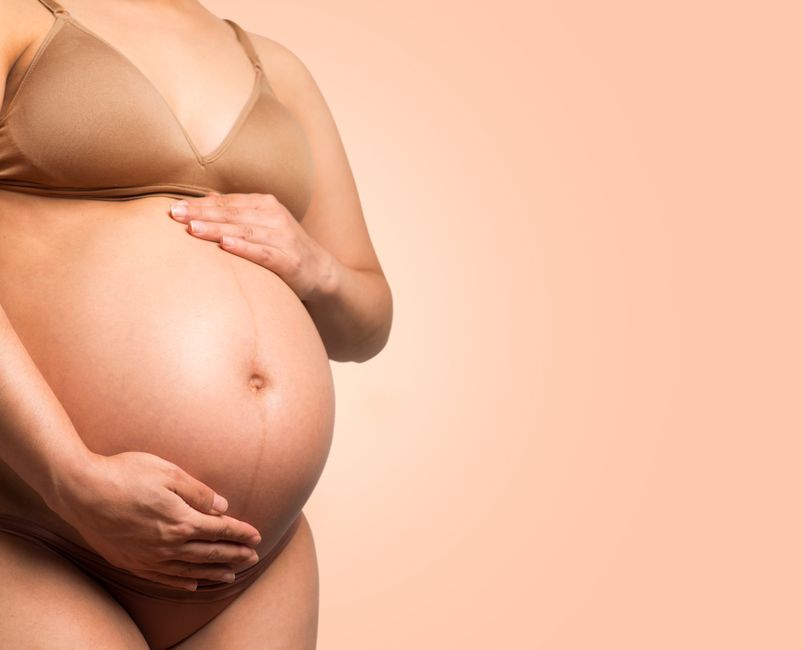
Thirty-three weeks pregnant is about 7½ months into pregnancy, or roughly seven months and three weeks. Pregnancy is counted in weeks because weeks are more precise than months, and 40 weeks is the standard full-term mark. Most people reach 33 weeks with about seven weeks left until their due date.
The month math trips people up because calendar months and pregnancy months are not the same length. A pregnancy “month” is usually counted as four weeks, which makes nine pregnancy months equal 36 weeks, not 40. That mismatch is why you will see different answers depending on who is counting.
How Many Months Pregnant Is 33 Weeks Exactly?
At 33 weeks, you are in your eighth month of pregnancy by the four-week counting method. You completed seven full months (28 weeks) and are five weeks into the eighth month.
Here is how the weeks break down by the four-week method most pregnancy resources use:
- Month 1: weeks 1–4
- Month 2: weeks 5–8
- Month 3: weeks 9–13
- Month 4: weeks 14–17
- Month 5: weeks 18–22
- Month 6: weeks 23–27
- Month 7: weeks 28–31
- Month 8: weeks 32–35
- Month 9: weeks 36–40
Notice the months are not all exactly four weeks. Months 3, 5, 6, and 9 run five weeks to keep the total at 40. This is why simple division gives an answer that feels slightly off.
If you divide 33 by 4.3 (the average weeks in a calendar month), you get about 7.7 months. Both answers are reasonable. The four-week method is the one used in most clinical and pregnancy tracking contexts.
Why Pregnancy Is Measured in Weeks, Not Months
Weeks give a more accurate picture of fetal development than months do. A baby at 33 weeks is very different from a baby at 36 weeks, even though both fall in the same rough “month” range. Measuring in weeks lets clinicians track milestones, schedule tests, and spot problems earlier.
Pregnancy weeks are counted from the first day of your last menstrual period, not from conception. This means the “33 weeks” figure includes about two weeks before conception actually happened. The actual age of the fetus is closer to 31 weeks. This is standard practice and not a mistake in your chart.
This counting convention is one of those things that surprises almost everyone. Your baby is not technically 33 weeks old at 33 weeks pregnant. The dating system starts before pregnancy begins.
What Happens at 33 Weeks Pregnant?
At 33 weeks, your baby is roughly the size of a pineapple. Length is typically around 17 inches from head to heel, and weight is often near 4 pounds, though healthy babies vary widely at this stage.
The lungs are still maturing. Surfactant, the substance that helps air sacs stay open after birth, is being produced but is not yet fully developed. Babies born at 33 weeks can survive with medical support, but they often need help with breathing and feeding. Every additional week in the womb reduces these risks.
The bones are hardening, except for the skull, which stays soft and flexible to help with delivery. The baby is gaining about half a pound per week at this point. Fat is accumulating under the skin, which helps with temperature control after birth.
You may notice your baby’s movements feel different now. Kicks may feel more like rolls or pushes as space gets tighter. Fewer sharp jabs and more stretching sensations are normal. What matters is that you still feel regular movement. If movement drops noticeably, contact your provider right away.





Common Symptoms at 33 Weeks
Third-trimester symptoms tend to intensify around this point. The uterus is large and pressing upward on the diaphragm and stomach, which can cause shortness of breath and heartburn. Sleep is often disrupted, partly from physical discomfort and partly from the need to urinate more often.
Other common experiences include:
- Swelling in the feet and ankles
- Lower back pain as posture shifts
- Braxton Hicks contractions, which are irregular and usually painless
- Fatigue that returns after a mid-pregnancy energy boost
- Difficulty finding a comfortable sleeping position
Some symptoms are not normal and need prompt medical attention. Call your provider if you notice sudden severe swelling, a severe headache, vision changes, upper abdominal pain, or bleeding. These can be signs of preeclampsia or other complications. Trust your instincts if something feels wrong.
Prenatal Appointments and Testing Around 33 Weeks
Most people see their provider every two weeks around this stage. Appointments typically include checking blood pressure, weight, urine for protein, and measuring the uterus to track growth. Your provider will also listen to the baby’s heartbeat.
Your provider may discuss group B strep testing, which usually happens between 36 and 37 weeks. Some practices offer it earlier. This test checks for a type of bacteria that can pass to the baby during delivery. If you test positive, antibiotics during labor reduce the risk to the baby.
Some pregnancies need extra monitoring at this stage, such as non-stress tests or biophysical profiles. These are more common with conditions like gestational diabetes, high blood pressure, or a pregnancy that is measuring small or large. Routine extra testing is not recommended for everyone.
Is It Safe to Give Birth at 33 Weeks?
Babies born at 33 weeks are considered late preterm. They are not full term, and they often need time in a neonatal intensive care unit. Most survive and do well with modern care, but the risk of breathing problems, feeding difficulties, jaundice, and temperature instability is higher than for babies born closer to term.
Doctors generally try to keep a baby in the womb until at least 39 weeks unless there is a medical reason to deliver earlier. Research consistently shows that babies born before 39 weeks have higher rates of certain complications, even when they look healthy at birth. This is why elective deliveries before 39 weeks are not recommended.
If you go into labor at 33 weeks, your care team will assess whether to try to stop labor or proceed with delivery. The decision depends on the cause, your health, and the baby’s condition. Some cases call for medications to help the baby’s lungs mature faster if early delivery seems likely.
When Should You Call Your Provider at 33 Weeks?
Call your provider if you have contractions that are regular or painful, fluid leaking from the vagina, vaginal bleeding, or a noticeable decrease in fetal movement. These can be signs of preterm labor or other problems that need quick evaluation.
Also call for severe headache, vision changes, sudden swelling of the face or hands, or pain in the upper right abdomen. These can signal preeclampsia, a condition that requires medical attention. Do not wait to see if symptoms pass.
Feeling anxious or unsure is common in the third trimester. It is always acceptable to call. Providers would rather check something that turns out fine than miss a problem.
Preparing for the Final Weeks
The weeks between 33 and 40 go quickly for some and slowly for others. Use this time to finish practical preparations. Pack a hospital bag, install the car seat, and confirm your support plan for after birth. These tasks are easier now than they will be later.
Rest when you can. Sleep may be broken, and fatigue is real. Short naps and putting your feet up help. Gentle movement like walking is usually fine if your provider has not restricted activity, but check with them about what is right for your situation.
Keep going to your appointments. The final stretch is when monitoring matters most. Your due date is an estimate, not a deadline. Only about a small share of babies arrive exactly on their due date, and anywhere from 37 to 42 weeks is generally considered full term, depending on how your provider defines it.
Frequently Asked Questions
How many months is 33 weeks pregnant?
Thirty-three weeks is about 7½ months, or seven months and three weeks, using the four-week pregnancy month. You are in your eighth month of pregnancy.
Is 33 weeks considered 8 months pregnant?
Yes, by the four-week counting method, 33 weeks falls in the eighth month of pregnancy. The eighth month runs from week 32 through week 35.
How many weeks are left if I am 33 weeks pregnant?
About seven weeks remain until 40 weeks, though the due date is an estimate. Only a small share of babies arrive exactly on their due date.
Is a baby born at 33 weeks okay?
Most babies born at 33 weeks survive and do well with medical care, but they are late preterm and often need support with breathing and feeding. Every extra week in the womb lowers those risks.
