

Boiling an egg is one of the simplest things you can do in a kitchen, and also one of the easiest to get wrong. The short answer: a soft-boiled egg with a runny yolk takes about 4 to 6 minutes in gently boiling water, a medium-boiled egg with a jammy center takes about 6 to 8 minutes, and a hard-boiled egg takes roughly 9 to 12 minutes. Those times assume a large egg starting from refrigerator temperature and going into water that is already boiling.
Everything else — the exact minute, whether you start with cold water, how you cool the egg afterward — shifts the result. Once you understand why, you can stop guessing and get the yolk you actually want every time.
How Many Minutes To Boil An Egg for Each Doneness Level?
The timing depends on how much heat reaches the yolk before you stop the cooking. Egg white sets at a lower temperature than yolk, which is why a soft-boiled egg can have a fully cooked white and a still-liquid center.
Egg white proteins begin to coagulate around 63°C (145°F) and fully set by about 80°C (176°F). Yolk proteins set at higher temperatures, starting near 65°C (149°F) and firming up closer to 70°C (158°F). In boiling water, the outside of the egg heats fast and the center lags behind. The longer the egg stays in, the further that heat travels inward.
Here is a general guide for a large egg from the fridge, lowered into already-boiling water:
- Soft-boiled (runny yolk, set white): about 4 to 6 minutes
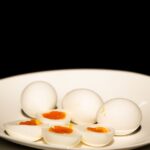
- Medium-boiled (jammy, partly set yolk): about 6 to 8 minutes
- Hard-boiled (fully set yolk): about 9 to 12 minutes
These are starting points, not laws. Your stove, pot, water volume, and egg size all matter. A small egg cooks faster than a large one. An extra-large or jumbo egg needs more time. Eggs straight from the fridge take longer than eggs that have sat on the counter.
Why Does Egg Size and Starting Temperature Change the Time?
Heat has to travel from the water, through the shell, and into the center of the yolk. The bigger the distance, the longer it takes. That is the whole story behind egg size.
A large egg is roughly 50 grams of liquid and shell. A jumbo egg can be closer to 65 grams. More mass means more distance for heat to cross, so a jumbo egg might need an extra minute or two to reach the same doneness as a large one.
Starting temperature works the same way. A cold egg has to warm up before it even begins to cook. An egg at room temperature is already partway there. If you boil a fridge-cold egg and a room-temperature egg for the same time, the cold one will come out less done.
This is why a single “perfect” time does not exist. The number that works for one person’s setup may overshoot or undershoot for another. Use the ranges above, then adjust by a minute based on what you see.
Should You Start Eggs in Cold Water or Boiling Water?
Both methods work, and they produce slightly different results. Neither is objectively correct — it depends on what you find easier to control.
Starting in boiling water gives you a precise, predictable clock. The moment the egg hits the water, timing begins. This method makes it easier to hit a specific doneness because your starting point is always the same. It is the approach most cooks use for soft-boiled eggs.
Starting in cold water means the egg heats gradually as the water comes to a boil. The timing only starts once the water reaches a rolling boil, which can vary depending on your stove. Some people find this method produces fewer cracked shells because the egg warms up slowly rather than hitting sudden heat.
A common middle path: lower eggs into boiling water with a spoon, then reduce to a gentle simmer. A violent rolling boil can crack shells as the eggs knock against each other and the pot.




Does Cooling the Egg in Ice Water Actually Matter?
Yes, and it does two things at once. An ice water bath stops the cooking and makes peeling easier.
When you pull an egg out of hot water, it keeps cooking from residual heat. The yolk can go from jammy to chalky in the minute or two it sits on the counter. Plunging it into ice water halts that process almost immediately, so you get the doneness you timed for.
The second effect is on peeling. As a hot egg cools, the white contracts slightly and pulls away from the inner shell membrane. This makes the shell easier to remove, especially for hard-boiled eggs. Give them at least a few minutes in the ice bath — longer for hard-boiled eggs you plan to peel right away.
One thing worth knowing: very fresh eggs are harder to peel than older ones. As an egg ages, its internal pH rises and the membrane bonds less tightly to the white. For hard-boiled eggs you want to peel cleanly, eggs that are a week or two old tend to work better than eggs laid yesterday.
Why Do Some Hard-Boiled Eggs Turn Green?
That greenish ring around the yolk is a sign of overcooking, not spoilage. It is harmless.
The color comes from a reaction between sulfur in the egg white and iron in the yolk. When eggs are cooked too long or at too high a heat, those two elements combine at the boundary between white and yolk and form iron sulfide. The longer and hotter the cook, the more pronounced the ring.
You can reduce it by not overcooking. Pull hard-boiled eggs at the shorter end of the range, use a gentle simmer rather than a hard boil, and cool them promptly in ice water. The ring may still appear faintly, but it does not affect taste or safety.
How Can You Tell When a Boiled Egg Is Done?
You cannot reliably tell doneness by looking at a whole egg in its shell. The most dependable method is a timer matched to your setup.
Once you have boiled eggs a few times and tracked your results, you develop a feel for your own stove. Until then, a few practical checks help:
- Spin test: A hard-boiled egg spins fast and wobbles little. A raw or soft-boiled egg spins slowly and wobbles because the liquid inside sloshes.
- Peel and look: The only way to know for certain is to crack it open. Soft-boiled yolks run, medium yolks are thick and jammy, hard-boiled yolks are firm and crumbly.
- Tap and listen: A cooked egg sounds solid when tapped; a raw one sounds duller. This is unreliable but can work with practice.
For consistent results, keep notes. Write down your egg size, starting temperature, and cook time the first few times. Adjust by 30 seconds to a minute until you land on the yolk you want.
Are There Food Safety Concerns With Soft-Boiled Eggs?
Yes, and this is worth taking seriously. Soft-boiled and medium-boiled eggs do not reach a temperature that reliably kills Salmonella bacteria throughout the egg. Hard-boiled eggs cooked to a firm yolk are safer.
In the United States, eggs are typically washed before sale, which removes the protective outer coating and means they should be refrigerated. The Centers for Disease Control and Prevention advises against eating raw or lightly cooked eggs for people at higher risk of serious foodborne illness. That includes young children, pregnant women, adults over 65, and anyone with a weakened immune system.
If you are in a higher-risk group, choose hard-boiled eggs or use pasteurized eggs, which have been heat-treated to kill bacteria while keeping the egg liquid. Pasteurized eggs are sold in some grocery stores and are labeled as such.
For healthy adults, the risk from a soft-boiled egg is low but not zero. If you want the runny yolk, that is a personal choice — just know the tradeoff.
Frequently Asked Questions
How long do you boil an egg for a soft-boiled yolk?
About 4 to 6 minutes in already-boiling water for a large, fridge-cold egg. Pull it earlier for a runnier yolk and later for a thicker one.
How many minutes to boil an egg for hard-boiled?
Roughly 9 to 12 minutes for a large egg, depending on your stove and starting temperature. Cool it in ice water right after to stop the cooking.
Do you put eggs in cold water or boiling water to boil them?
Either works, but starting in boiling water gives you a more precise and repeatable timer. Cold-water starts are more forgiving on the shell but less predictable.
Why is my hard-boiled egg yolk green?
A green ring around the yolk comes from overcooking and is harmless. Shorter cook times and prompt ice-water cooling reduce it.
