
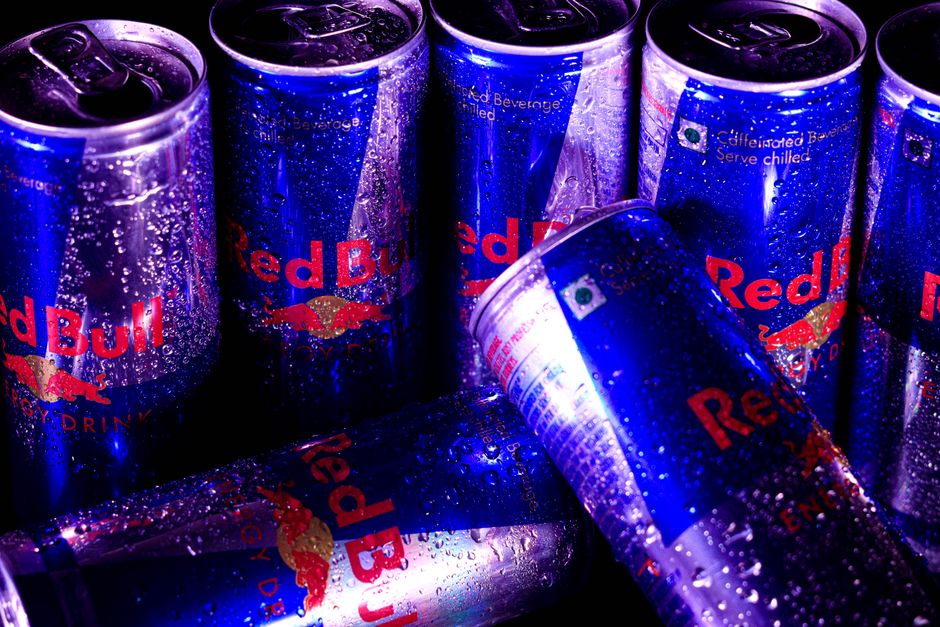
A standard 8.4 fl oz can of Red Bull contains 80 mg of caffeine. That is about the same as a cup of coffee. The 12 fl oz can contains 114 mg. Red Bull Sugarfree and Red Bull Zero contain the same caffeine as the original because the caffeine comes from the same base. The sugar is what changes, not the stimulant.
Most people are surprised by one thing: Red Bull is not a high-caffeine drink. It sits in the middle of the energy drink market. What makes it worth understanding is how that 80 mg compares to coffee, soda, and the daily limits that health agencies set.
How Many Mg Of Caffeine In A Red Bull By Can Size?
The caffeine content scales with the can size, not the formula. Red Bull sells several sizes in the US, and each one carries a different total.
- 8.4 fl oz can: 80 mg of caffeine
- 12 fl oz can: 114 mg of caffeine
- 16 fl oz can: about 151 mg of caffeine
- 20 fl oz can: about 189 mg of caffeine
These figures come from Red Bull’s own published product information. The concentration stays roughly constant across sizes at about 9.5 mg of caffeine per fluid ounce. A bigger can simply delivers more of the same liquid.
One clarification that trips people up: the sugar-free versions are not lower in caffeine. Red Bull Sugarfree and Red Bull Zero both contain the same caffeine per ounce as the original. If you are watching caffeine, switching to sugar-free changes nothing on that front.
How Does Red Bull Compare To Coffee And Other Drinks?
An 8.4 oz Red Bull lands close to a typical cup of coffee, but coffee varies far more than an energy drink does. That is the key difference. A canned product is standardized. A brewed cup is not.
| Drink | Typical caffeine |
|---|---|
| Red Bull, 8.4 fl oz | 80 mg |
| Red Bull, 12 fl oz | 114 mg |
| Brewed coffee, 8 fl oz | 95 mg (USDA average) |
| Espresso, 1 fl oz shot | About 64 mg |
| Cola, 12 fl oz | About 34 mg |
| Black tea, 8 fl oz | About 47 mg |
The USDA figure for brewed coffee is an average. Real cups run from well under 95 mg to well over 150 mg depending on the bean, the roast, and how it is brewed. A strong drip coffee can easily beat a 12 oz Red Bull. A weak one can come in below an 8.4 oz can.
Against soda, Red Bull is more than double the caffeine of a typical cola per similar volume. Against coffee, it is roughly comparable. That comparison matters because people often treat energy drinks as uniquely potent when the caffeine load is often similar to what they already drink.
How Much Caffeine Is Too Much In A Day?
Health agencies generally point to 400 mg of caffeine per day as a level not associated with harm for most healthy adults. That figure is widely used by food safety and health authorities as a general guide. It is not a target and it is not a threshold that guarantees safety for everyone.
At 400 mg, that works out to about five 8.4 oz cans of Red Bull, or about three and a half 12 oz cans. Few people drink that much Red Bull, but caffeine adds up across everything you consume in a day.
The 400 mg guide does not apply to everyone. Pregnant women are generally advised to keep caffeine intake much lower, and health authorities commonly cite 200 mg per day as the limit during pregnancy. Children and adolescents are advised to avoid caffeine or keep intake very low. People with certain heart conditions, anxiety disorders, or who take specific medications may need to limit caffeine far below the general guide. If you are unsure where you fall, that is a conversation for your clinician, not a number on a can.
One point worth stating plainly: the 400 mg figure is a general population guide, not a personal prescription. Individual sensitivity to caffeine varies widely, and some people feel effects at doses well below it.
What Else Is In A Can Of Red Bull?
Caffeine is only one ingredient. A standard 8.4 oz can also contains sugar, taurine, B vitamins, and small amounts of other compounds. Understanding what each does helps separate the meaningful from the marketing.
Sugar is the biggest difference between regular and sugar-free versions. A standard 8.4 oz can contains about 27 g of sugar. That is a meaningful amount, close to the daily added sugar limit many dietary guidelines recommend for adults. The sugar-free versions use sweeteners instead.
Taurine is an amino acid found naturally in the body and in meat and fish. Red Bull contains about 1,000 mg per 8.4 oz can. It is included because it is thought to interact with caffeine, but the evidence that taurine adds a meaningful stimulant effect in humans at this dose is limited. The caffeine is doing the heavy lifting.
B vitamins are added, but a can does not correct a deficiency or provide energy in any direct sense. B vitamins help the body convert food into energy through normal metabolism. They do not act as a stimulant.
The energy you feel from Red Bull comes from caffeine and sugar. The other ingredients are not established to produce the alertness people attribute to the drink.
How Long Does The Caffeine In Red Bull Last?
Caffeine is absorbed quickly. Most people reach peak blood levels within about 30 to 60 minutes of drinking it. From there it clears gradually.
The average half-life of caffeine in healthy adults is roughly 3 to 5 hours. That means about half the caffeine is still in your system several hours after you drink it. A single 8.4 oz can at 80 mg could still leave around 40 mg circulating four or five hours later.
Half-life is not fixed. It varies with genetics, age, pregnancy, liver function, and certain medications. Smoking speeds caffeine clearance. Pregnancy slows it substantially. Oral contraceptives can also slow it. This is why the same can affects two people very differently, and why an afternoon Red Bull keeps some people awake at night while others notice nothing.
For sleep, timing matters more than total daily caffeine. Caffeine consumed within several hours of bedtime can interfere with sleep even in people who do not feel wired. If sleep is a concern, the practical move is to note when your last caffeine was, not just how much.
Is Red Bull Safe?
For most healthy adults, moderate caffeine intake from Red Bull falls within general guidance. The concern is not a single can. It is the pattern: multiple cans a day, combined with coffee, plus other caffeine sources, on top of sugar intake.
Energy drinks as a category have drawn attention from health authorities, particularly regarding young people and adolescents. The American Academy of Pediatrics has advised that children and adolescents should not consume energy drinks. That position reflects concerns about caffeine and sugar in a population that is more sensitive to both.
Mixing energy drinks with alcohol is a separate and more serious issue. Caffeine can mask the feeling of intoxication without reducing actual impairment, which is a well-documented risk pattern. The combination is not a safe way to drink.
People with heart conditions, high blood pressure, anxiety disorders, or who take medications that interact with caffeine should talk to their clinician about intake. Caffeine is a real stimulant with real cardiovascular effects. That is not a reason to fear a single can, but it is a reason to know your own situation.
Frequently Asked Questions
How many mg of caffeine are in a Red Bull 8.4 oz can?
A standard 8.4 fl oz can of Red Bull contains 80 mg of caffeine. The sugar-free versions contain the same amount.
Does Red Bull have more caffeine than coffee?
An 8.4 oz Red Bull at 80 mg is close to a typical 8 oz cup of brewed coffee, which averages about 95 mg. Coffee varies much more than Red Bull, so some cups are higher and some are lower.
How many Red Bulls is 400 mg of caffeine?
About five 8.4 oz cans or three and a half 12 oz cans reach roughly 400 mg. That figure is a general daily guide for healthy adults, not a personal limit, and it does not apply to pregnant women, children, or people with certain medical conditions.
Is Red Bull Sugarfree lower in caffeine?
No. Red Bull Sugarfree and Red Bull Zero contain the same caffeine per ounce as the original. Only the sugar content changes.
