
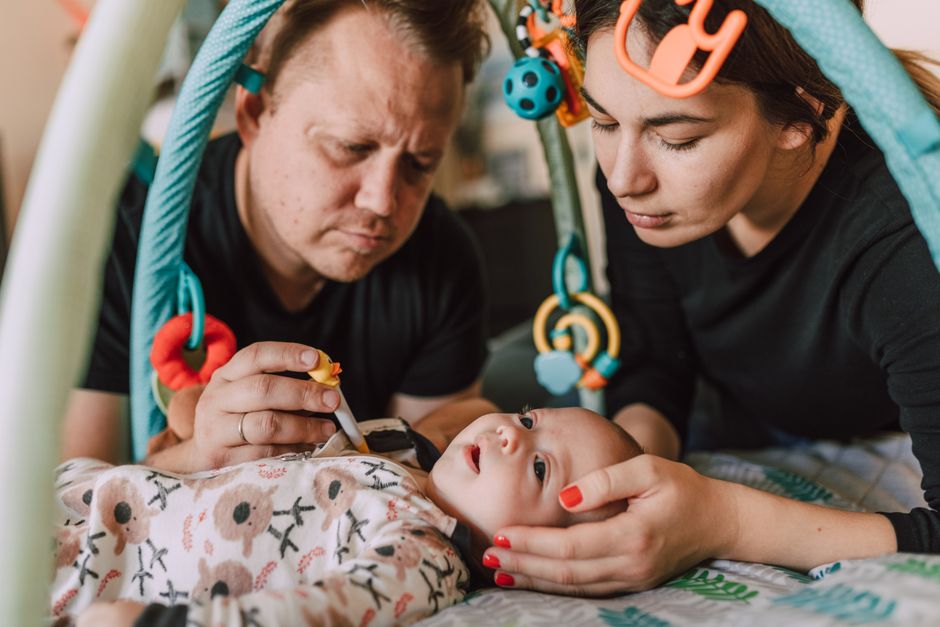
A newborn baby sleeps a lot. Most newborns sleep between 14 and 17 hours in a 24-hour period. Some may sleep as little as 11 hours or as much as 19 hours. This total is spread across many short naps, day and night, because a newborn’s sleep cycle is very different from an adult’s. Understanding this pattern can help you set realistic expectations for the first few months.
What Is a Normal Newborn Sleep Schedule?
Newborns do not follow a day-night schedule. Their internal clock, or circadian rhythm, has not developed yet. This rhythm usually begins to form around 6 to 8 weeks of age. Until then, sleep is distributed evenly across the day and night.
A typical newborn sleep cycle lasts about 45 to 60 minutes. During this time, they move between quiet sleep and active sleep. Active sleep is when you might see your baby twitch, make facial expressions, or move their arms and legs. This is normal and does not mean they are waking up.
Because each sleep cycle is short, newborns wake frequently. They often wake to feed, which is necessary because their stomachs are very small. A newborn’s stomach holds only about 1 to 2 ounces of milk at a time. This is why they need to eat every 2 to 3 hours, even at night.
How Many Hours A Day Do Newborns Sleep in Total?
The total sleep time for a newborn is consistently reported as 14 to 17 hours per day. This range comes from the National Sleep Foundation and is widely accepted by pediatricians. Some babies will sleep slightly more or less, and that can still be normal.
It is important to note that this total is not continuous. A newborn rarely sleeps for more than 2 to 4 hours at a stretch in the first few weeks. This is a protective mechanism. Frequent waking ensures the baby feeds often and reduces the risk of sudden infant death syndrome, or SIDS.
Parents often worry that their baby sleeps too much or too little. If your baby is gaining weight well, has enough wet diapers, and is alert when awake, their sleep amount is likely fine for them. Every baby is different, and the range of normal is wide.
Why Do Newborns Sleep So Much?
Sleep is critical for newborn development. During sleep, the brain processes new experiences and forms neural connections. A newborn’s brain grows rapidly. At birth, the brain is about 25 percent of its adult size. By the first birthday, it doubles in size. Much of this growth happens during sleep.
Growth hormone is also released primarily during deep sleep. This hormone supports physical growth and tissue repair. The high sleep needs of a newborn directly support this rapid phase of development.
Sleep also supports the immune system. Newborns have immature immune systems. Sleep helps regulate immune function and may help protect against infection. The high sleep duration in early infancy is a natural and necessary part of building a healthy foundation.





How Long Do Newborns Sleep at Night vs. During the Day?
In the first few weeks, there is no real difference between night and day for a newborn. They sleep roughly equal amounts during the day and night. Each sleep period may last 2 to 4 hours, followed by a feeding and a brief period of alertness.
By around 6 weeks, many babies start to sleep slightly longer stretches at night. This is often a 4 to 5 hour stretch. This is not the same as “sleeping through the night,” which is defined as a 6 to 8 hour stretch. Most babies do not achieve this until they are 3 to 6 months old.
Here is a general breakdown of newborn sleep patterns:
- Total sleep: 14 to 17 hours per day
- Nighttime sleep: 8 to 9 hours total, broken into segments
- Daytime sleep: 7 to 9 hours total, spread across 3 to 5 naps
- Longest single stretch: Usually 2 to 4 hours in the first weeks
These numbers are averages. Some healthy babies sleep more or less. The pattern matters more than the exact hours.
When Should You Wake a Sleeping Newborn?
In the first few weeks, you may need to wake your baby for feedings. This is especially important if your baby is not gaining weight well or was born prematurely. Most pediatricians recommend waking a newborn to feed if they have not eaten for 4 hours, day or night.
Once your baby has regained their birth weight, usually by 2 weeks, you can often let them sleep longer stretches at night. Your pediatrician will give you specific guidance based on your baby’s growth. Until then, feeding every 2 to 3 hours is the standard recommendation.
If you are breastfeeding, frequent feeding also helps establish your milk supply. The more often the baby nurses, the more milk your body produces. Skipping feedings in the early weeks can reduce milk production.
What Is the Safest Sleep Position for a Newborn?
Safe sleep is just as important as sleep duration. The American Academy of Pediatrics recommends that all babies sleep on their backs for every sleep, including naps. This position significantly reduces the risk of SIDS.
The sleep surface should be firm and flat. Use a crib, bassinet, or play yard that meets safety standards. Remove all soft objects from the sleep area, including pillows, blankets, bumper pads, and stuffed animals. These items can increase the risk of suffocation.
Your baby should sleep in the same room as you for at least the first 6 months. This is called room-sharing. It is different from bed-sharing, which is not recommended. Room-sharing can reduce the risk of SIDS by as much as 50 percent. Place your baby in their own sleep space, such as a bassinet beside your bed.
How Can You Help Your Newborn Sleep Better?
You cannot force a newborn to sleep longer. But you can help them develop healthy sleep habits. Start by keeping the environment calm. During nighttime feedings, keep the lights dim and avoid talking or playing. This helps your baby learn that night is for sleeping.
During the day, let natural light into the room. Keep some normal household noise going. This helps your baby begin to distinguish day from night. It does not mean you should keep your baby awake during the day. It simply means the environment signals different times.
A consistent bedtime routine can begin early. This does not need to be elaborate. It might be a warm bath, a feeding, and a few minutes of quiet cuddling. Repeating this sequence each evening helps your baby feel secure and signals that sleep is coming.
Watch for sleep cues. A newborn may show tiredness by rubbing their eyes, pulling at their ears, or becoming fussy. Putting your baby down when they are drowsy but still awake can help them learn to fall asleep on their own. This skill develops over time and is not expected in the first weeks.
When Should You Contact a Doctor About Newborn Sleep?
Most newborn sleep patterns are normal, even when they feel exhausting. However, some signs warrant a call to your pediatrician. If your baby is sleeping significantly more than 19 hours a day and is difficult to wake for feedings, contact your doctor. This can sometimes signal an underlying issue.
Also contact your doctor if your baby is not waking on their own to feed, is not gaining weight, or has fewer than 6 wet diapers per day after the first week. These can be signs of dehydration or feeding problems. Trust your instincts. If something feels wrong, a call to your pediatrician is always appropriate.
Remember that the first few months are the most demanding for sleep. This phase does not last forever. By 3 to 4 months, most babies begin to sleep in longer stretches at night. By 6 months, many can sleep through the night. The newborn phase is intense, but it is temporary.
Frequently Asked Questions
How many hours a day do newborns sleep?
Most newborns sleep 14 to 17 hours in a 24-hour period. Some healthy babies may sleep as little as 11 hours or as much as 19 hours.
Is it normal for a newborn to sleep all day?
Yes, newborns sleep a lot because their brains and bodies are growing rapidly. They wake every 2 to 3 hours to feed, even if they seem to sleep most of the day.
When do newborns start sleeping through the night?
Most babies begin sleeping 6 to 8 hour stretches between 3 and 6 months of age. In the first weeks, the longest sleep stretch is usually only 2 to 4 hours.
Should I wake my newborn to feed at night?
In the first few weeks, yes, if your baby has not eaten for 4 hours. Once your baby regains their birth weight, ask your pediatrician if you can let them sleep longer.
