
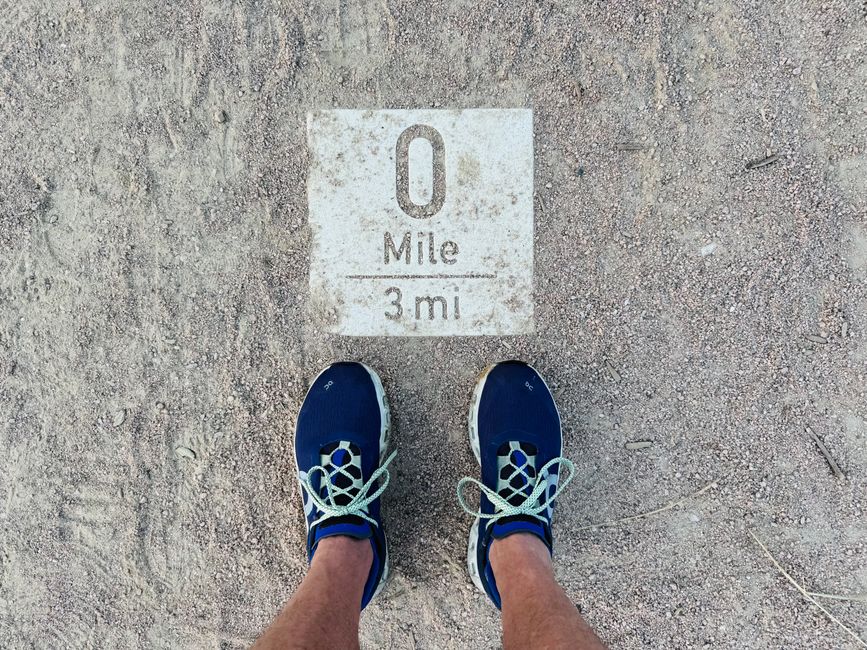
Walking 3 miles is a common goal, whether you are training for fitness, tracking daily activity, or just enjoying the outdoors. The most direct answer is that the average person takes about 6,000 to 7,500 footsteps to cover 3 miles. This number is not fixed. It changes based on your height, your walking speed, and the terrain beneath your feet. For most people, planning on roughly 6,750 steps for a 3-mile walk is a safe and accurate estimate.
Why Does Your Step Count Vary So Much?
Your stride length is the single biggest factor in how many steps you take. Stride length is the distance from the heel strike of one foot to the heel strike of the other foot. A taller person naturally has a longer stride, meaning they cover more ground with each step and need fewer total steps.
Walking speed also changes your stride. When you walk faster, you tend to lengthen your stride slightly. When you stroll slowly, your steps become shorter and more frequent. This means the same 3-mile route can produce a different step count depending on how briskly you move.
Terrain matters too. Walking uphill forces you to take shorter steps. Walking downhill can lengthen your stride, but it also changes your balance and gait. Uneven surfaces like trails or sand disrupt your natural rhythm, increasing the total number of steps needed to finish the distance.
How Many Footsteps In 3 Miles by Height
Height is the easiest way to estimate your personal step count. The relationship is well established in biomechanics research. Shorter individuals have shorter legs, which means a shorter stride length and more steps per mile.
Here is a practical breakdown based on average stride lengths:
- Person under 5’4″ tall: Stride length is roughly 2.0 to 2.1 feet. This person will take about 7,500 to 7,900 steps in 3 miles.
- Person between 5’4″ and 5’10” tall: Stride length is roughly 2.2 to 2.3 feet. This person will take about 6,900 to 7,200 steps in 3 miles.
- Person over 5’10” tall: Stride length is roughly 2.4 to 2.5 feet. This person will take about 6,300 to 6,600 steps in 3 miles.
These numbers are estimates, not exact measurements. The best way to know your own number is to measure your stride length directly. Walk a known distance, like 20 feet, and count your steps. Divide the distance by the number of steps to get your personal stride length. Then divide 15,840 feet (the length of 3 miles) by your stride length to get your exact step count.
What Do Fitness Trackers Say?
Most fitness trackers and smartphone pedometers use a default stride length based on your height and weight. They do not measure your actual stride in real time. This means your tracker’s step count can be off by 5 to 10 percent depending on how accurately your profile matches your real body.
Some modern devices use GPS to measure distance directly. These are more accurate for outdoor walks. However, GPS accuracy can drop in dense urban areas, under heavy tree cover, or near tall buildings. For indoor treadmill walking, GPS does not work at all, and the device falls back to step counting algorithms.
If you want the most accurate step count for a 3-mile walk, use a device that combines GPS with an accelerometer. If you are using a basic step counter, accept that the number is an estimate. The difference of a few hundred steps does not change the health benefits of the walk.





How Long Does Walking 3 Miles Take?
Walking speed is usually measured in minutes per mile. A moderate walking pace is about 3 miles per hour, which equals 20 minutes per mile. At this pace, 3 miles takes about 60 minutes.
A brisk walking pace is about 3.5 to 4 miles per hour, which equals 15 to 17 minutes per mile. At this pace, 3 miles takes about 45 to 51 minutes. A leisurely stroll at 2 miles per hour takes about 90 minutes to cover 3 miles.
Your step count changes with your speed, but the distance stays the same. Walking faster does not drastically reduce your step count. It mainly reduces your time. The number of footsteps you take is more tied to your height than to your speed.
Does Walking 3 Miles Count as Enough Exercise?
Walking 3 miles is a solid amount of physical activity for most adults. Health guidelines from major public health organizations recommend at least 150 minutes of moderate-intensity aerobic activity per week. Walking 3 miles at a brisk pace for 45 to 60 minutes covers a large portion of that weekly target in a single session.
Moderate-intensity means your heart rate is elevated and you are breathing faster, but you can still hold a conversation. If you can talk but not sing while walking, you are at a moderate intensity. Walking at a leisurely pace still has health benefits, but it does not count toward the moderate-intensity recommendation.
Walking 3 miles daily would exceed the weekly guideline easily. Walking 3 miles a few times per week is also beneficial. The key is consistency. A regular 3-mile walk is a practical and achievable fitness habit for most healthy adults.
How to Measure Your Own 3-Mile Step Count
The most reliable method is to measure a known distance. Find a local track, which is typically 400 meters around. Four laps equals approximately 1 mile. Walk one mile on the track and count your steps. Multiply that number by 3 to get your 3-mile step count.
If you do not have access to a track, use a mapping app to plot a 3-mile route in your neighborhood. Walk the route once with a step counter and record the number. This gives you a personalized, real-world measurement that accounts for your exact stride, pace, and terrain.
Another method is to use your car’s odometer. Measure a straight 3-mile stretch of flat road with your car. Park and walk that same stretch while counting your steps. This is simple and accurate, though it requires a safe walking route away from traffic.
Does Step Count Matter for Health?
Step count is a convenient proxy for physical activity, but it is not the only measure that matters. The intensity of your walk, the total time spent moving, and your overall activity pattern all contribute to health outcomes. A person taking 6,000 brisk steps in 3 miles gets a different workout than someone taking 7,500 slow steps over the same distance.
Research on step counts and health outcomes has focused on daily totals rather than single walks. Some studies suggest that people who take more daily steps have lower rates of cardiovascular disease and improved metabolic health. The exact optimal number remains debated, and individual needs vary based on age, baseline fitness, and existing health conditions.
Do not fixate on hitting a specific step number if it causes stress. The evidence is clear that any increase in physical activity is better than none. Walking 3 miles, whether it takes you 6,300 or 7,900 steps, is a meaningful contribution to your health.
Frequently Asked Questions
How many footsteps are in 1 mile?
The average person takes about 2,000 to 2,500 steps per mile. Taller individuals with longer strides take fewer steps, while shorter individuals take more.
Does walking faster reduce my step count?
Walking faster slightly lengthens your stride, which can reduce your step count by a small margin. The bigger change is time, not total steps.
Are fitness tracker step counts accurate?
Most trackers estimate steps using your height and weight, so they can be off by 5 to 10 percent. GPS-enabled devices are more accurate for outdoor distance measurement.
Is walking 3 miles a day good exercise?
Yes. Walking 3 miles at a brisk pace provides roughly 45 to 60 minutes of moderate-intensity activity, which meets a large portion of weekly exercise recommendations.
